Edition 011
Pharma's most famous crystal, and what we gained from it


Welcome to Highly Regulated 011, from Katalyze
Welcome back to Highly Regulated. Last week we followed donor-derived cell therapies from the first engineered receptors to early clinical results in autoimmune disease.
This week, we’ll look at the story behind a medicine already being made at scale that suddenly became difficult to produce. In 1998, capsules of medicine began failing a routine quality test. The molecule’s crystal structure had unexpectedly changed, halting manufacturing of a crucial drug. We discuss what happened, what scientists learned from it, and how today’s manufacturers benefit.
We'll end with Something Good: researchers in Nebraska are using AI to listen to wild turkeys, assisting their conservation efforts. We're arriving a day early, ahead of the holiday; we hope you enjoy the thematic closing.
First, a few things worth your attention from around the industry.
Alyse Gonthier, PhD and Zack Holland from Katalyze
Worth Your Time
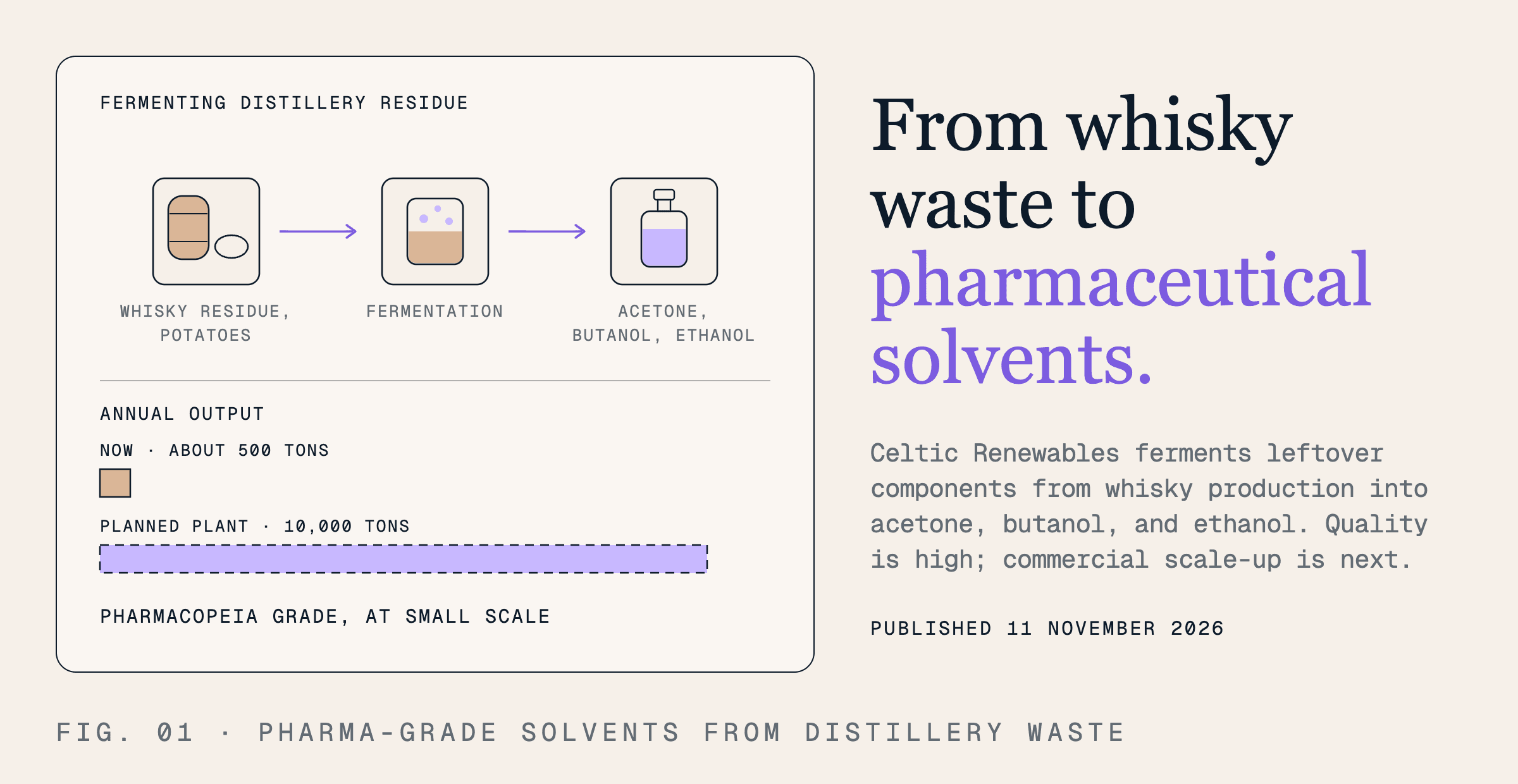
- Using whisky waste to produce pharmaceutical solvents. Pharmaceutical manufacturers rely on solvents often made from fossil feedstocks. Celtic Renewables instead ferments whisky residues, reject potatoes, and other feedstocks into acetone, butanol, and ethanol. The process earned it the CPHI Award for Sustainable Pharma Excellence in October. In a November 11th interview, chief commercial officer Bettina Brierley said its bioacetone meets U.S. Pharmacopeia specifications and credited staff with whisky-industry experience for the plant's strong operations. The next step is increasing fermentation yields so more of that waste becomes usable solvent. For manufacturers, that could reduce reliance on fossil feedstocks while supplying the same solvents their production processes already use. Pharma-Grade Solvents From Whisky Waste
- Blackstone commits up to $1.5 billion to Pfizer's obesity drug trials. Pfizer's monthly obesity candidate has ten ongoing and planned Phase 3 trials, with the development costs that come with them. The drug, berobenatide, activates a GLP-1 receptor involved in appetite and blood sugar regulation. Earlier this month, Pfizer and Blackstone Life Sciences announced an agreement under which Blackstone-managed funds will pay up to $1.5 billion of its development costs through 2028. In return, Blackstone becomes eligible for payments tied to U.S. approval of monthly berobenatide as a single-agent treatment and to later sales milestones. Pfizer keeps ownership and control of the program. Blackstone's Funding Agreement With Pfizer
- Merck signs an AI drug design deal with Isomorphic Labs, two days after its $5 billion raise. AI drug design needs laboratory testing and development teams to turn molecular predictions into potential medicines. On November 19th, Merck announced a collaboration that brings those pieces together: Isomorphic Labs will design small molecules against an undisclosed oncology target using its drug design engine and Merck's laboratory data. Merck will take responsibility for preclinical and clinical development, manufacturing, and commercialization of any resulting products. The agreement follows Isomorphic's November 17th announcement of a $5 billion Series C, co-led by Greenoaks and Sequoia Capital, to advance its pipeline and build infrastructure for human trials. Its internal oncology and immunology programs remain preclinical. Together, the funding and collaboration support the work between a promising molecular design and a candidate ready to be tested in people. Merck's AI Discovery Deal; Isomorphic's $5 Billion Series C
- Lilly is hiring a senior director to run its advanced therapies manufacturing partnerships. Working with contract manufacturers means keeping process knowledge and quality standards connected across organizations. Lilly is hiring a Senior Director, Advanced Therapies External Manufacturing to lead those partnerships, from selecting a manufacturer and transferring a process to overseeing production. The role brings engineering, technical services, and quality teams together to keep internal and external supply coordinated. Lilly's Advanced Therapies External Manufacturing Role
- Marrow Therapeutics launches with $173 million to deliver genetic medicines to bone marrow. Approved gene therapies for sickle cell disease require collecting a patient's stem cells, modifying them outside the body, and giving chemotherapy before returning them. Marrow Therapeutics is working toward a treatment delivered directly to cells in the bone marrow. On November 17th, the company launched with $173 million: a $53 million Series A co-led by Scion Life Sciences and venBio, and a $120 million Series B led by OrbiMed. Its lead candidate, MAR-101, uses an engineered antibody to carry a short piece of genetic material into immature red blood cells. The payload is designed to reduce a protein called BCL11A, allowing the cells to make more fetal hemoglobin. Increasing it could help compensate for the faulty adult hemoglobin in sickle cell disease and beta thalassemia. MAR-101 silences gene activity rather than editing DNA. It’s still at the preclinical stage for now. If it works in people, the hope is to spare patients the cell collection, transplantation, and chemotherapy that current gene therapies require. Marrow Therapeutics' Launch Financing; How MAR-101 Is Designed To Work
Meanwhile, at Katalyze
A great week at the American Pharma Manufacturing & Outsourcing Summit in Boston
We had a great time hosting our welcome reception the evening before the summit kicked off.
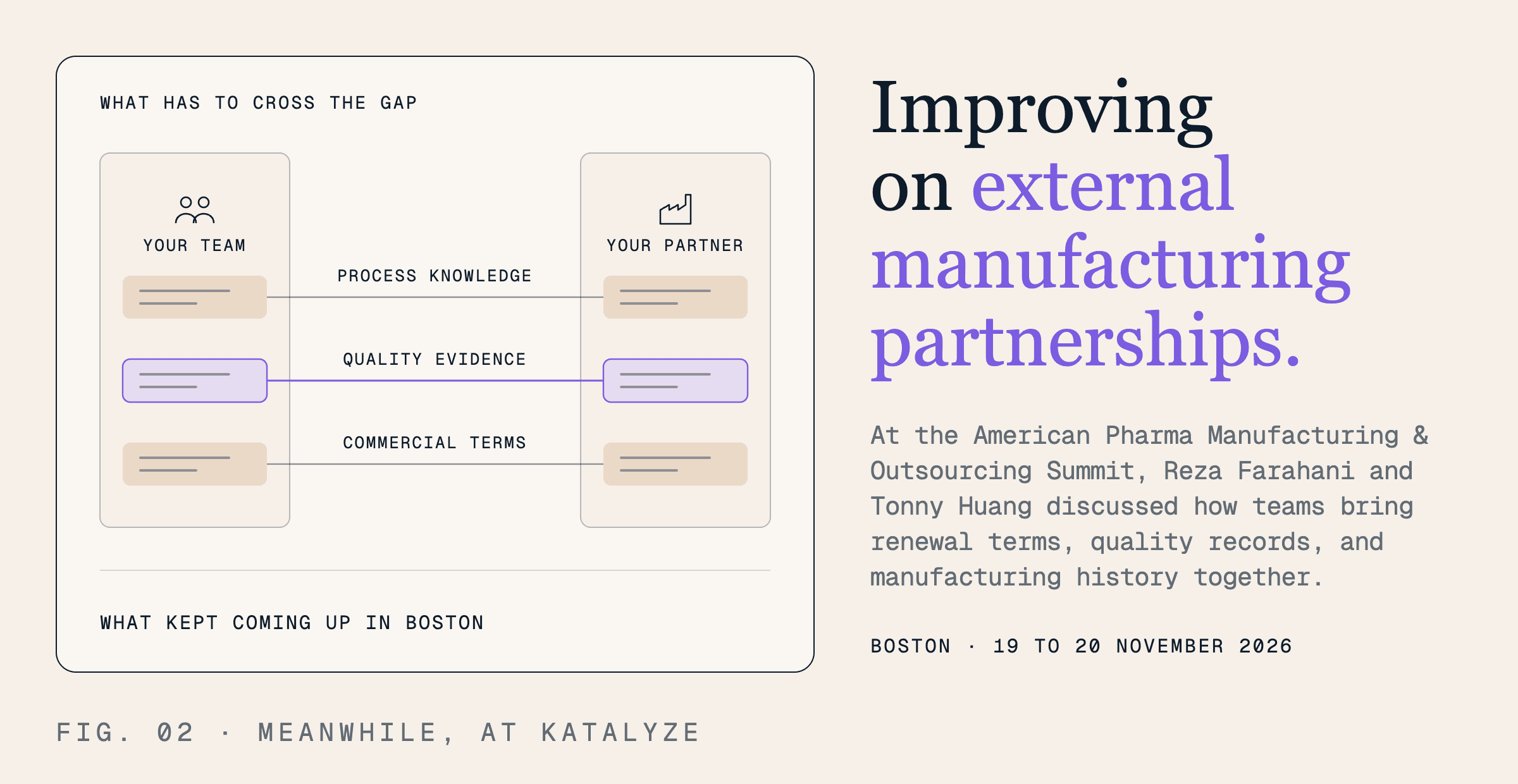
Conversations kept coming back to external manufacturing: how to keep process knowledge, quality evidence, and commercial terms connected across organizations that don't share systems. Our CEO and co-founder, Reza Farahani, spoke during the program, along with Tonny Huang, our Director of Deployment, to work through how teams can bring renewal terms, quality records, and manufacturing history together to answer questions about their manufacturing partnerships.
The Feature: Pharma's most famous crystal, and what we gained from it
In 1998, batches of an HIV medicine that had been in commercial production for two years began failing a routine quality test. The capsules were made from the same drug, but some of it had crystallized in an arrangement chemists had never seen.
The unexpected form
Ritonavir was an early HIV drug that kept the disease under control by blocking an enzyme it needed to produce infectious copies of itself. Used alongside other HIV medicines, it reduced the risk of AIDS-related illness and death in patients with advanced disease, making reliable access to the drug a matter of survival. Ritonavir's Early Clinical Benefit
The FDA approved ritonavir in March 1996, as capsules and an oral solution. Through development and the first two years of manufacture, Abbott's chemists had found only one crystal form of the drug substance, later called Form I. Their searches for alternatives had come up empty.
In 1998, several batches of the capsules failed dissolution testing, which checks how readily a medicine releases its drug into solution. Some ritonavir had crystallized inside the capsule fill, and the product no longer met its required performance standards.
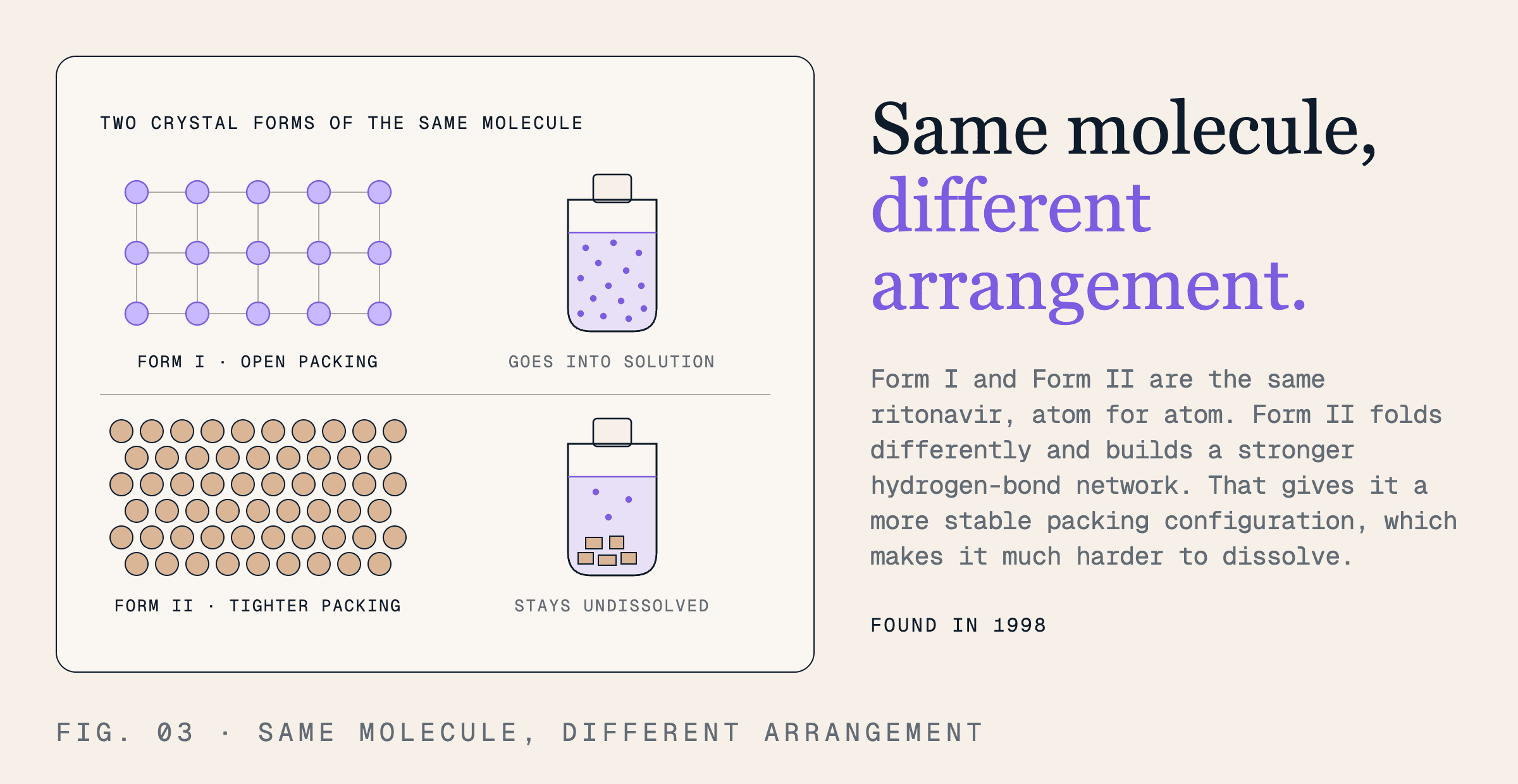
When Abbott's scientists examined those crystals, they identified a previously unknown crystallization form, called Form II. Molecules can pack into more than one repeating arrangement in a solid. These different crystal structures, called polymorphs, can have different physical properties even though their chemical composition is identical. In Form II, ritonavir folds differently and forms a more complete network of hydrogen bonds. The molecules hold together more strongly, making the crystal more stable and harder to dissolve.
The capsule's fill had been designed to hold ritonavir dissolved in a solvent mixture, close to the maximum concentration Form I could sustain. Form II could not sustain that same concentration: once it began growing, some of the dissolved drug precipitated into crystals. That explained the failed tests and the need for a different formulation. Abbott could no longer make the original capsules. FDA's Account Of The Capsule Failure
How Abbott restored capsule supply
Keeping Form II out of future batches was not straightforward. Tiny seed crystals could give further crystals a template to grow on, leaving the formulation vulnerable even after a batch was replaced. Abbott's scientists had to work out how much crystallization a capsule could tolerate and still deliver the drug reliably. John Bauer and colleagues described the investigation in Pharmaceutical Research in 2001. Bauer And Colleagues On Ritonavir Polymorphism
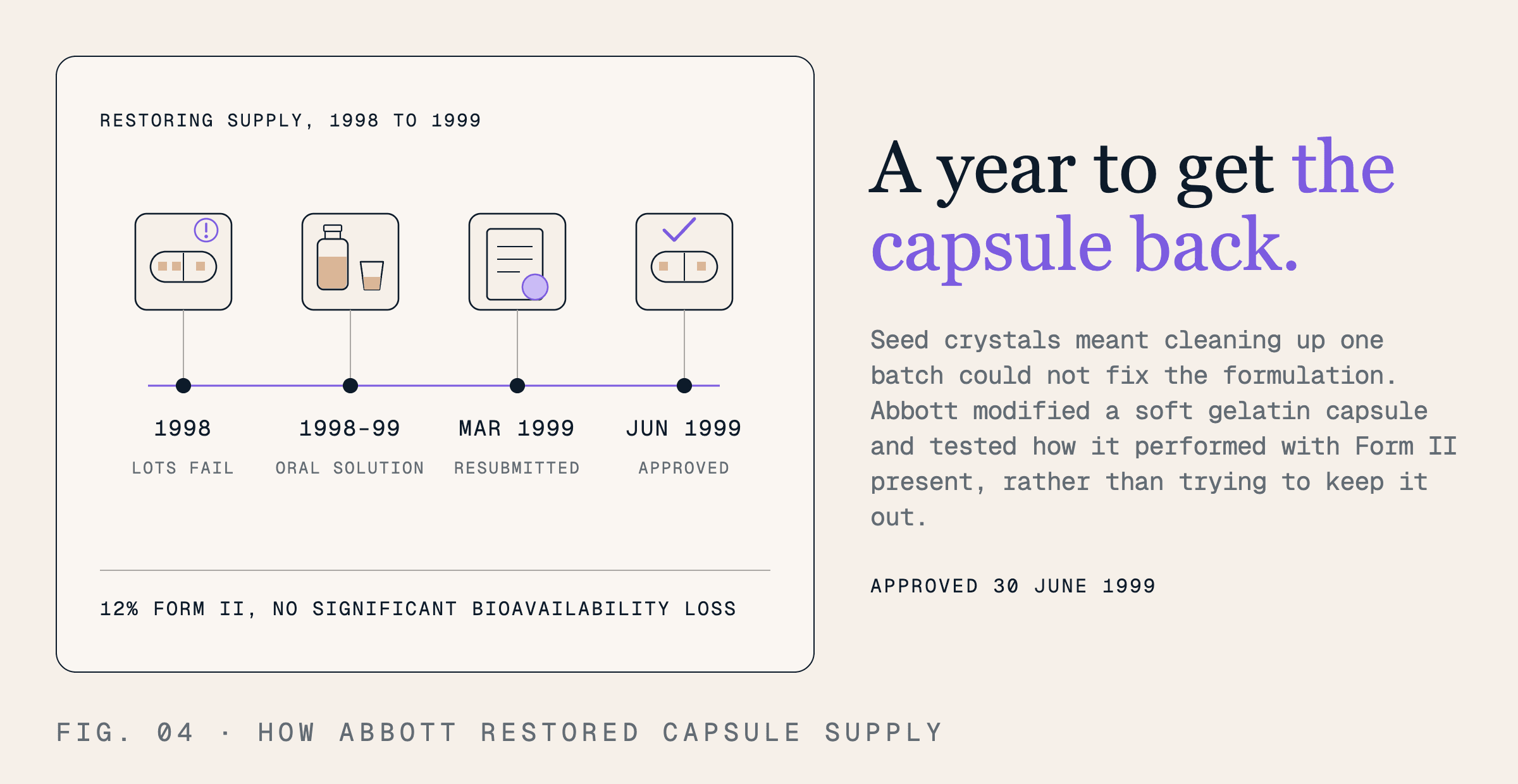
They eventually designed a modified soft gelatin capsule formulation and tested how it performed with Form II present. European regulators recorded no significant difference in the amount of drug available to the body, or bioavailability, between soft capsules with and without 12% Form II crystals. Abbott resubmitted in March 1999 and announced FDA approval on June 30. Patients who had relied on the oral solution during the interruption would have a capsule option again. European Assessment Of The Reformulation; Abbott's Approval Announcement
The revised capsule solved the immediate supply problem by tolerating some crystals. Over the following years, formulation scientists also developed tablets that held the drug in a disordered solid, making treatment easier to store and take.
Keeping the drug entirely uncrystallized
Dispersing a drug through a polymer can help keep its molecules from arranging into crystals, allowing it to dissolve more readily. This is called an amorphous solid dispersion, and it has the added benefit of, in this case, being stable at room temperature as a solid, rather than the solution-based predecessor which required refrigeration. To make these tablets, manufacturers heat and mix the drug with a polymer in a screw extruder. The process has to break up the crystal structure without degrading the drug, and the polymer has to help prevent crystals from forming again during storage and use. How Polymers Help Stabilize Amorphous Ritonavir
Abbott put that approach to work in Kaletra, a combination of ritonavir and a second HIV medicine, lopinavir. The new tablet, made with its Meltrex process and approved in 2005, replaced an earlier capsule containing both drugs. For adults taking the standard daily dose of Kaletra, six capsules became four tablets. The tablets could be taken with or without food and required no refrigeration, making them easier to distribute to clinics and store at home. Kaletra's Tablet Approval
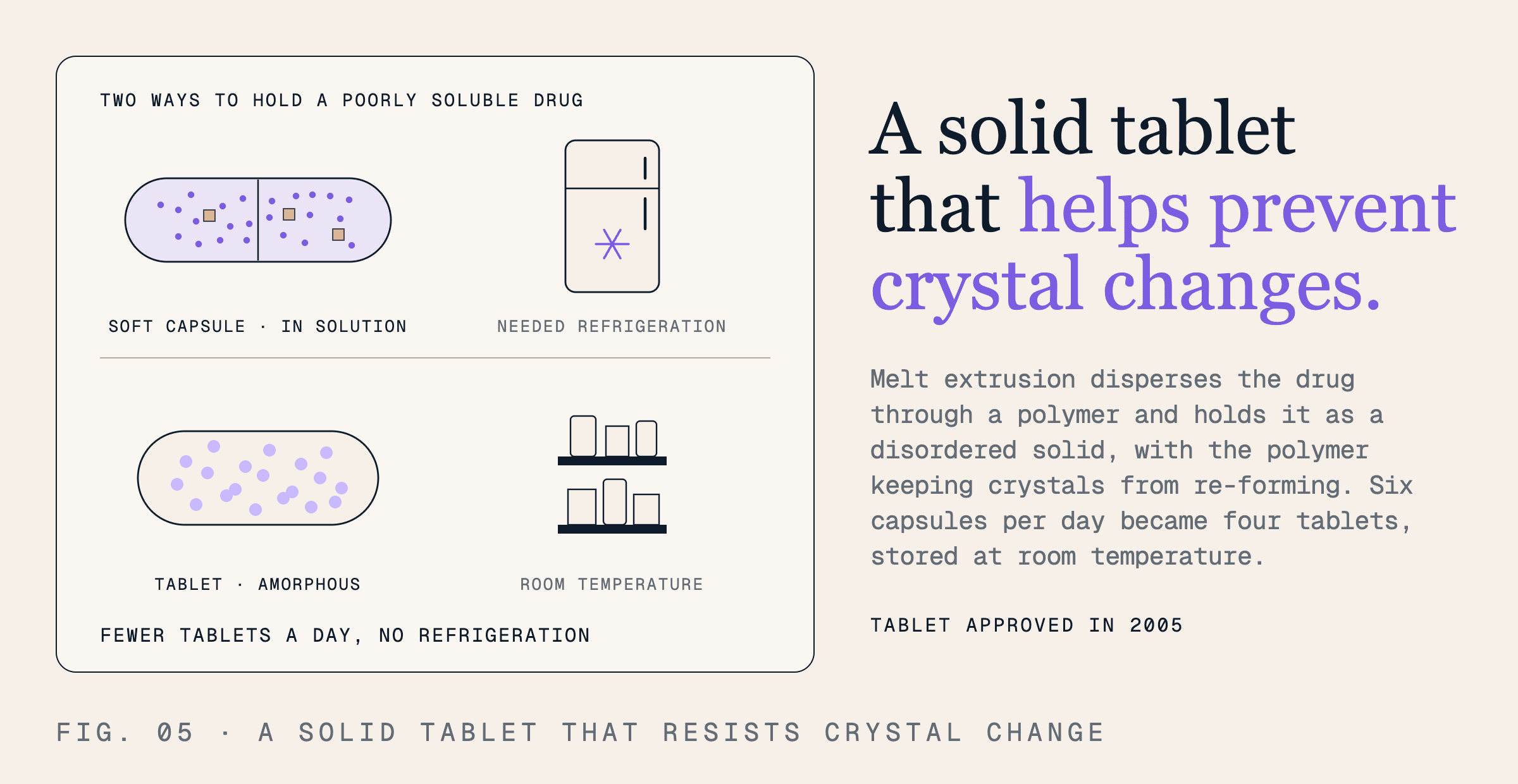
A ritonavir-only tablet followed in 2010, using similar hot melt extrusion technology. Formulation scientists had made the medicines more practical to store and take while preserving delivery of their active ingredients. Maintaining that performance required careful manufacturing and stability testing, because it is possible for amorphous drugs to re-crystallize. Why Seed Crystals Still Matter
Improving drug stability pre-launch
Alongside the work on formulations, the capsule crisis reinforced the need to look for troublesome crystal forms earlier, during drug development. Finding one before patients depend on a product gives teams time to choose a formulation and manufacturing process that can accommodate it. The international guideline on specifications for new chemical drug substances and products, ICH Q6A, describes how to investigate different solid forms and decide whether their properties affect safety, performance, or efficacy. That assessment helps determine what manufacturers should test and control. ICH Q6A's Approach To Polymorphism
Modern tools have made that search much easier. In a high-throughput screen, researchers run many crystallization conditions in parallel using small amounts of drug. One ritonavir study ran roughly 2,000 experiments, producing Form II along with three additional solid forms: another polymorph and two forms that incorporate water or solvent into their structures. Later work crystallizing ritonavir from cooled melts identified another polymorph, now called Form III, more than two decades after Form II appeared. High-Throughput Crystallization Of Ritonavir; Finding Form III From The Melt
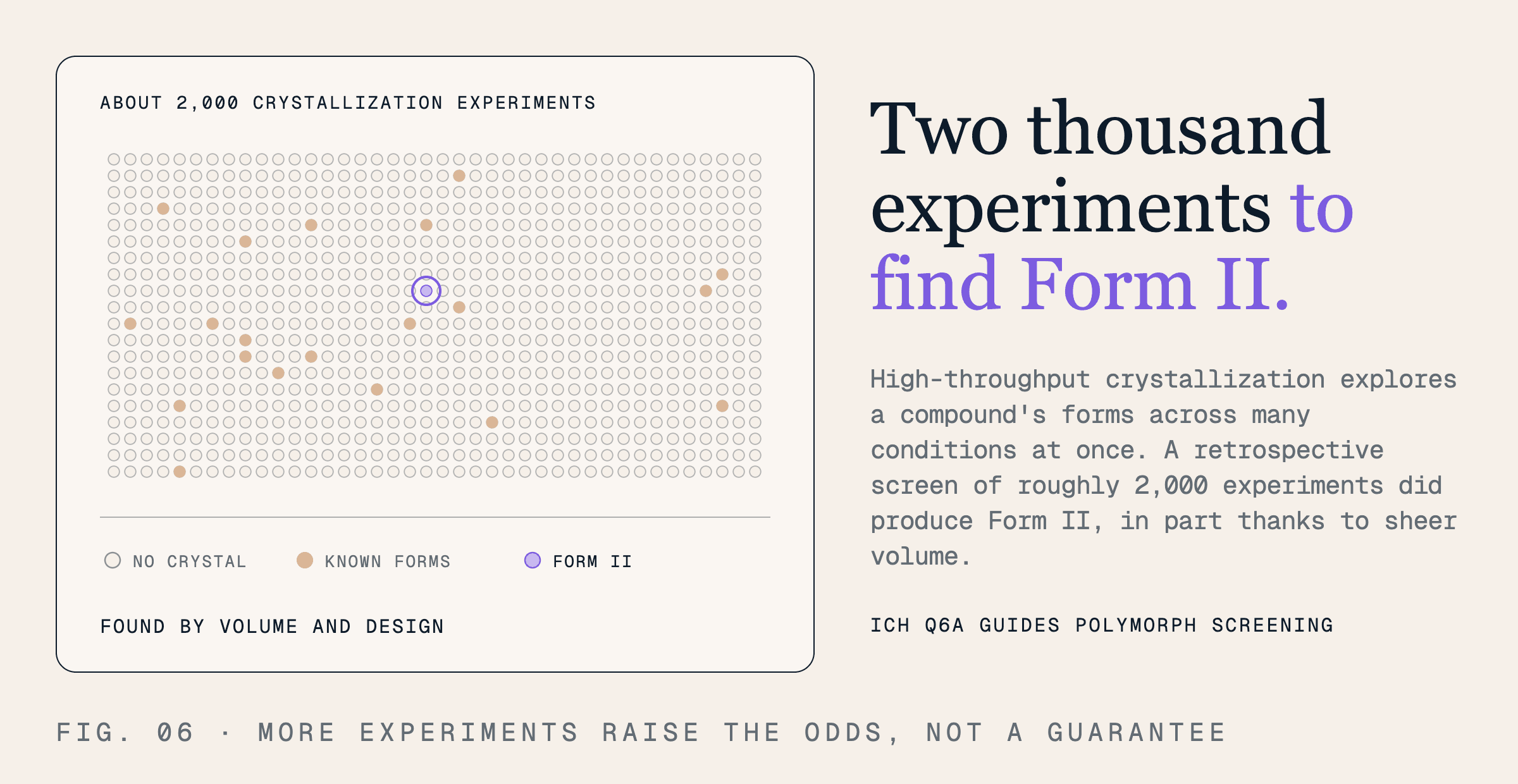
These examples demonstrate that while more advanced laboratory screens can reveal some forms, they cannot establish that no others exist. We’ve come a long way towards predicting these changes, though, in part thanks to the well-documented experiments from the past. Capsule and tablet drugs that are made today have a much higher chance of avoiding a manufacturing halt like ritonavir, precisely thanks to everything we learned from it.
Could we see the next one coming?
In December 2025, researchers at Merck and ELDICO Scientific published a retrospective study of ritonavir in Communications Chemistry. Using a computational method called crystal structure prediction, they generated possible crystal arrangements and ranked their stability. They asked whether those results could have warned a formulation team about Form II before it appeared in production.
The structure matching Form II ranked as the most stable arrangement generated at room temperature. Its calculated advantage over Form I implied roughly half the solubility. For a team preparing a nearly saturated capsule fill, that would have been a warning to investigate further. The authors argue that the calculation could have directed laboratory experiments toward the missing form or prompted a formulation that could tolerate its lower solubility, potentially averting the crisis. Revisiting The Ritonavir Crisis With Crystal Structure Prediction

The study shows what current calculations can reveal about a known case. The search is imperfect: it excluded more complex crystal structures, including the Form III model the authors considered most representative. Hands-on laboratory screening remains essential, even when a calculation offers reassurance.
The gain is the chance to make decisions earlier: which crystallization experiments to run, how close to saturation to formulate, and what changes a product must tolerate through manufacture and storage. Abbott's scientists and production teams had to answer those questions while capsule supply was actively interrupted. Today's teams have more tools to investigate them during development. Their work can mean fewer daily pills, simpler storage, and a medicine patients can keep relying on, batch after batch.
Something Good
Listening to wild turkeys with AI to help protect them
Wild turkeys disappeared from Nebraska around 1915. Managers successfully reintroduced them in 1959, hunting resumed in 1962, and the population grew for decades. Since peaking between 2008 and 2010, it has fallen by roughly half. Researchers are listening for clues to that decline. Listening To Turkeys For Conservation

Robyn Dausener and colleagues at the University of Nebraska-Lincoln used automatic recorders across two regions of western Nebraska to capture gobbling over three springs, from 2023 to 2025. The recordings span pine forests, canyons, and agricultural land. Machine learning helps pick gobbles out of tens of thousands of hours of audio, turning a daunting listening task into a record of when the birds are calling. Nebraska's Wild Turkey Project
Gobbling offers clues to breeding activity. Dausener's master's research compared it with nesting timing, hunting pressure, weather, and moon phase. The findings suggest that hunting overlaps important breeding activity and give managers a reason to examine hunting season timing.
The Nebraska Game and Parks Commission considered the gobbling results alongside dispersal and nesting data and delayed the 2027 spring hunting season by a week. A National Wild Turkey Federation grant will support two more springs of recording to assess what happens next. For wildlife managers, continued recording offers a way to help the turkey population stabilize, without halting tradition.
The Katalyze Marketing Team