Skip to content
Katalyze announces $10.5M seed round. Read the press release
The platform

The knowledge is on record. Katalyze puts it to work.

Documents and systems become source-grounded context. Governed agents do the assembly. Your experts focus on the science.

Why it is hard

Putting operational knowledge to work is harder than it looks.

The knowledge is on record: batch records, COAs, deviation reports and the systems around them. Finding it, reconciling what the records say and assembling the evidence to begin is expert work that takes weeks, and it has to hold up in an audit. Katalyze handles the layers underneath, so your scientists put their expertise into the question and the decision, not the assembly.

Documents and systemsBatch records · COAs · SAP · Veeva Vault · PubMedContext LayerOntology · Knowledge Graph · lineage to every sourceAgentic SolutionsDeviation Investigation · Yield Optimization · Tech TransferExpert reviewApproval · execution record · audit trail
Your team keeps
  • The questions worth asking
  • The terms your operation uses
  • Review and approval
  • Every decision
Katalyze handles
  • Reading records, handwriting included
  • Connecting systems without moving data
  • The Ontology and the Knowledge Graph
  • Lineage to every source
  • Evidence assembly
  • Drafting outputs for review
  • Execution records
  • Access control
01 Connect

Connect the records and systems the work depends on.

Batch records, COAs and lab reports arrive as paper, scans and PDFs, from your own sites and from suppliers, CROs and CDMOs; the rest of the picture sits in five systems. Document Intelligence reads the text, the tables, the handwriting and the margin notes into structured data that keeps its place on the page. Connectors bring in system data, scientific datasets and research sources without moving them; your systems remain the source of truth. Your experts start from the data instead of the re-keying.

Explore Document Intelligence
One extracted value keeps its page, table, field or note, so a reviewer can follow any value back to the record it came from.

Document Intelligence · BR-0412
Source-linked
Feed lot2231-BExtracted · 1 correction read
  1. Batch record BR-0412paper · 12 pages · read by Document Intelligence
  2. Feeding record, section 6feed 1 · feed lot
  3. Handwritten entry2231-B · the corrected value, not the struck one
  4. Correctionsingle line · initials AM · 2026-03-05
  5. ReviewedKS · 2026-03-18 · no further corrections
02 Contextualize

Contextualize with an Ontology and a Knowledge Graph your operation recognizes.

Connected is not the same as understood. A customer-specific Ontology defines how your operation names and relates its concepts, and a Knowledge Graph built on it connects lots, materials, samples, equipment and deviations around each batch, with a path back to every source. That is the Context Layer, and every solution runs on it, so the next question starts with context already established.

Explore the Context Layer

One batch and everything on record about it: the feed addition from the feeding record, the lot from SAP, the harvest titer from Snowflake, the deviation from Veeva Vault, each with its path back to the source.

BatchBR-0412P-14 · fed-batch culture · March 2026
Feed 3, recorded11:40 · planned 09:00
Feed lot 2231-Bcell-culture feed · supplier
Harvest titerlower · against the comparison set
Certificate 0091feed lot 2231-B · supplier
Deviation DV-0088open · feed addition later than planned
Feeding recordpaper · Document Intelligence
SAPmaterial master · connector
Snowflakeharvest results · connector
Supplier certificatePDF · Document Intelligence
Veeva Vaultdeviation record · connector
03 Work

Work one defined job at a time, with the evidence to show for it.

An investigation is weeks of assembly before anyone can think. Agentic Solutions do the assembly inside a governed workflow: they establish ground truth by querying the Context Layer and validating it against source evidence, investigate by testing hypotheses against the data, and draft evidence-backed outputs for review. Your experts direct the work, challenge the findings and decide what comes next, so the weeks go into the question instead of the assembly. Deviation Investigation, Yield Optimization, Raw Material Characterization and Tech Transfer run on the same platform today. App Studio gives your teams dashboards and applications on the same connected information.

Explore Agentic Solutions

The evidence for deviation DV-0088 in order, becoming a cited draft; every line carries its source, and the draft goes to a person.

Deviation Investigation · DV-0088
Draft 1 · for review
Evidence, in order
  1. 01Feed timingInvestigateFeeding records · BR-0412 · BR-0421
  2. 02Feed-lot variationCompareMaterial record · lot 2231-B · BR-0412 · BR-0415 · BR-0421
  3. 03Analytical contextReviewHarvest results · sampling and method
Draft findings, cited

BR-0412 and BR-0421: lower harvest titer, and a feed addition later than planned.1

Lot 2231-B: shared by both, and by BR-0415, fed as planned and comparable.2

Sampling stage and analytical method: checked before the comparison is read further.3

For review · J. M.Open the execution record
04 Control

Control every source, every run, every decision.

If it cannot be traced, it cannot be used. Agents are constrained to approved sources and tools; every result keeps its lineage; every run is recorded with an owner; missing or uncertain information is surfaced instead of passing silently. Your scientists retain review and approval authority over every decision, so a result can be inspected, verified against the evidence, and used within a validated process. Your quality team puts its attention on the difficult findings, not on reconstructing how a result was produced.

Hear from Customers

A reviewer challenges the draft's finding and sends it back revised; the execution record keeps the owner and the time.

Review · DV-0088 · draft 1
1 to resolve
Flagged, not assumedComposition data for feed lot 2231-B is not in the review set. The draft says so and does not read the lot as the cause.Certificate 0091 · lot 2231-B · Document Intelligence
J. M.MSAT lead · 10:09Don't call the lot the cause. Compare feed timing across all three batches that used it.
Revised · J. M. · 10:12:36Execution record updated · draft 2 for review · owner recorded
Built for regulated work

Traceable results your teams can verify. Experts in control.

Katalyze performs operational work against approved sources, within defined workflows, and records every run, so a regulated team can verify what was done and why, and put the result to use. Built for GxP environments; it supports validated GxP processes.

How compliance works
  • Approved sourcesAgents are constrained to the right data and tools, and nothing else.
  • Uncertainty surfacedMissing or uncertain information is surfaced instead of passing silently.
  • Source lineageEvery result keeps its path back to the original record, table, field or note.
  • Expert approvalYour scientists retain review and approval authority over every decision.
  • Execution recordsEach run is recorded and has an owner.
  • Access controlAccess is controlled, and every action is recorded.
A floral macro, orange petals against blue
  • SharePoint
  • Veeva Vault
  • Outlook / Microsoft Graph
  • SFTP
  • Amazon S3
  • Amazon Redshift
  • Snowflake
  • SAP
  • REST API and webhooks
  • PostgreSQL
  • PubMed
  • ScienceDirect
  • Neo4j
  • Cytiva
  • BASF
Connectors

Connects to the systems you already run.

Your systems stay where they are and remain the source of truth. Connectors read, move or publish; Document Intelligence covers the paper records, PDFs and spreadsheets no system holds. Nothing is migrated.

The connector directory
15 connectors today
One deviation, two ways

The same investigation, by hand and as a governed run.

DV-0088: lower harvest titer on batch BR-0412, and a feed addition recorded later than planned. On the left, the work as it is usually done. On the right, the same work performed within a governed workflow and recorded step by step, with your experts reviewing the evidence and deciding the response.

Book a Demo
By hand
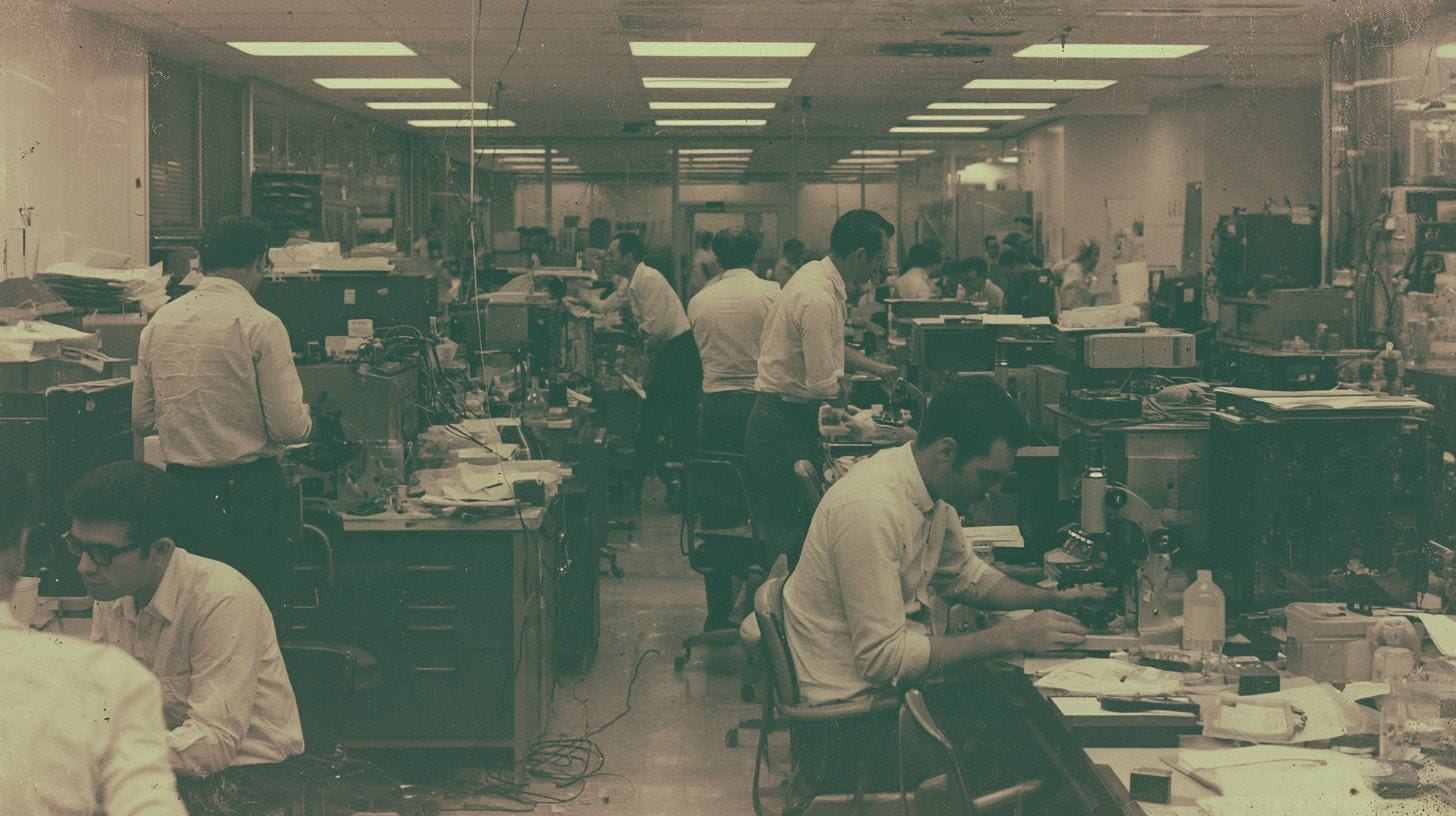
A mid-century laboratory floor: men in white shirts at crowded benches, instruments and paper everywhere
  1. 01Pull the feeding records for every batch that used lot 2231-B
  2. 02Request the feed certificate from the supplier and wait for the PDF
  3. 03Re-key the values into a spreadsheet, page by page
  4. 04Reconcile them against the SAP lot data
  5. 05Open the deviation record in Veeva and chase the harvest results
  6. 06Draft the findings and the follow-up
  7. 07Route it for review; start again when a value turns out wrong
With Katalyze - Deviation Investigations in Half the Time
A modern laboratory behind glass: four scientists at work, one pipetting, one reading batch data on a screen, two reviewing a tablet by the window
Execution record · run 2026-03-18-0412
Recorded
  1. 09:41:02Sources approvedBatch records BR-0410 to BR-0421 · Veeva Vault · SAP · Snowflake4 sources
  2. 09:41:19Evidence assembled12 batch records read, 3 systems queried, every value keeps its lineageLineage kept
  3. 09:43:05Uncertainty surfacedComposition data for feed lot 2231-B is not in the review set; flagged, not assumed1 flagged
  4. 09:44:40Draft preparedInvestigation documentation: the possible explanations in order, the evidence behind each, the follow-up proposedDraft
  5. 10:12:36ReviewedJ. M., MSAT lead · comment on explanation 02 · draft revisedRevised
Where to start

Start with one job.

Document Intelligence turns the records into source-linked data; each Agentic Solution performs one defined operational job within a governed workflow. Whichever comes first, the context it builds gives the next a head start.

All solutions
  1. 01Document IntelligenceTurns records from suppliers, CROs, CDMOs and your labs into contextualized, source-linked data.Explore
  2. 02Deviation InvestigationAssemble and validate the evidence behind possible causes; your experts determine the cause and the response.Explore
  3. 03Yield OptimizationConnect recipes, process and material data to investigate yield; your experts decide what the findings mean.Explore
  4. 04Raw Material CharacterizationConnect material, supplier and scientific information to investigate variability; your experts judge what matters for the process.Explore
  5. 05Tech TransferAssemble process knowledge and evidence into transfer documentation and plans; your experts focus on the open questions.Explore
FAQ

Questions about the platform.

How it works with the systems you run, what it does day to day, and where your data lives. The full set of answers is in the FAQ.

All questions and answers
The mission

More medicine to more patients.

Our goal is to cut the time and cost of bringing a new lifesaving drug to market in half by 2030. Katalyze puts operational knowledge to work and frees your experts to advance the science, so more medicine can reach the people who need it.