Edition 008
13,000 kgs in, 1 kg out: the manufacturing feat behind the GLP-1 boom

Welcome to Highly Regulated 008, from Katalyze
Welcome back to Highly Regulated. Last week, we followed a reaction in horseshoe crab blood from a frustrating laboratory observation to a contamination test that helps protect injectable medicines. This week we stay on the factory floor and look at what it takes to make the peptide medicines millions of people now use.
Assembling peptides can take substantial amounts of material. In an industry study, the process averaged roughly 13,000 kilograms of input per kilogram of active ingredient. This week's feature follows the chemistry behind that number, the different routes to get there, and Samsung's proposed blockbuster acquisition of a peptide manufacturer.
We'll end with Something Good: a lower price for malaria vaccines that could help protect up to one million more children.
First, a few things worth your attention from around the industry.
Zack Holland and Alyse Gonthier, PhD from Katalyze
Worth Your Time
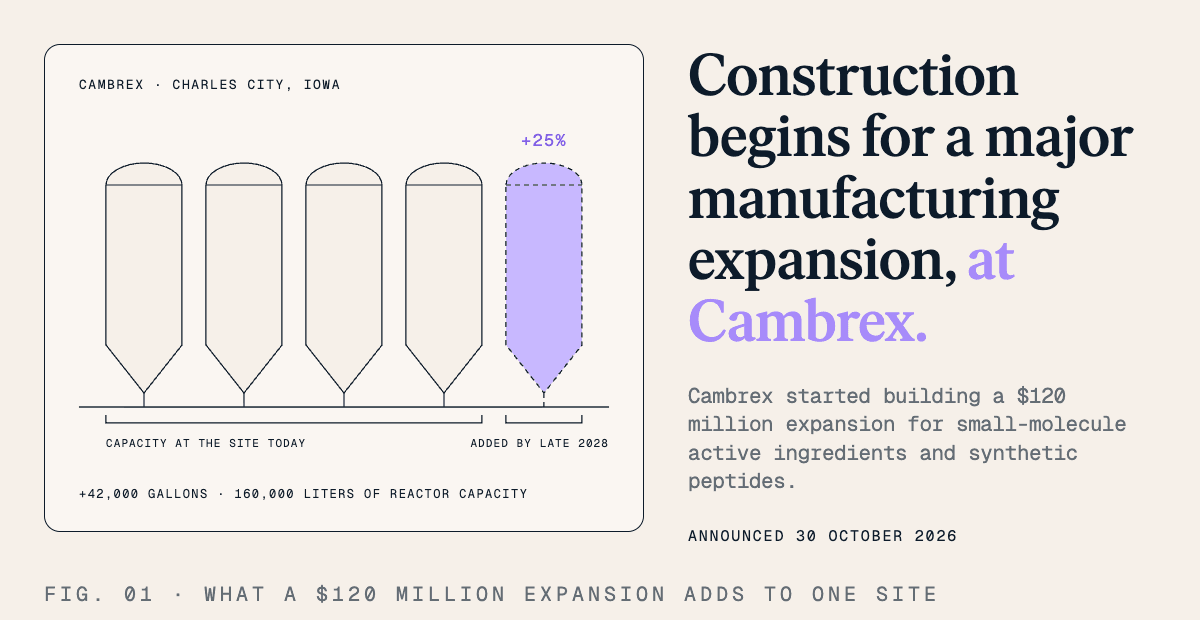
- Cambrex starts a $120 million drug-manufacturing expansion in Iowa. Growing U.S. drug production takes additional factories and equipment. Cambrex marked the start of construction on October 30 for a $120 million expansion at its Charles City, Iowa, facility. The project will add approximately 42,000 gallons of manufacturing capacity for small-molecule active ingredients and synthetic peptides. Cambrex expects the expansion to increase the site's capacity by approximately 25%, with completion anticipated in late 2028. It’s a concrete addition to the domestic manufacturing infrastructure needed to take medicines from development into commercial supply. Cambrex's Iowa Expansion
- Pfizer is hiring a director to oversee data quality for its hospital and biosimilars business AI applications depend on data that people and machines can interpret consistently. Pfizer is recruiting a Director for AI-Ready Data Foundation & Governance, within its Global Hospital & Biosimilars (GH&B) business. The role connects manufacturing, supply, commercial, and pricing data, owns a data warehouse, and establishes shared definitions and automated quality checks. It’s a concrete opportunity to build the data foundation behind operational decisions and AI. Pfizer's Director Job Listing
- AbbVie licenses Nxera's experimental IBD pill for $100 million upfront. Many people with inflammatory bowel disease (IBD) still struggle to achieve lasting disease control. On November 4, AbbVie agreed to license worldwide rights to Nxera's experimental oral drug NXE0033744, which is designed to act locally in the gut to reduce inflammation and support the intestinal barrier. The program has completed Phase 1 testing. Nxera will receive $100 million upfront and could receive up to $1.37 billion more in development and commercial milestones, plus royalties. The agreement funds further testing of a different approach to a disease where patients still need more options. AbbVie and Nxera Licensing Agreement
- Dren Bio raises $350 million to advance its blood cancer antibody toward commercialization Developing an antibody into a medicine requires funding beyond its earliest clinical studies. On October 29, Dren Bio closed a $350 million private financing co-led by Juvia Group and Lightspeed Venture Partners. The proceeds will support further development, regulatory submission, and a planned commercial launch of dibotatug, its lead investigational antibody. Its most advanced studies involve two rare blood cancers: cytotoxic T-cell lymphoma and large granular lymphocytic leukemia. Funding will also support additional uses and the broader pipeline. Dren Bio's Financing Announcement
- Novartis' oral MS drug reduces relapses in two Phase 3 trials Multiple sclerosis (MS) treatments aim to prevent relapses and preserve function. On October 23, Novartis reported that its oral drug remibrutinib reduced annualized relapse rates by 35.2% and 31.2% compared with teriflunomide in two Phase 3 trials. MRI measures of disease activity also improved. The drug blocks an enzyme involved in immune-cell signaling, called Bruton's tyrosine kinase. Novartis plans to seek approval for relapsing MS. The relapse results provide encouraging evidence for another oral treatment option, while disability-progression findings require more cautious interpretation. The company describes roughly one relapse every thirteen years as an extrapolation from annualized rates, rather than thirteen years of patient follow-up. Novartis' Phase 3 MS Results
Meanwhile, at Katalyze
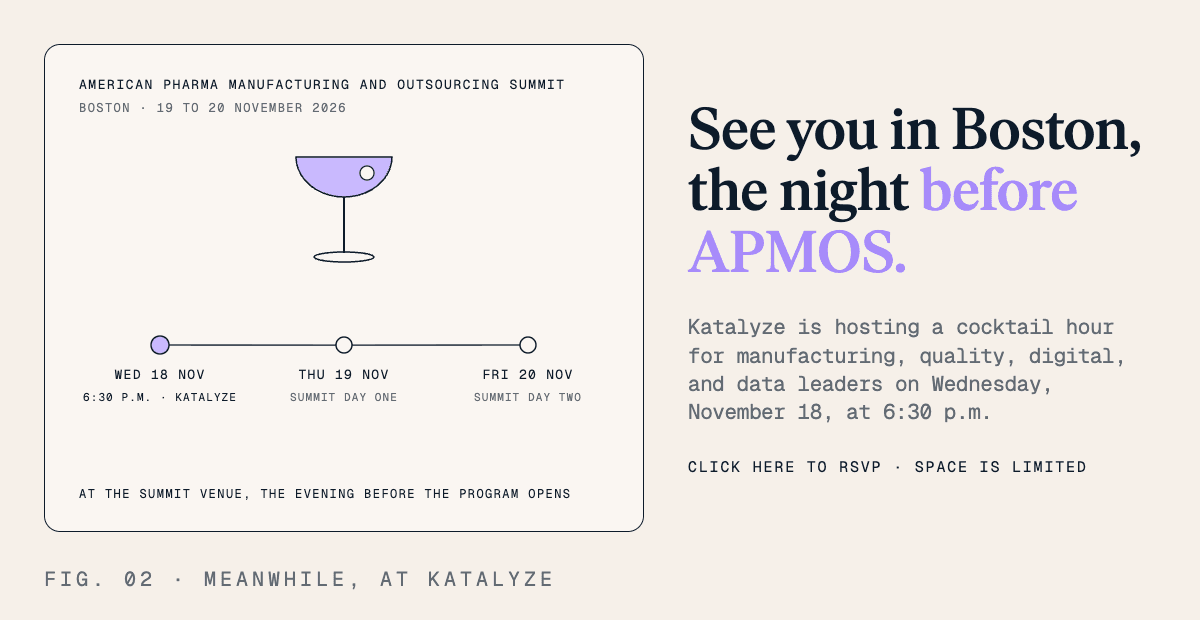
Join us for cocktails in Boston the night before APMOS
The American Pharma Manufacturing and Outsourcing Summit (APMOS) takes place in Boston on November 19 and 20. Join Katalyze for cocktails at the summit venue the evening before, on Wednesday, November 18, at 6:30 p.m.
We're bringing together senior leaders in manufacturing, technical operations, quality, digital, IT, and data from pharma, biotech, and contract manufacturing companies. It's a chance to meet fellow attendees before the formal program begins, over cocktails, food, and a few Katalyze surprises.
Space is limited, and registrations are subject to approval. Please RSVP here in advance; Luma will send the venue details once your registration is approved. Colleagues are welcome to register through the same link.
The Feature: 13,000 kgs in, 1 kg out: the manufacturing feat behind the GLP-1 boom
A polymer bead and the beginning of reliable peptide synthesis
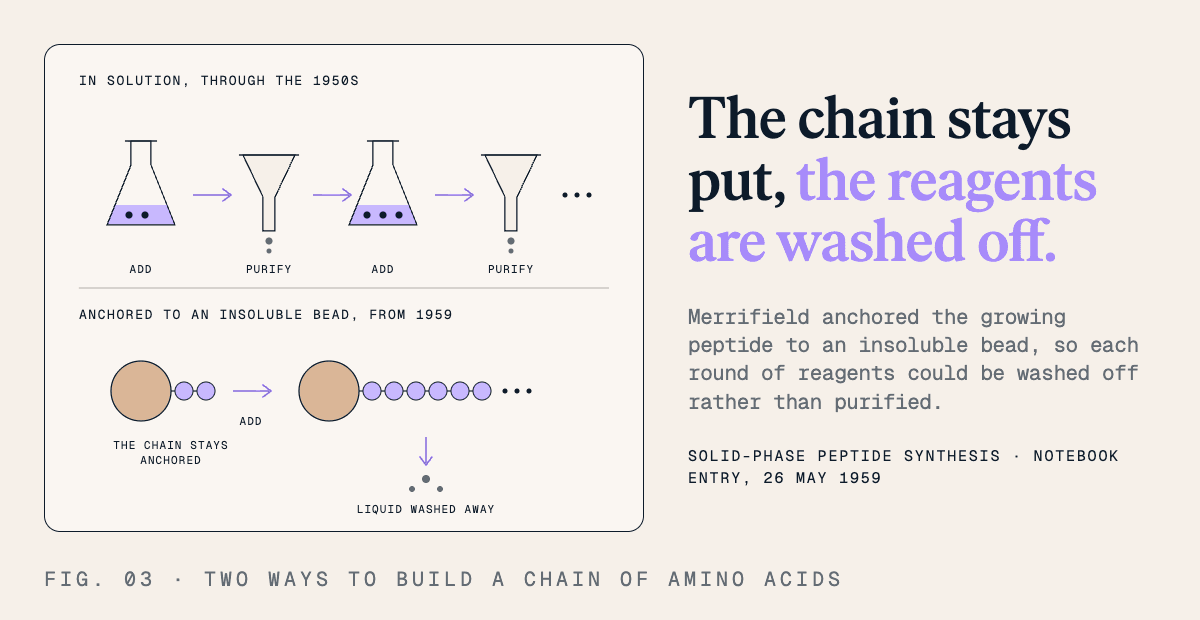
A peptide, despite its modern buzz-word connotation, is simply any chain of amino acids. Their synthesis is anything but simple. Through the 1950s, chemists commonly built those chains in solution, separating and purifying intermediates as the synthesis progressed. The process could be painstaking: Bruce Merrifield recalled spending eleven months making a five-amino-acid peptide, with an overall yield of only 7%. Merrifield's Early Peptide Work
On May 26, 1959, he recorded a different approach in his notebook. Anchor the growing chain to an insoluble support, a small polymeric bead, then wash excess reagents and byproducts away before adding the next amino acid. The chemistry still had to hold up at each step, but the chain could stay attached while the surrounding liquid was removed. That changed how chemists separated their product from the reaction mixture. American Peptide Society
In 1963, Merrifield published the synthesis of a four-amino-acid peptide using the method now known as solid-phase peptide synthesis (SPPS). It helped make both the synthesis of longer chains and automated synthesis practical, earning him the Nobel Prize in Chemistry in 1984. His achievement made a difficult chemistry more reliable and repeatable, so that many more peptides could be made and studied. Merrifield's Nobel Prize
The cost of repeated washing at scale
Keeping the chain on a bead makes it easier to separate from the reaction mixture, but each addition still takes work. Chemists use temporary chemical caps to keep reactions happening in the right places, remove selected caps before the next addition, and wash away leftover chemicals between steps. Once the chain is complete, they must also separate it from shorter or slightly altered chains made along the way.
In 2024, fourteen companies published data on forty synthetic peptide processes, from early development to commercial production. They counted the materials needed to make a given amount of active drug ingredient, including solvents and water. This measure, called process mass intensity, gives the repeated reactions, washes, and purification steps a common unit: kilograms in for each kilogram out. Process Mass Intensity Study
Across fourteen processes used in commercial production or the final stage of clinical trials, the average was 13,063 kilograms of material for every kilogram of active ingredient. Individual processes ranged from 1,684 to 34,585 kilograms. Much of that material went into assembling the chains and purifying the result.
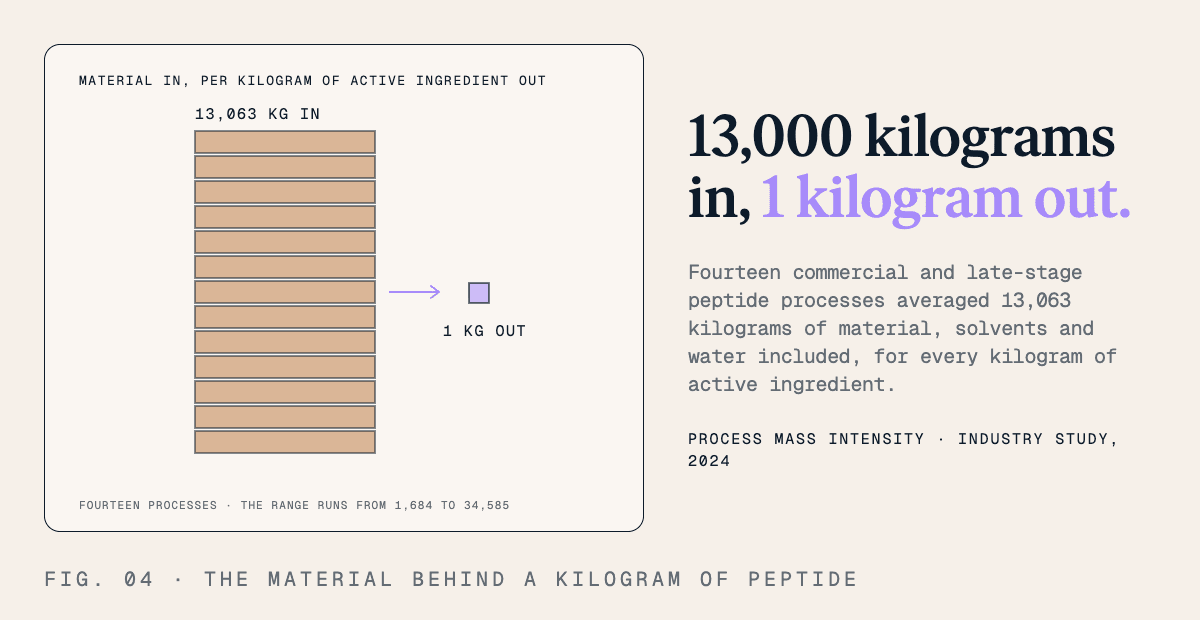
While we can’t assign those values to a particular GLP-1 drug for proprietary reasons, that ratio does show the scale of material use in the synthetic peptide manufacturing methods that help supply this market. The count also starts after the amino-acid building blocks themselves have been made, leaving an additional part of the manufacturing work outside the calculation.
Water and solvents each accounted for roughly 44% of the material used. That helps explain how a kilogram of medicine can require so much input: most of the mass supports the chemistry and separation steps, rather than becoming part of the drug. Reducing those requirements is a substantial opportunity, although material use alone does not capture every cost. Journal of Organic Chemistry
How semaglutide and tirzepatide are made
The medicines at the center of the GLP-1 boom also demonstrate that there’s no single recipe for making a peptide. Semaglutide and tirzepatide both treat diabetes and help people manage their weight, but their published manufacturing routes take different approaches to building the chain.
Semaglutide, sold as Ozempic and Wegovy, mimics a hormone that helps regulate appetite and blood sugar: glucagon-like peptide-1, or GLP-1. In Novo Nordisk's original manufacturing process, engineered yeast makes a starting version of the peptide. Manufacturers recover that chain, chemically modify it, and purify the finished ingredient. Cells do much of the chain-building work that Merrifield's method accomplishes through repeated chemical reactions. European Medicines Agency
Tirzepatide, sold as Mounjaro and Zepbound, acts on the GLP-1 receptor and a second hormone receptor. Its chain contains 39 amino acids and carries a fatty side chain. In Lilly's published kilogram-scale process, chemists build shorter peptide fragments on a solid support, then join them in solution. They also use controlled flows of material, measurements taken during production, and fine membranes to help run reactions and separate intermediate products. The result combines Merrifield's approach with other tools suited to making a larger peptide at scale. Organic Process Research & Development
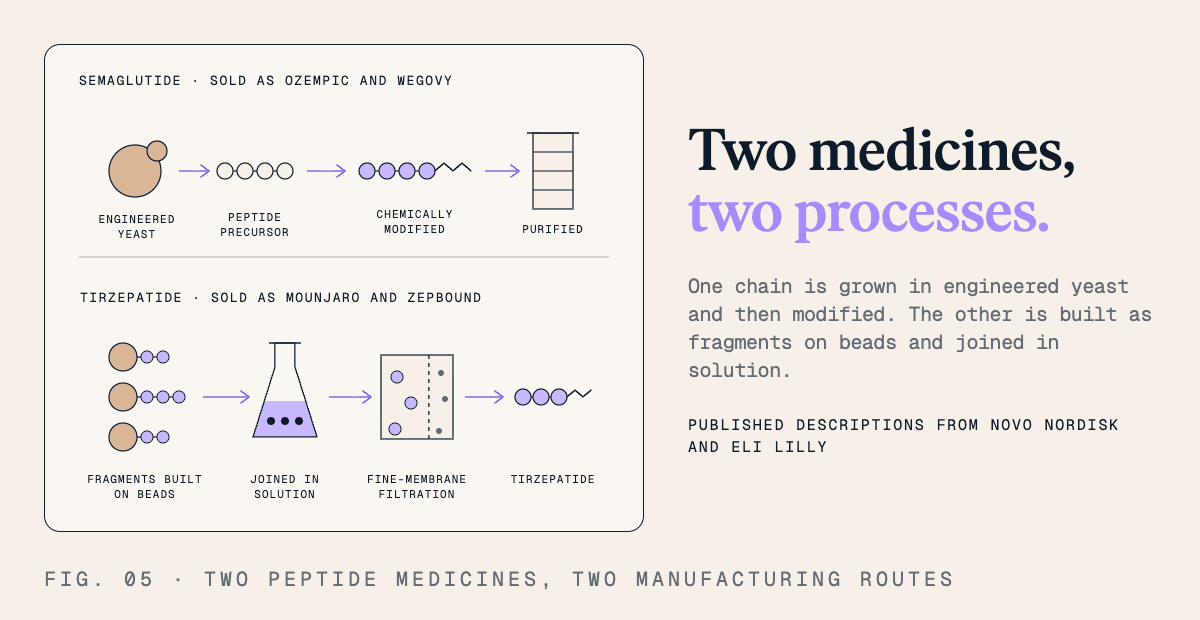
Each route creates its own manufacturing challenges. Growing a starting peptide in yeast requires fermentation and recovery; assembling fragments chemically requires repeated reactions and separations. In either case, a successful process must deliver the right molecule at the required purity, batch after batch. The route determines what equipment, materials, and expertise a manufacturer needs to do that.
Samsung's investment in peptide manufacturing
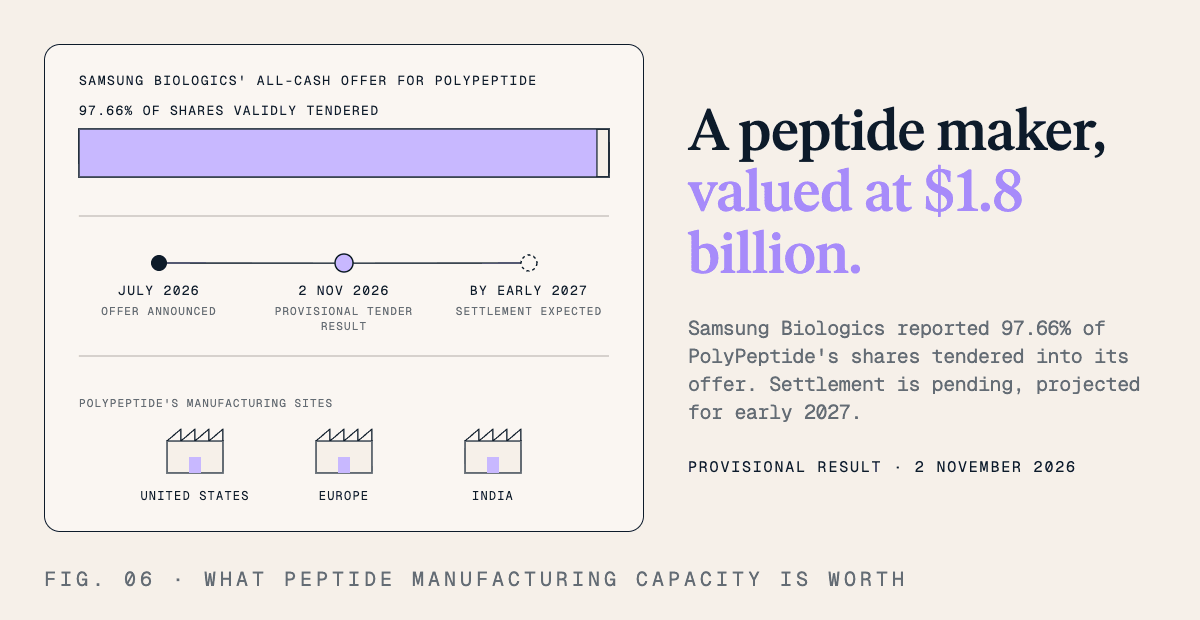
The value of that expertise is visible in Samsung Biologics' offer to acquire PolyPeptide, a leading global CDMO. On November 2, Samsung reported that shareholders had tendered 97.66% of PolyPeptide's issued shares into the offer. Completion was still subject to the offer conditions, with the deal expected to close toward the end of 2026 or in Q1 of 2027. Samsung Biologics
Announced in July, the offer valued PolyPeptide's equity at about $1.8 billion. The acquisition would bring Samsung peptide manufacturing sites across the United States, Europe, and India, along with the teams that know how to operate them. As demand for GLP-1 medicines grows, that combination of facilities and experience gives manufacturers a way to expand production. Samsung Biologics; Yonhap
Building more capacity is one part of the task. Improving the processes inside those facilities can also help manufacturers get more medicine from the equipment and materials they already use.
Three ways to expand supply
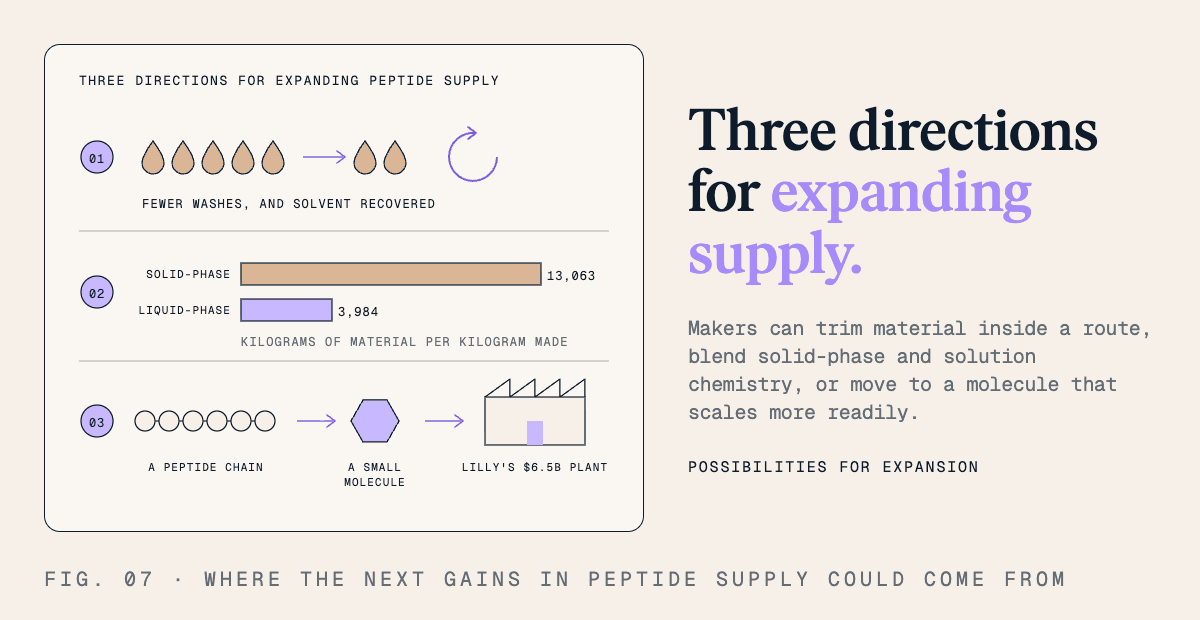
Some improvements begin with the existing recipe. Others change how a peptide is assembled, or use a different kind of molecule to achieve a similar therapeutic effect.
The first improvement option is to make each step more efficient. A wash that uses less solvent, a reaction that needs less excess reagent, or a separation that recovers more of the desired peptide can reduce the materials needed per kilogram of product. Recovering solvents for reuse can help, too. These changes require careful testing because a more efficient process still has to meet the same standards for purity and quality.
The second path is to choose where each part of the chemistry happens, as Lilly did by building tirzepatide fragments on a support and joining them in solution. In the industry study, four processes carried out in liquid solution averaged 3,984 kilograms of input per kilogram of active ingredient, about 30% of the commercial and late-stage solid-phase average. Those processes generally made shorter peptides and were at different stages of development, so the figures don’t yet predict the savings from changing a particular drug's recipe. They do give chemists a reason to investigate which approach best suits each molecule. Journal of Organic Chemistry
The third method is to make a drug that acts on the GLP-1 receptor without being a peptide at all. On September 21, Lilly broke ground on a $6.5 billion Houston plant that will make active ingredients for Foundayo, its oral GLP-1 medicine orforglipron, and other medicines. Orforglipron is a small molecule, which can be made using established chemical manufacturing technologies that Lilly says scale more readily. Alongside its peptide medicines, it gives the company another route to expanding supply. Eli Lilly
The achievement still ahead
Merrifield's bead helped turn peptide synthesis into a repeatable process. Today's manufacturers have extended that work with fermentation, fragment assembly, and new ways to control reactions and purify their products.
The 13,000-to-1 finding shows how much work remains. Every improvement that reduces material use or recovers more product can help make demanding chemistry more practical at scale. Bringing those improvements into a factory takes process chemists, engineers, and production teams working through the details together.
Their contribution belongs in the story of the GLP-1 boom. Designing an effective molecule is an achievement; working out how to make it reliably for millions of people is another.
Something Good
UNICEF and Gavi agree to cut malaria vaccine prices by 40%
Getting a vaccine to more children depends on what it costs to make and buy.
On October 22, Gavi and UNICEF announced an agreement to cut the price of the RTS,S/AS01 malaria vaccine by approximately 40%. The deal is expected to save $50 million between 2027 and 2029, potentially enough to fully vaccinate up to one million additional children. Countries could also use the savings for other childhood vaccines.
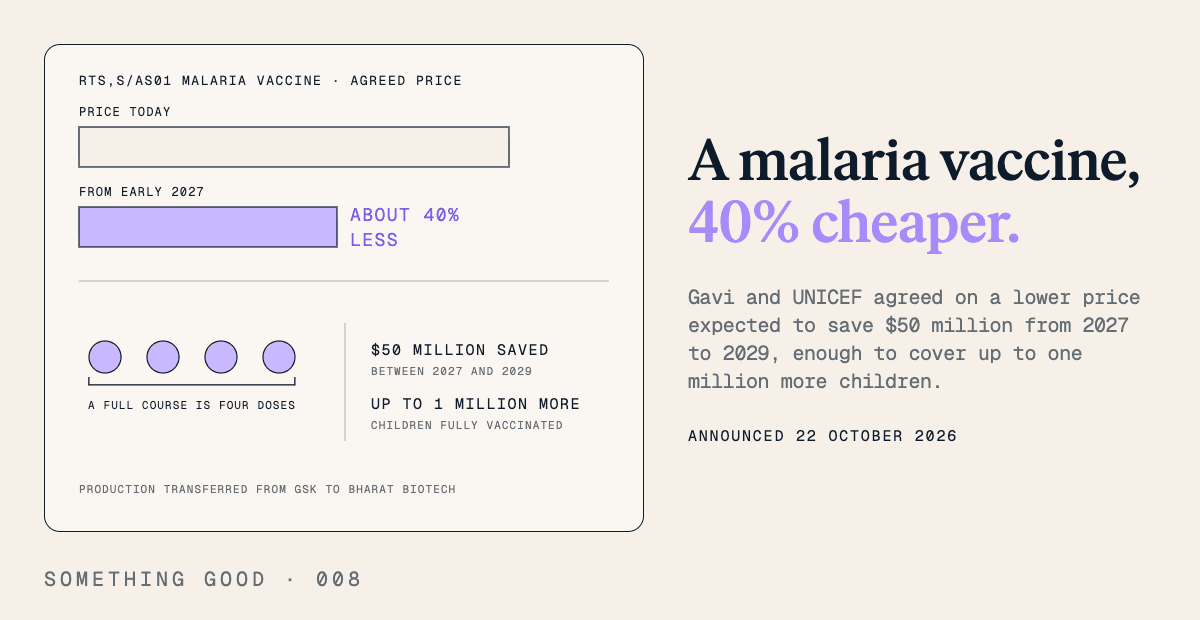
The agreement builds on the transfer of vaccine production from GSK to Bharat Biotech. Advance financing helps make the lower price possible, linking the work of manufacturers, procurement teams, and funders to expanded access.
The lower price is expected by early 2027, subject to regulatory and manufacturing milestones, including WHO prequalification of a new facility. The hope is that costs saved will expand the impact of these crucial vaccinations.
For families, that work could mean more children receiving the full four-dose course. These less flashy improvements to existing systems and relationships can make an existing scientific advance reach further. It’s a practical achievement worth celebrating. Malaria Vaccine Access Agreement
The Katalyze Marketing Team