Edition 007
Why do injectable medicines rely on horseshoe crab blood?


Welcome to Highly Regulated 007, from Katalyze
Welcome back to Highly Regulated. Last week, we followed microscopic bubbles to the blood-brain barrier. This week, I want to look at a different part of making medicine safe: a contamination test borrowed from a horseshoe crab.
For decades, manufacturers have used proteins from horseshoe crab blood to check injectable medicines for bacterial toxins. The test is remarkably useful, but it also depends on collecting and bleeding wild animals. Today, there are ways to run that check without crab blood. This week’s feature tells the whole story.
We’ll end with Something Good: a 15-year-old who got to ring the celebration bell after gene therapy for sickle cell disease, including a visit to the facility where his own cells became his treatment.
First, a few things worth your attention from around the industry.
Zack Holland and Alyse Gonthier, PhD from Katalyze
Worth Your Time
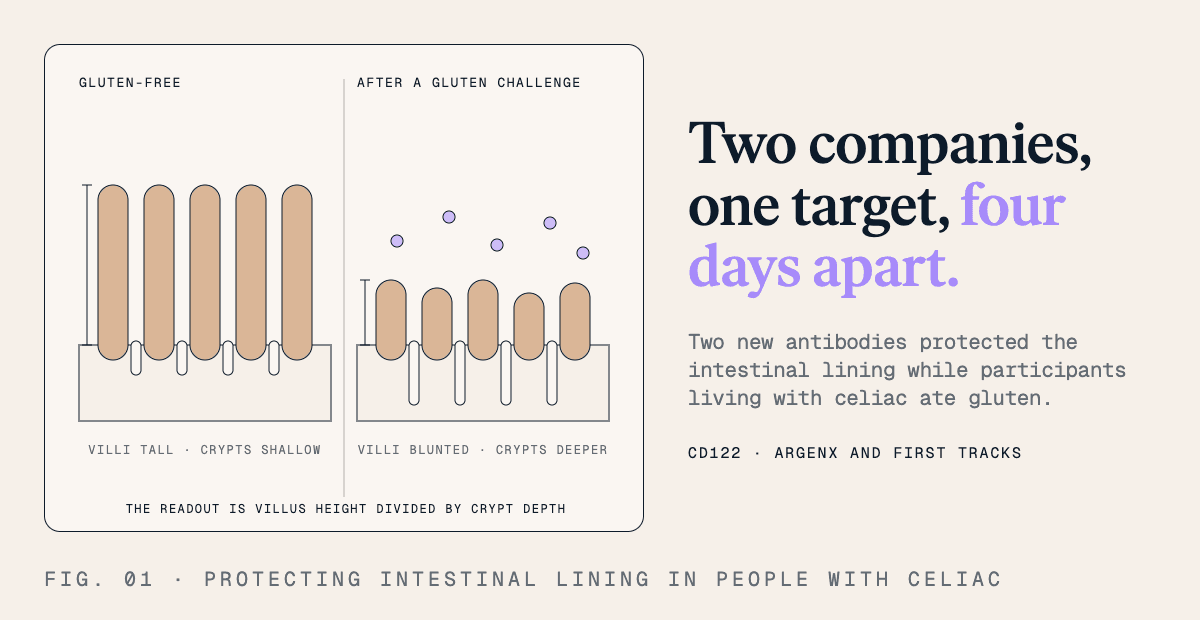
- Two experimental celiac treatments reduce intestinal damage. A strict gluten-free diet remains the standard treatment for celiac disease, but avoiding accidental exposure is difficult. On October 8, argenx reported that its antibody FB102 reduced gluten-induced damage to the intestinal lining in a phase 2 study of 126 adults. Four days later, First Tracks reported encouraging phase 1b results for ANB033, another antibody blocking the immune receptor CD122. Both studies exposed participants to gluten under controlled conditions. These are early, company-reported findings, but two programs showing protection on the same target is a great sign for those living with celiac. argenx; First Tracks
- GE HealthCare agrees to buy a U.S. network that makes PET imaging drugs. Many radioactive drugs used in PET scans decay too quickly for distant, centralized production. Getting them to patients means making them nearby. GE HealthCare has agreed to acquire SOFIE Biosciences for $945 million in cash, adding a U.S. network of 15 production sites and 21 cyclotrons, the machines that produce the radioactive isotopes. Closing is expected in the first half of 2027, subject to customary conditions. It’s a substantial investment in the manufacturing and delivery that make a scan possible. GE HealthCare
- BMS shows targeted radiation treatment delays progression of neuroendocrine cancer. On October 12, Bristol Myers Squibb reported that their RYZ101 improved progression-free survival in a phase 3 trial of patients whose neuroendocrine tumors, in the digestive tract or pancreas, had progressed after lutetium-177 therapy. RYZ101 delivers actinium-225 to tumor cells, where it emits alpha particles that release energy over a short distance. The result supports testing this approach after earlier radiopharmaceuticals stop working. The announcement did not disclose the size of the benefit; the full results will help establish how much this could change care. Bristol Myers Squibb
- Roche backs Hansoh’s targeted cancer drugs with $510 million in initial payments. Antibody-drug conjugates carry a potent drug payload to cells recognized by an antibody. Roche’s October 19 agreement with Hansoh covers two preclinical programs and additional programs against targets Roche will propose. Hansoh will receive $400 million upfront and $110 million on the first anniversary, with more than $15 billion in potential milestone payments. That distinction matters: most of the headline value depends on future progress. The deal funds development of new candidates; its relative success will have to be monitored. Hansoh
Meanwhile, at Katalyze
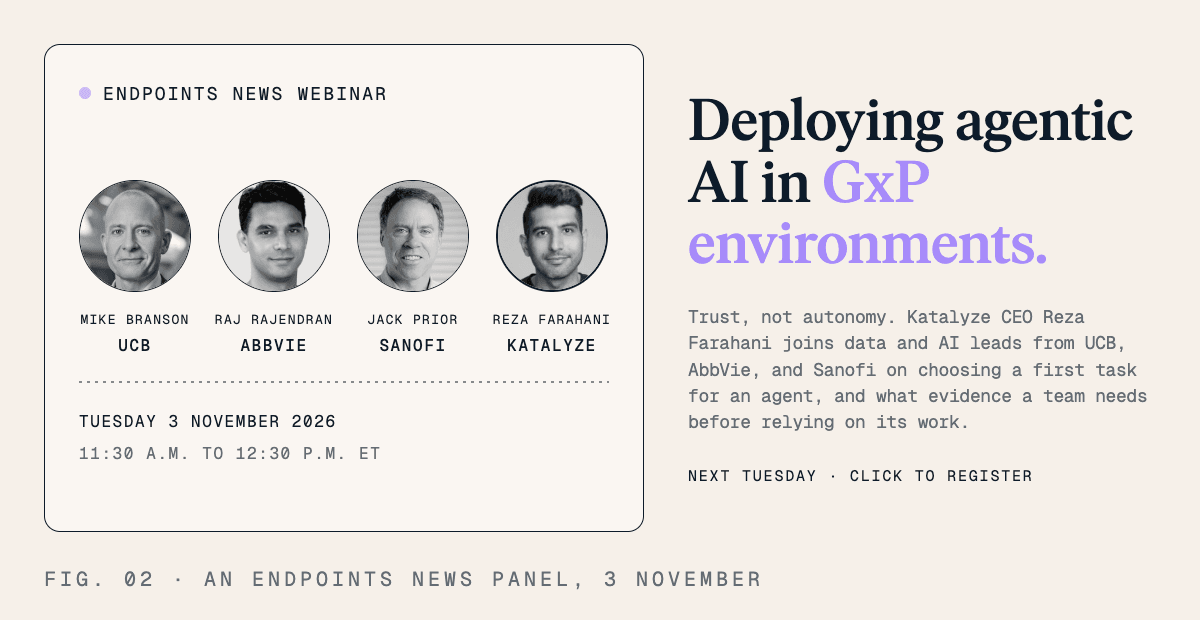
Join us virtually November 3 for a conversation about AI in regulated work
Next Tuesday, November 3, our CEO and co-founder Reza Farahani will join an Endpoints News webinar titled “Trust, Not Autonomy: Deploying Agentic AI in GxP Environments,” which runs from 11:30 a.m. to 12:30 p.m. ET.
He’ll be joined by Mike Branson, who heads biometrics and data science at UCB; Raj Rajendran, who leads AI for product development, science, and technology at AbbVie; and Jack Prior, who leads process monitoring and data science/AI strategy at Sanofi.
They’ll discuss how to identify opportunities for agentic AI, what evidence teams need before relying on its work, and where scientific judgment remains essential. These are questions we work through with scientists and engineers at Katalyze, and we’re looking forward to hearing how industry leaders approach them. Register here.
The Feature: How horseshoe crab blood became a flagship safety test for medicine
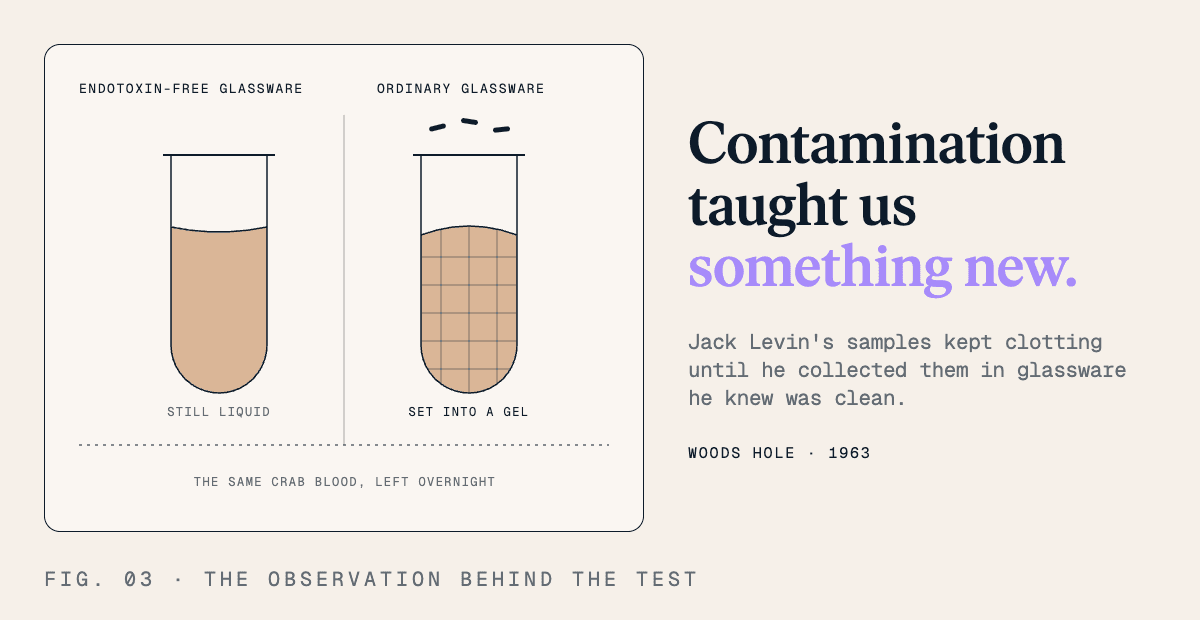
In the summer of 1963, Jack Levin arrived at the Marine Biological Laboratory in Woods Hole to study horseshoe crab blood. He wanted to know whether the animal’s blood cells helped it clot, much as platelets do in people. His samples were making that difficult.
They were liquid when he left the lab at night and clotted when he returned in the morning. Standard anticoagulants didn’t help.
Levin had studied how bacterial toxins affected clotting in rabbits. He wondered whether those same toxins were contaminating his samples. When he collected blood using equipment he knew was free of endotoxin, it stayed liquid. That troublesome clot was a response he could investigate. UCSF
He was working with Frederik Bang, who had already observed horseshoe crab blood clotting during bacterial infections. Together, they helped explain the response and turn it into a test for contamination. They describe working in a lab without hot water or working air conditioning. While research today still brings challenging experiences, I like to remember details like that when I think about how much medicine now depends on their work. Johns Hopkins
The danger that survives sterilization
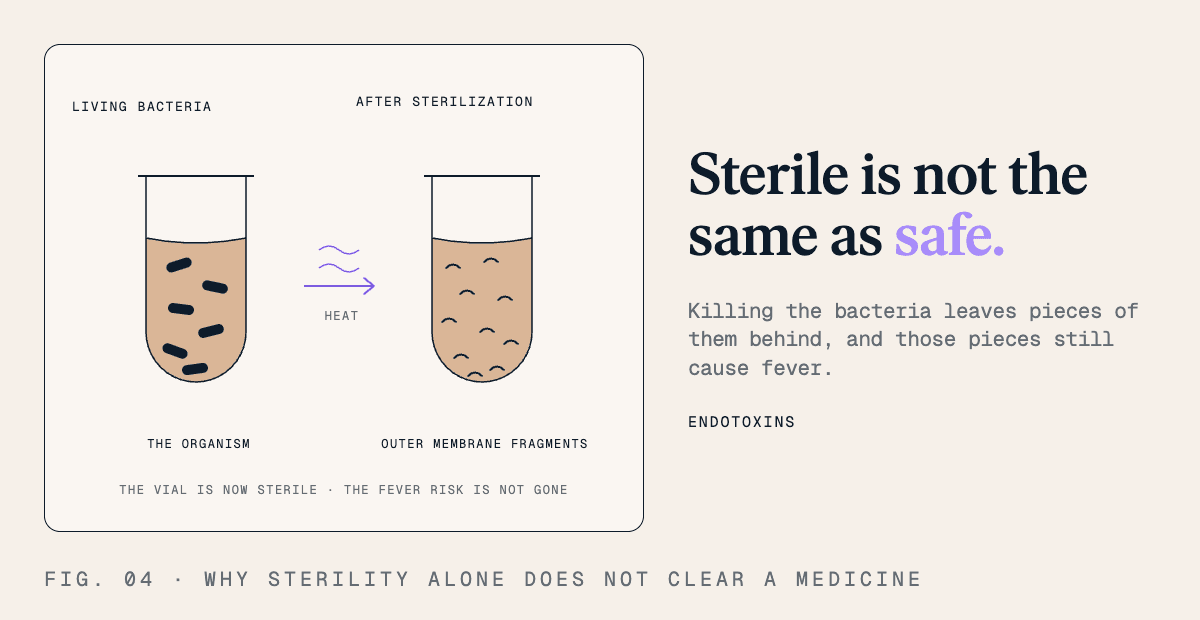
Endotoxins are components of the outer membrane of Gram-negative bacteria. If enough enters the bloodstream, they can cause fever and life-threatening reactions. Killing the bacteria doesn’t necessarily remove the toxins. A medicine can be sterile and still contain an unsafe amount of endotoxin.
Manufacturers therefore need a way to check for it. For much of the twentieth century, that meant injecting rabbits and watching for a rise in temperature. The rabbit pyrogen test entered the U.S. Pharmacopeia in 1942. It helped protect patients, but it required live animals, took time, and was unsuitable for some medicines whose own effects could interfere with the response. PDA; FDA
The horseshoe crab offered a way to detect endotoxin in a sample outside a living animal. That was a considerable improvement for a laboratory trying to check medicines consistently, and for the rabbits.
A defense system in a vial
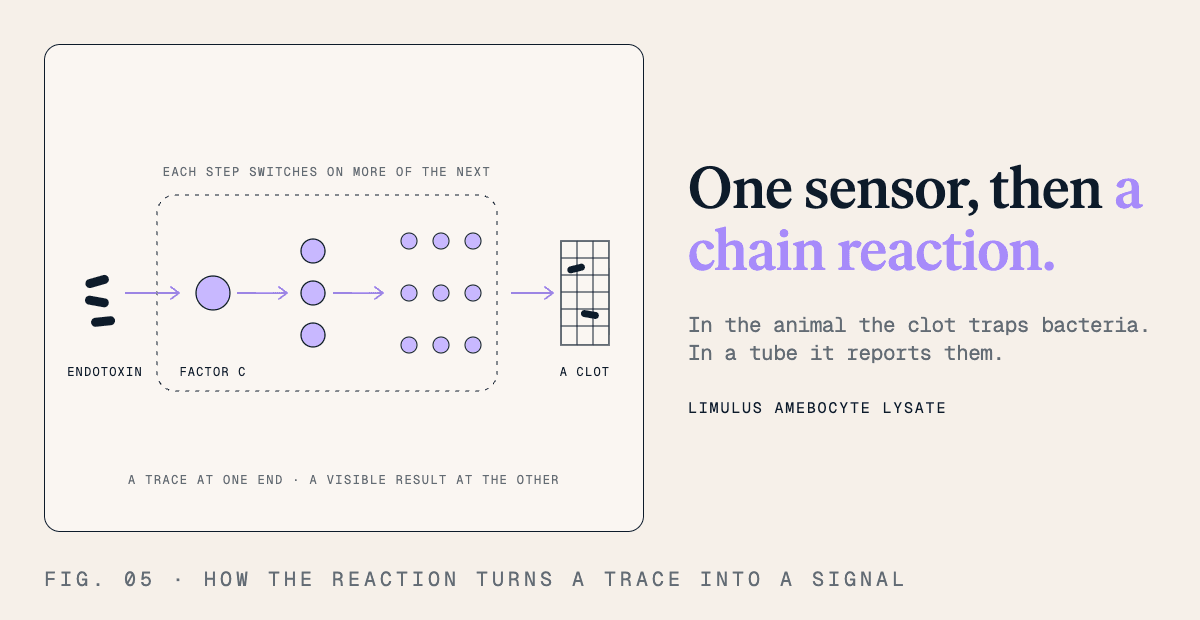
Inside the horseshoe crab’s blood cells is a set of proteins that respond to bacterial endotoxin. One, Factor C, starts a chain of enzyme reactions that ends in a clot. In the animal, that response helps contain an infection. In a laboratory, it can reveal contamination.
Extract the contents of those cells and you have Limulus amebocyte lysate, or LAL. Add a test sample and watch for the reaction. In the original method, a gel signals contamination. A biological defense became something manufacturers could measure. Johns Hopkins
The transition took years of work. Manufacturers had to establish how sensitive the test was, whether a medicine interfered with it, and how the results related to patient safety. In 1977, FDA allowed LAL to replace the final pyrogen test for licensed biological products and medical devices under specified conditions. The bacterial endotoxins test first appeared in the U.S. Pharmacopeia in 1980. Federal Register; USP
That history is useful context for what came next. Even a test that seems an obvious improvement has to demonstrate that it can do the job, and that it’s still the best option.
More than a million crabs in a year
Producing LAL still means collecting wild horseshoe crabs and drawing their blood. Animals collected solely for biomedical use must be returned alive to the waters they came from, but some die during collection, handling, or after release.
In 2024, U.S. biomedical facilities bled 1,008,943 horseshoe crabs, excluding animals taken for bait. Fisheries managers estimated about 185,000 deaths associated with the process. That total combines observed deaths before release with an estimate of deaths afterward.
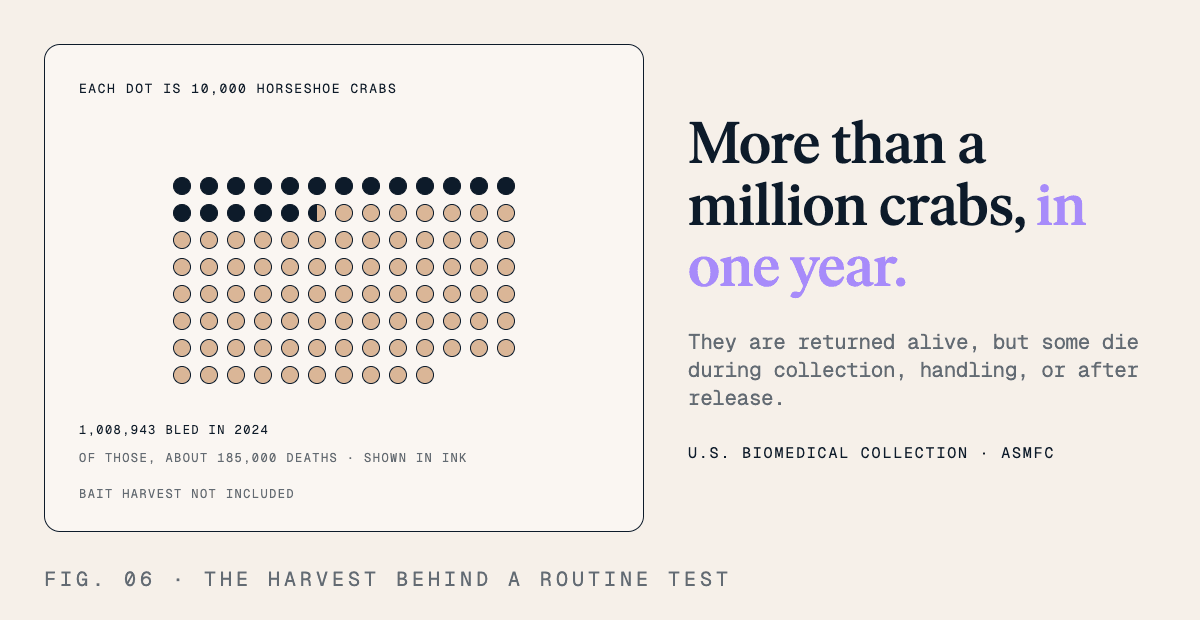
The ecology is complicated, too. The Atlantic States Marine Fisheries Commission reports good population status in Delaware Bay and the Southeast, poor status around New York, and a neutral assessment in the Northeast. A single coastwide verdict misses those differences. ASMFC
We don’t need to predict an imminent shortage to ask whether a routine test for medicine should continue to require this harvest. If we can make the proteins another way and preserve the quality of the test, that seems worth doing.
Making the protein without bleeding the animal
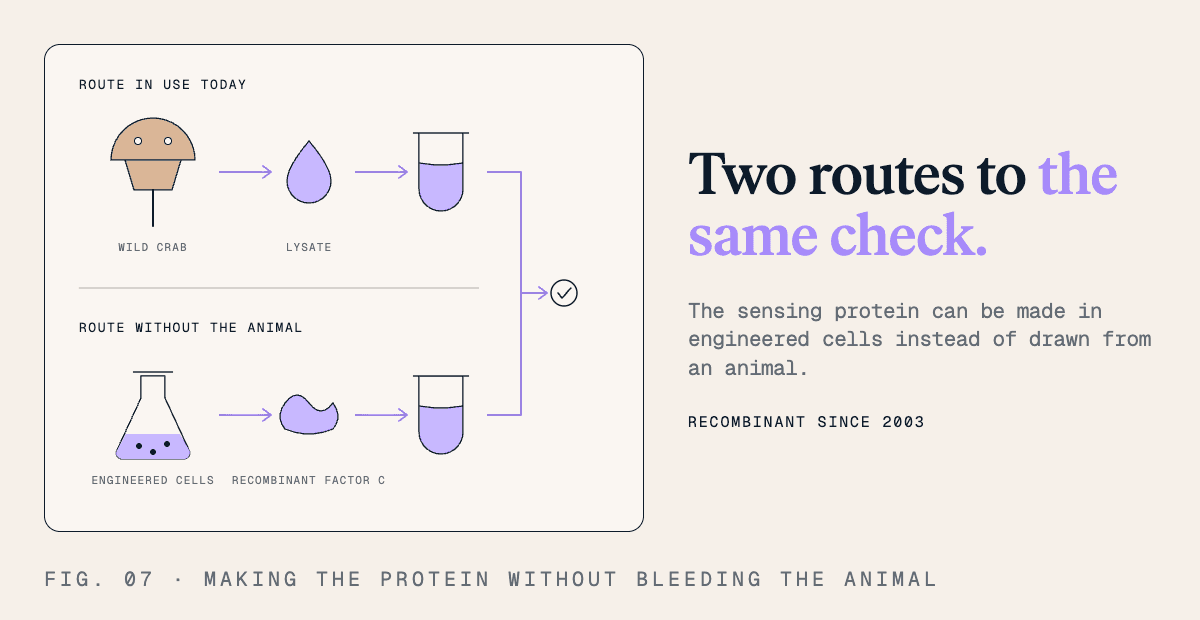
Recombinant Factor C, or rFC, uses biotechnology to produce the endotoxin-sensing protein without drawing horseshoe crab blood. It has been commercially available since 2003. Researchers can pair that protein with a signal that lights up when endotoxin activates it. The test borrows the crab’s biology without needing a fresh animal extract. Research Review
There are also recombinant reagents that reproduce several steps of the enzyme cascade. USP’s chapter covering both approaches became official in May 2025. Notably, these are additional methods manufacturers can use, but there are currently no requirements to abandon LAL. USP Chapter 86
Changing an established test takes real work. A company needs to show that the method is suitable for its product and satisfy the relevant regulators. A protein medicine, its formulation, and the conditions of the assay can all affect what a test detects. For products already approved in several countries, managing the change across those approvals adds another practical hurdle. USP FAQ
I sympathize with the teams asked to replace a test that has served them well for years. They need evidence they can rely on and a clear route to implementing the change. A better option becomes much easier to adopt when both are available.
Regulators are working to make the switch easier
On January 1, 2027, recombinant Factor C will become one of the methods in the European Pharmacopoeia’s main bacterial endotoxins chapter. Users will still need to demonstrate suitability under the conditions of use, including the chapter’s preparatory testing. But rFC will no longer need to be justified as an alternative to the methods in that chapter. EDQM
There has also been progress on changing tests for medicines already on the market. On August 31, FDA announced approval, along with international collaboration, of a protocol allowing a manufacturer to move multiple biological products from a crab-derived test to a recombinant method. FDA
One approval does not mean the whole industry has switched. It does show that regulators can help companies change an established method while continuing to examine the evidence. That is encouraging progress for the people who have to put the new test to work.
Levin began with samples that wouldn’t stay liquid. The scientists and quality teams who followed made that response dependable enough to help protect patients for decades. Now another generation is finding ways to keep that protection while using fewer animals. I think both achievements deserve recognition the next time we admire a new medicine.
Something Good
100 hospital stays for sickle cell, then a celebration bell rings
At 15, Phillip had already endured more than 100 hospitalizations and 15 surgeries. Sickle cell disease meant never knowing when another painful crisis would interrupt his life.
On October 23, he rang a bell at Manning Family Children’s in New Orleans, surrounded by family, friends, and his care team. He was celebrating his recovery after receiving LYFGENIA, a gene therapy made from his own blood-forming stem cells.
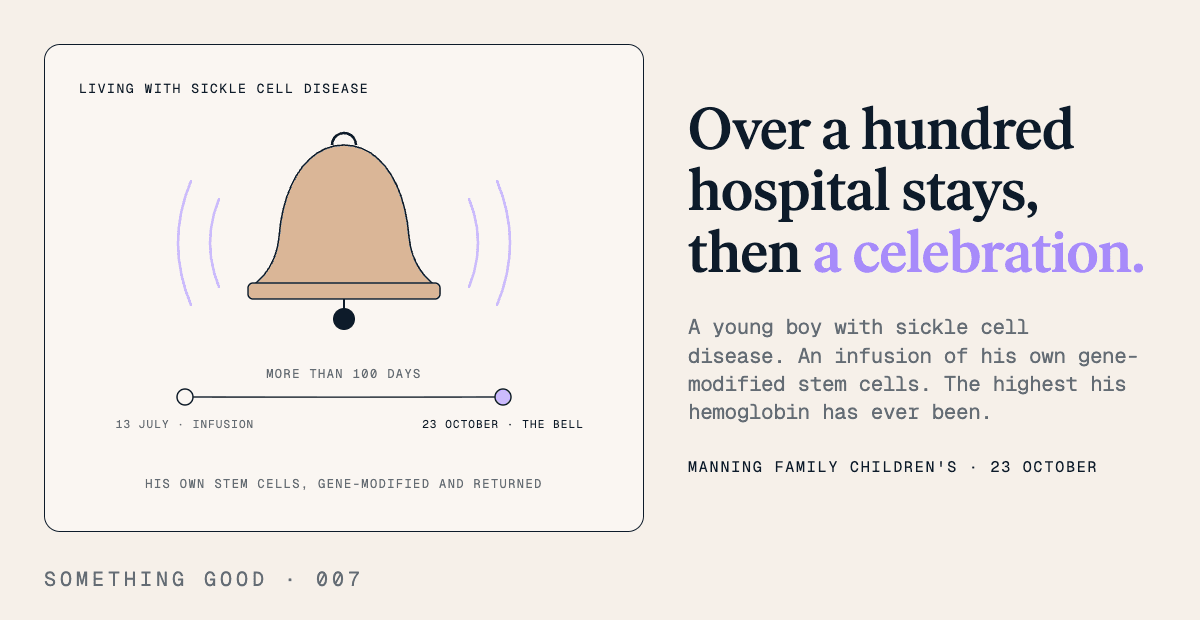
The treatment adds a gene that lets those cells produce an anti-sickling form of hemoglobin. Chemotherapy prepares the bone marrow, then the modified cells are returned in an infusion. It’s demanding treatment, and LYFGENIA carries a boxed warning for blood cancer that requires lifelong monitoring. FDA
At his celebration, more than 100 days after his July 13 infusion, the hospital reported the highest hemoglobin level of his life.
Before treatment, Phillip visited the manufacturing facility and saw his own cells. While long-term follow-up will of course matter, this experience strengthened Phillip’s ambition to become a doctor caring for children with blood disorders.
For now, he’s looking forward to water parks and exploring the mountains. After so much time in hospital, those are good things to have on the calendar. Manning Family Children’s
The Katalyze Marketing Team