Edition 004
How does a single cell know where the light is?
Welcome to Highly Regulated 004, from Katalyze
Welcome back to Highly Regulated. This year’s Nobel Prize in Medicine sends me to an unlikely starting point: How does a single cell know where the light is?
As it turns out, this seemingly small question has big answers.
On Monday, Peter Hegemann, Georg Nagel, and Karl Deisseroth won the Nobel Prize in Physiology or Medicine for optogenetics, a way to control specific cells like neurons with light. The path to that tool began with scientists trying to understand pond algae.
That’s where we’re starting this week: the patience behind curiosity-driven science, and how a discovery in algae helped launch an approach that we think could help people with inherited blindness see again.
We’ll end with a different kind of ingenuity: a heart valve designed to grow up with the child who has it. Fewer operations would reshape their childhoods.
We’ll be in New York City next week for Endpoints AI Day and our Pharma Supper Club. Join us on October 15th for dinner and a meeting of the minds at the intersection of medicine and technology. Request an invite here.
Zack Holland and Alyse Gonthier, PhD from Katalyze
Worth Your Time
- Novartis bets $575 million on making autoimmune treatments inside the body. Novartis has agreed to license an experimental injection from Abogen Biosciences that gives the body instructions to make a medicine, rather than delivering the finished medicine itself. It’s designed to direct mRNA-encoded T-cell engagers to remove the cells driving some autoimmune diseases. In an early study of three people whose immune systems were destroying their blood-clotting platelets, the targeted cells were cleared and platelet counts recovered. The treatment is in the early stages, but promising. If its success continues in larger trials, it could offer a simpler alternative to treatments that require laborious collection and engineering of a patient’s cells in the lab. Abogen Announcement; Article in Cell
- Data-entry time for clinical trials cut in half at Mount Sinai. Research staff often enter the same patient information twice: once in the health record and again in a clinical trial’s database. Mount Sinai’s Tisch Cancer Center now uses technology from IgniteData to transfer that information automatically across all 16 of its cancer disease groups. About 70 percent of trial form data now fills itself in, cutting entry time per patient visit from 5.5 minutes to 2.5. The data evaluated so far showed no errors or follow-up queries. These are early results, but less duplicate typing means more time for coordinating studies and caring for patients. Mount Sinai Announcement
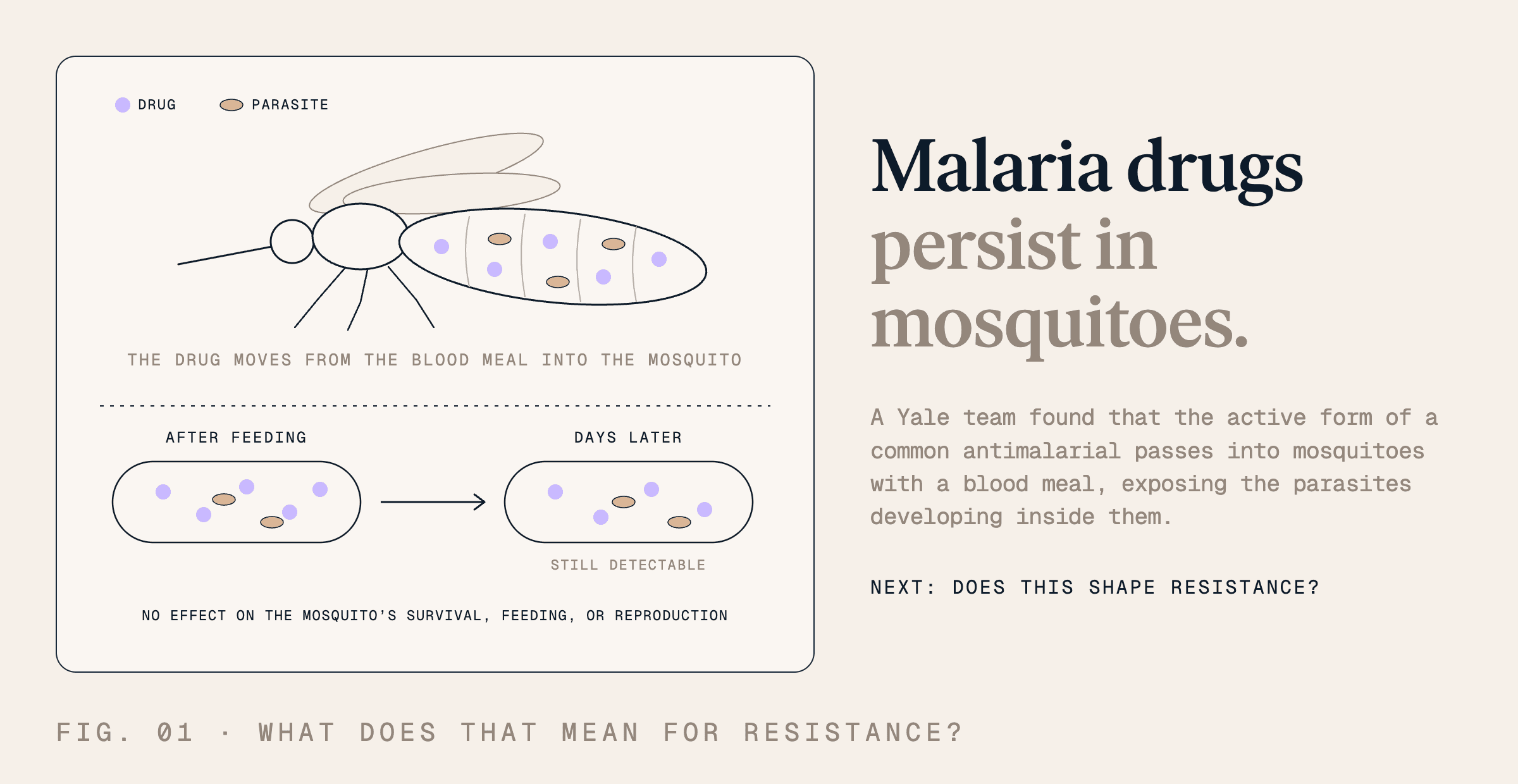
- Malaria drugs persist in mosquitoes. What does that mean for resistance? A mosquito biting someone who has taken malaria medicine can pick up the drug along with their blood. A Yale team led by Morgan Goheen found that the active form of a commonly used antimalarial moved into the mosquito’s circulating fluid and remained detectable for days, without affecting its survival, feeding, or reproduction. That means malaria parasites developing inside the mosquito are exposed, too. The team is now investigating whether this affects parasite development or encourages drug resistance. Understanding this part of the interaction could help scientists find better ways to slow resistant malaria. Yale News; Journal of Infectious Diseases
- Rare disease that turns muscle into bone curbed by new daily pill. The FDA has approved a new treatment, Mirum’s Atebrioz, for people with fibrodysplasia ossificans progressiva, a rare condition in which bone forms in muscles, tendons, and ligaments. The disease gradually locks joints in place; the drug blocks the signal driving that growth. In its Phase 2 trial, only 3.1% of treated patients developed new bone lesions, compared with 16.7% on placebo over 24 weeks. It’s the third FDA-approved treatment for the disease in the last few years, giving families another option that can be taken at home. Mirum Announcement; Trial Results
Meanwhile, at Katalyze
Join Us in NYC Next Week for Pharma Supper Club
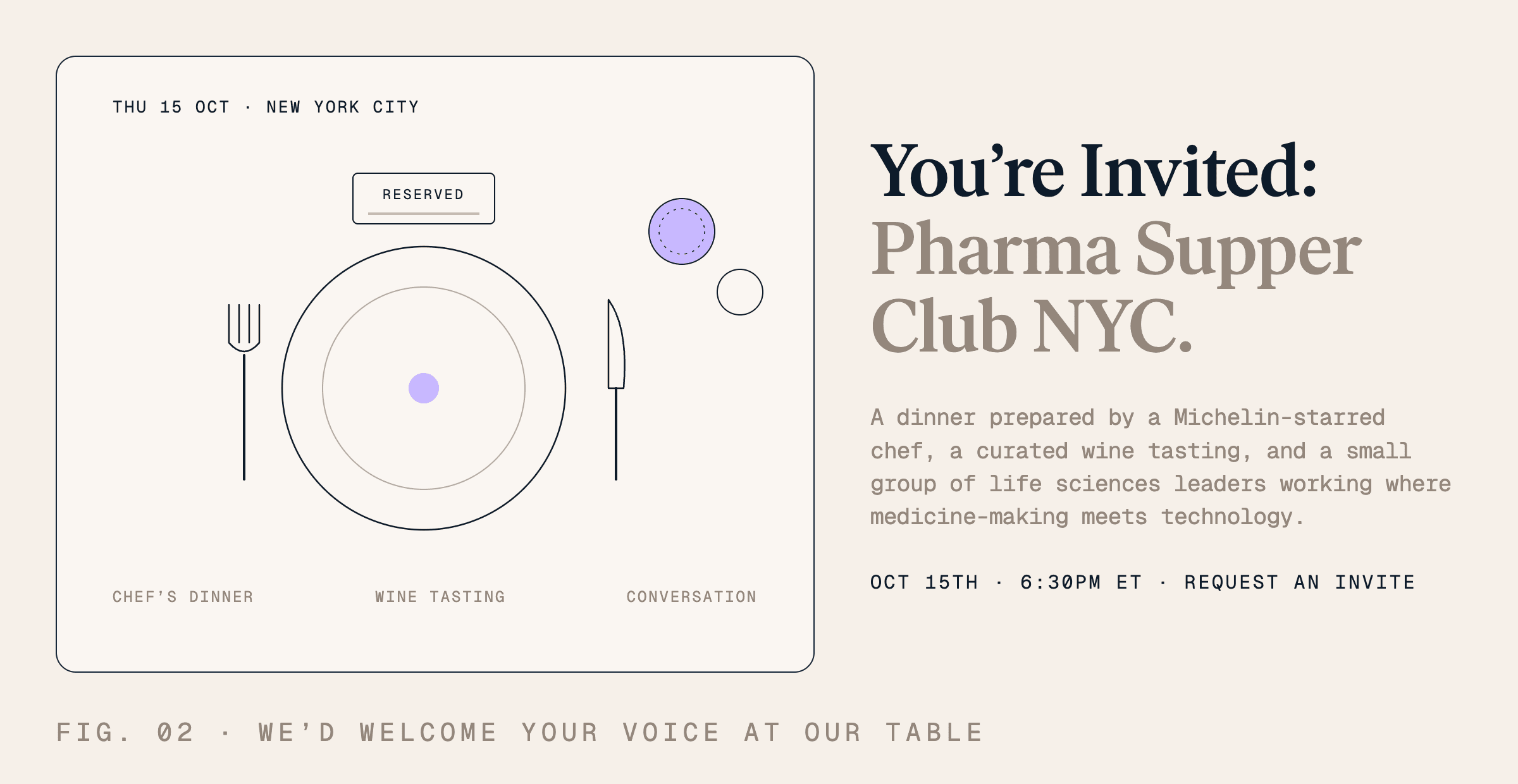
We’re heading to New York next week, and we’d love to spend an evening with you. On Thursday, October 15th, Katalyze will host the inaugural Pharma Supper Club, an invitation-only evening to share a meal and ideas with fellow leaders shaping how medicines are made.
We’ll meet from 6:30 to 9:30 p.m. ET, the evening after Endpoints AI Day, where our CEO Reza Farahani will give the opening remarks. Over a dinner prepared by a Michelin-starred chef, a curated wine tasting, and a few classic Katalyze surprises, we’ll have room to compare notes on AI in research and manufacturing: what’s working, what’s difficult, and what it takes to enact real change.
We’re bringing together a small group of life sciences leaders working where medicine-making meets technology. If that sounds like your kind of evening, we’d welcome your voice at our table. Request an invite to dinner. If the evening doesn’t fit your schedule, reserve a time with our team while we’re in NYC. We’d be glad to connect.
The Feature: How a question about pond algae became a tool for the brain
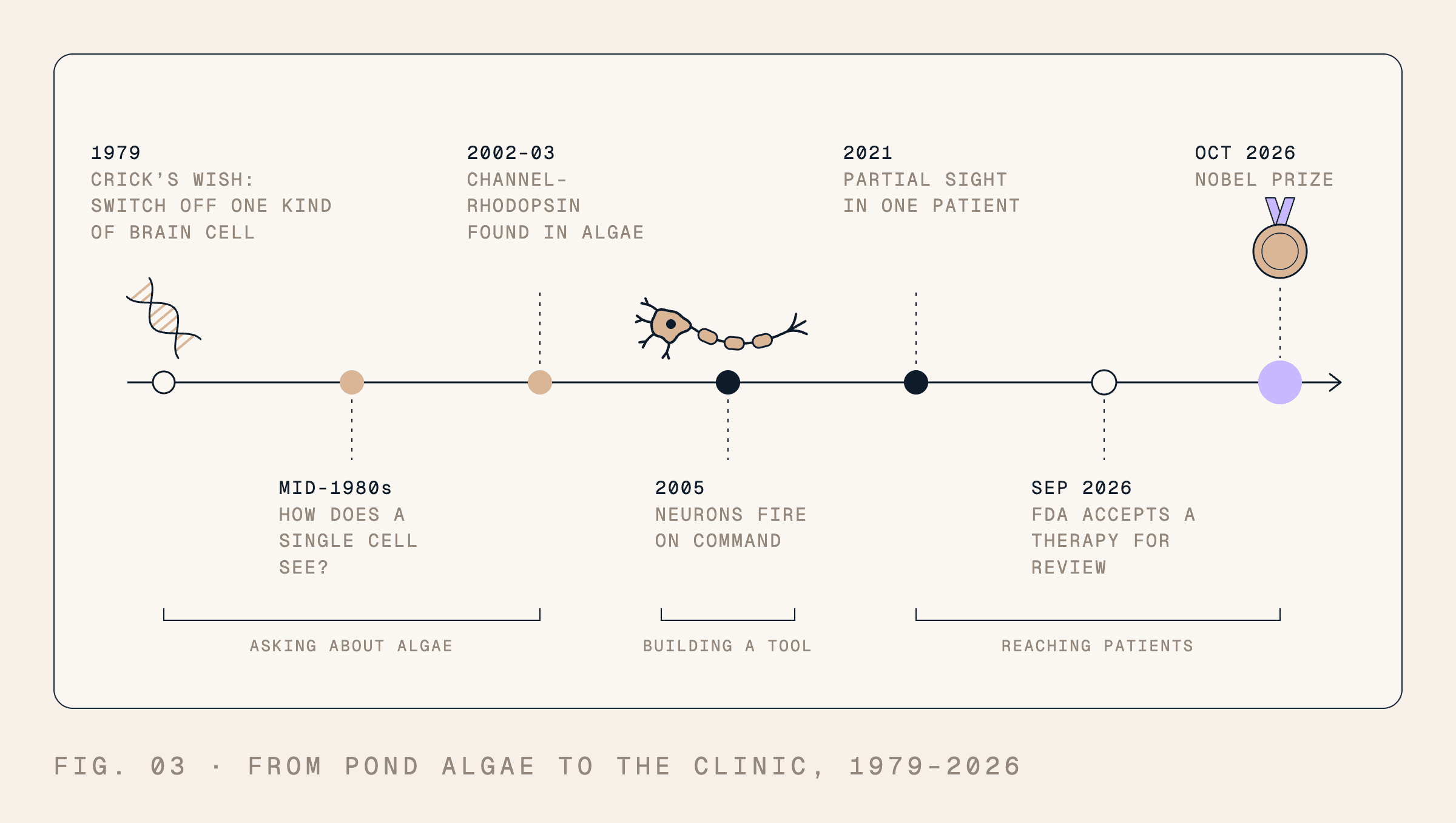
In 1979, Francis Crick, who by then had moved from DNA to the brain, wrote down a wish. To understand how the brain works, he argued, scientists needed a way to switch off one kind of brain cell while leaving the others largely unaffected. Two decades later, he suggested that cells could be engineered to respond to light. Nobody yet knew how to do that or if it was even possible. Crick 1979; Crick 1999
The answer was swimming in pond water.
It started with a small question that had no obvious medical use.
A single-celled green alga with two whip-like tails and a small orange eyespot, called Chlamydomonas, is known to swim toward light. In the mid-1980s, Peter Hegemann, then a postdoc at Syracuse University, started researching a simple but elusive question: how does a single cell see? Jeantet Foundation
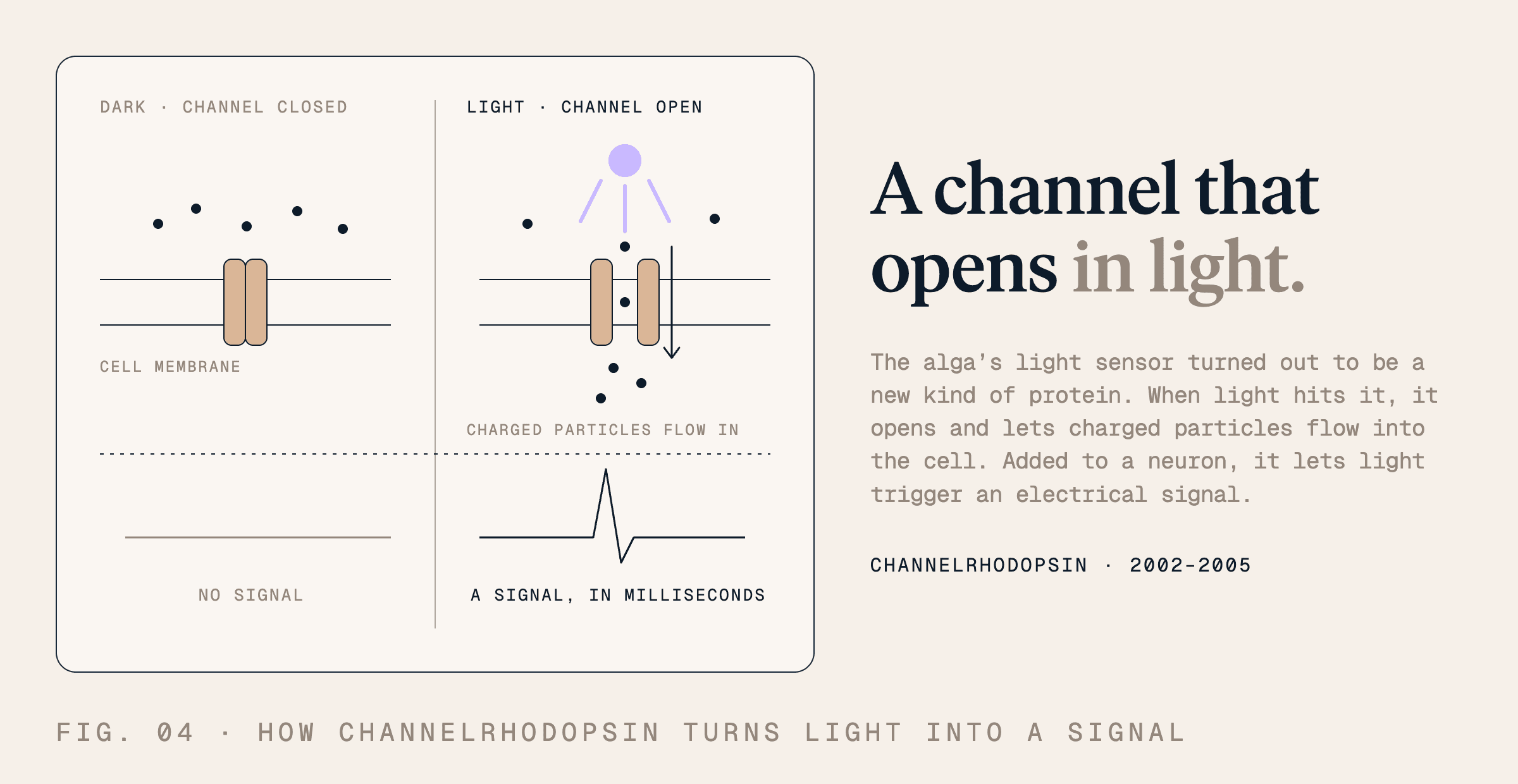
The full answer took close to two decades. In 2002 and 2003, Hegemann, Georg Nagel, Ernst Bamberg, and their colleagues showed that the alga's light sensors were actually a new kind of protein: a channel that opens when light hits it, letting ions flow into the cell. They named it channelrhodopsin. Nagel had spent years putting microbial light-sensing proteins into frog eggs to see whether they would still work in animal cells. The second version, channelrhodopsin-2, produced a strong response in animal cells. EMBO Molecular Medicine; PNAS
Every new contribution in science carries weight, even if the impact isn’t fully apparent right away. This team was asking questions about algae. They weren’t originally asking about the brain. Their findings changed neuroscience anyway.
A scientist takes a risk.
Karl Deisseroth, who holds a PhD in neuroscience and an MD with a psychiatry specialty, opened his lab at Stanford in 2004. As a psychiatrist, he’d seen how existing treatments could fall short or come with difficult side effects. He wanted to understand which brain cells were driving symptoms, so future treatments could target them more precisely. Scientific American
His lab was testing several ways to control brain cells. Compared with approaches using animal proteins, using a protein from an alga was risky. It might not work safely, respond to light quickly, or have a strong enough effect. Deisseroth thought it was still worth trying.
In August 2005, Deisseroth and graduate students Ed Boyden and Feng Zhang reported that adding the algal gene to mammalian neurons made those cells send electrical signals on command, within milliseconds, in response to pulses of blue light. Crick's wish had a working answer. Nature Neuroscience
Sharing a new way to study the brain.
Deisseroth’s team brought the method into living brains using thin optical fibers. They added a way to switch neurons off as well as on, then shared the engineered genes and trained scientists around the world to use them. Stanford
Researchers could now switch selected brain cells on or off and observe what changed, helping them identify which cells drive a behavior. Labs have since used optogenetics to study memory, emotion, Parkinson’s disease, and depression in animals. Euronews
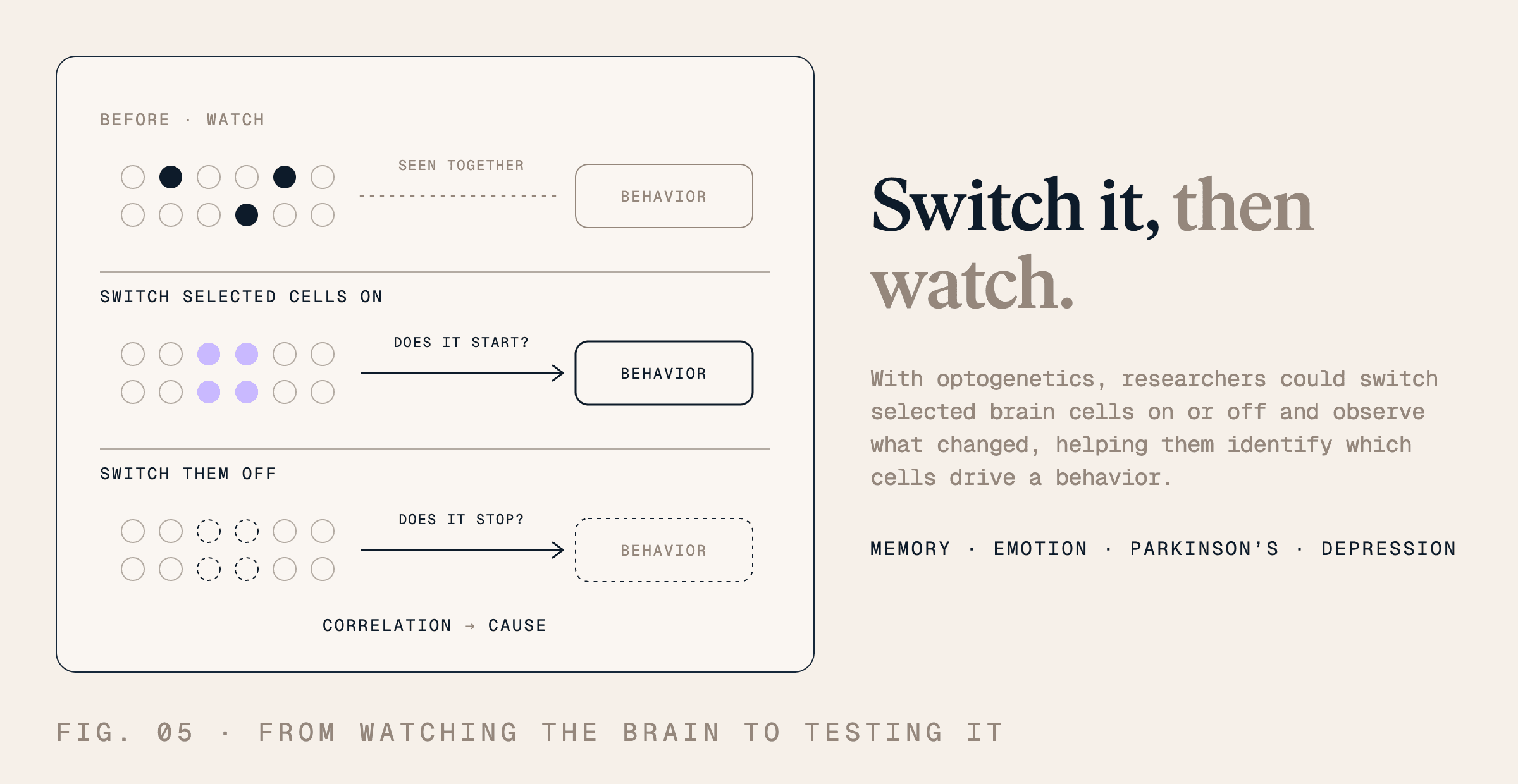
The Nobel honored three scientists, but the work involved many more. Ernst Bamberg helped discover channelrhodopsin; Ed Boyden and Feng Zhang helped establish its use in neurons. Zhuo-Hua Pan independently showed it could make retinal cells respond to light. Each contribution helped build what came next. Article in Neuron
Could the same approach help restore sight?
The eye offers a way to put that knowledge to work for patients.
In retinitis pigmentosa, inherited mutations gradually destroy the retinal cells that detect light. Other cells survive and remain connected to the brain. Researchers saw a possibility: give the surviving cells a new ability to sense light.
In 2021, teams led by José-Alain Sahel and Botond Roska reported on a man with advanced retinitis pigmentosa who received an injection into one eye that delivered the light-sensitive channelrhodopsin gene. Wearing goggles that projected the scene onto his retina in amber light, and after months of training, he could locate, touch, and count objects on a table. He reached a notebook in 92 percent of 39 attempts. He couldn’t perform those tasks without the goggles, and the treatment did not restore full sight. Still, after years of blindness, he could find and count objects in front of him. Institute of Molecular and Clinical Ophthalmology Basel
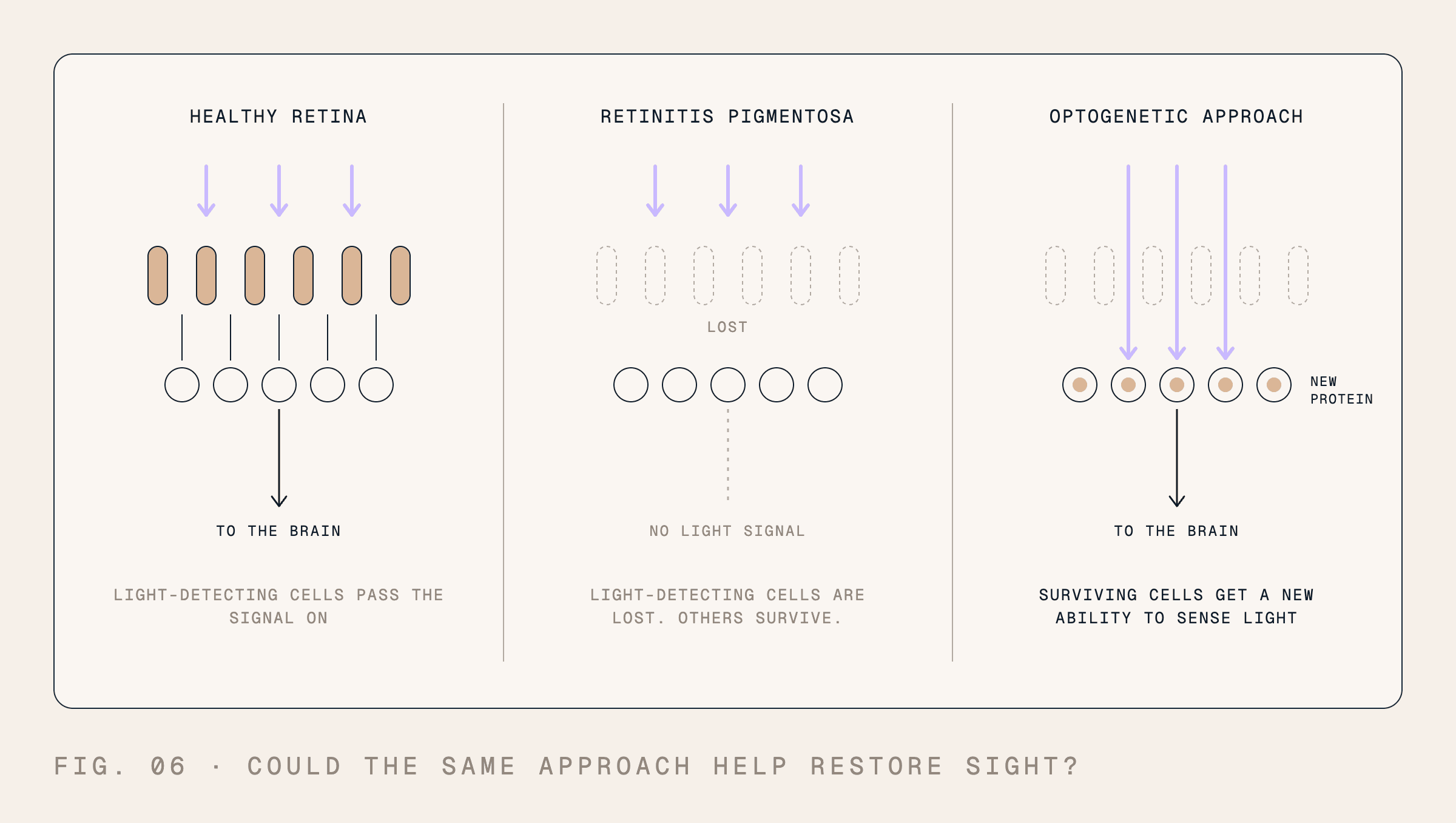
Five years later, the approach is reaching regulators. On September 9, the FDA accepted Nanoscope Therapeutics' application for MOGENRY, a one-time injection given in a doctor’s office. It delivers a gene that allows surviving retinal cells to make a synthetic light-sensitive protein. The treatment is designed to work regardless of which mutation caused the disease, potentially making it useful to people with different forms of retinitis pigmentosa. The company reports that its Phase 2b/3 trial met its main goals, with improved vision at 52 and 76 weeks and no treatment-related serious adverse events. The application is now under FDA review, and long-term follow-up continues. Approval is still an open question. But the work has reached a point where discoveries that began with algae could become a treatment for people losing their sight. Nanoscope
The case for niche hypotheses.
This is a story about scientific ingenuity, but also about patience and curiosity. The path ran from an alga's eyespot to frog eggs, from frog eggs to mammalian neurons, and from neurons in a dish to a man regaining partial sight. Each step depended on researchers having the time and support to pursue an interesting question before its practical value was clear.
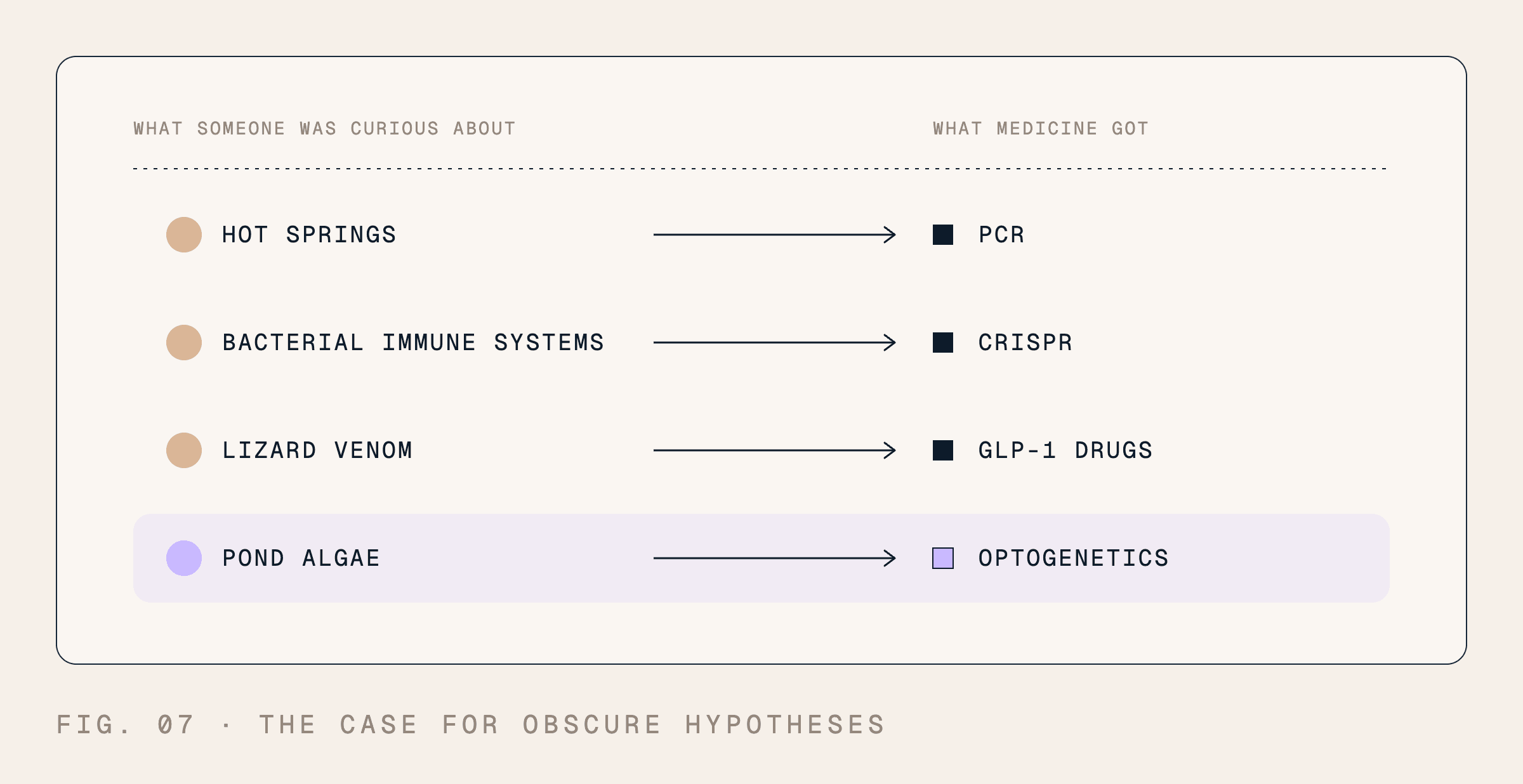
Medicine keeps benefiting from that kind of curiosity. The tools we rely on, from PCR to CRISPR to some GLP-1 drugs, trace back to people studying hot springs, bacterial immune systems, and lizard venom. Optogenetics adds algae to the list.
When the Nobel call came, Deisseroth said, he lost the ability to form words for about 30 seconds. His children’s excitement, which Stanford shared online, is a hopeful reminder that the next generation will have new questions to ask.
Somewhere right now, someone is studying a question that sounds just as obscure as Karl, Georg, and Peter’s did 20 years ago. Here's to letting them.
Something Good
A heart valve that grows up with its patient.
About 4,200 babies are born in the U.S. each year with a mis-sized or underdeveloped valve between the heart and lungs. Replacement valves come in fixed sizes, and children don't. Many of these kids face repeated open-heart surgeries throughout childhood, each one to swap a valve they've outgrown. FDA
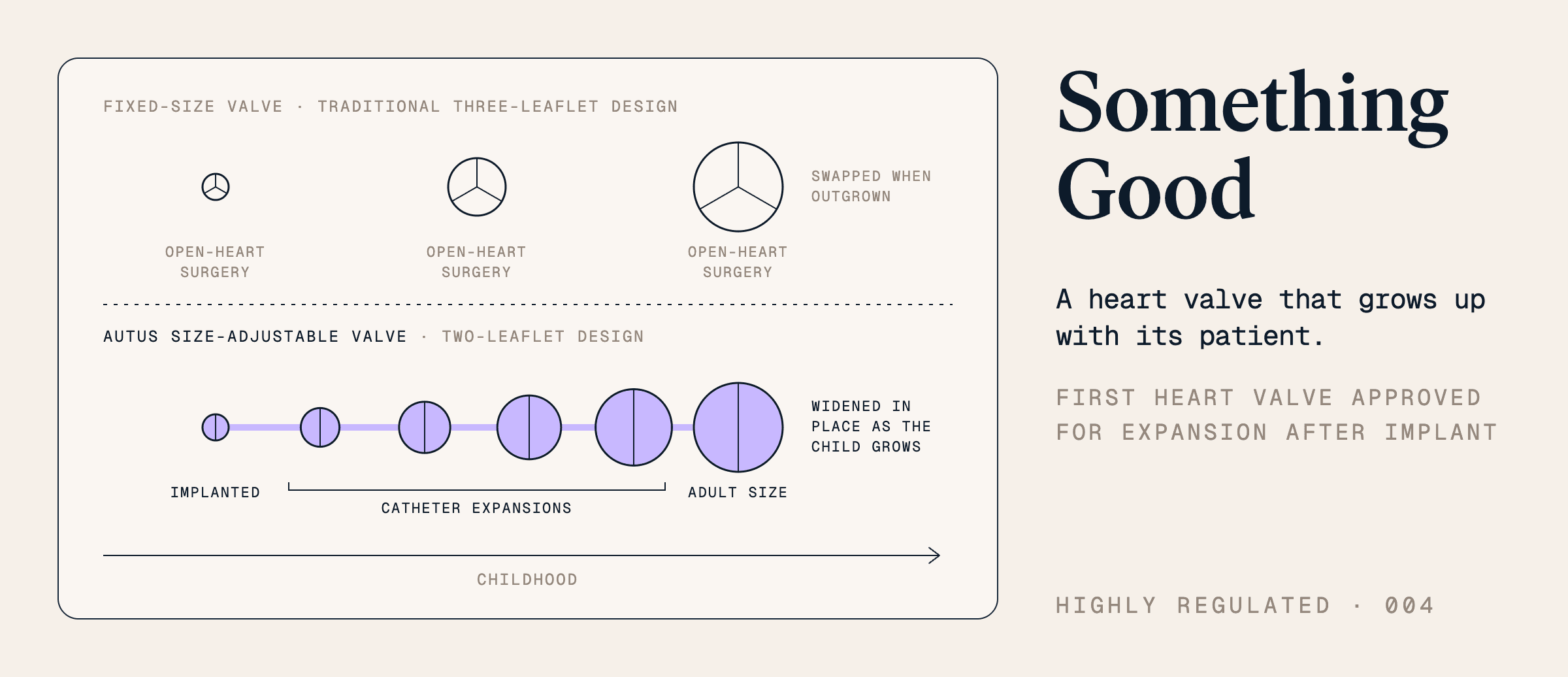
Dr. Sophie-Charlotte Hofferberth and her team at Boston Children's Hospital set out to change that. Their valve uses synthetic flaps, called leaflets, that resist the hardening seen with animal tissue in children. Its frame can be widened later using a balloon catheter, from about 13 millimeters at implant to 22 millimeters, which is roughly adult size. Hofferberth began developing the valve in 2016. After testing in growing lambs, the first child received one in late 2021. Boston Children’s Hospital
On October 1, the FDA approved it as the Autus Size-Adjustable Valve, now made by Edwards Lifesciences: the first heart valve approved for expansion after implant. In a study of 62 children at 12 sites, every procedure was successful, with no deaths, strokes, or blood clots requiring treatment. Two children have already had their valves expanded without open-heart surgery. There’s still more to learn. Three patients had fractures in the valve frame, and two had reduced movement in the valve’s flaps. Researchers are continuing to study how well it holds up over time. FDA
Hofferberth has described the goal as "a bridge through childhood." For a family, that could mean trading a future open-heart operation for a catheter procedure with a short recovery. Boston Children’s Hospital
A valve that grows. A childhood with fewer operations.
The Katalyze Marketing Team