Edition 003
What if a clinical trial didn't have to start over?
Welcome to Highly Regulated 003, from Katalyze
Welcome back to Highly Regulated, the weekly letter from Katalyze that informs and celebrates the impactful work happening across life sciences. Feedback on the first newsletter focused on biomanufacturing that is actually editorial-focused and not shilling ads has been incredible - and we’re very pleased to continue serving all of you for our little ten minute weekly sessions.
This week’s edition starts with a question that sounds administrative but isn’t: what happens to a clinical trial after it gets its answer?
Usually, it ends. The study teams wind down, staff move on, and the next treatment often needs a new trial of its own. That’s a lot of rebuilding in a field where patients are waiting for the next answer, often without time to spare.
That’s where we’re starting this week: the trials that keep running after the first answer is found. One discovered a lifesaving COVID-19 treatment eleven days after ruling out another. One exists because a man with ALS asked for a faster way to test drugs, knowing it might come too late for him. Both were built to keep what they learned for the next patient.
We’ll end, as always, with a celebration of life sciences. This week, it’s a familiar treatment with a new way to make the routine smaller.
First, though: a few things worth your attention from around the industry.
Zack Holland and Alyse Gonthier, PhD from Katalyze
Worth Your Time
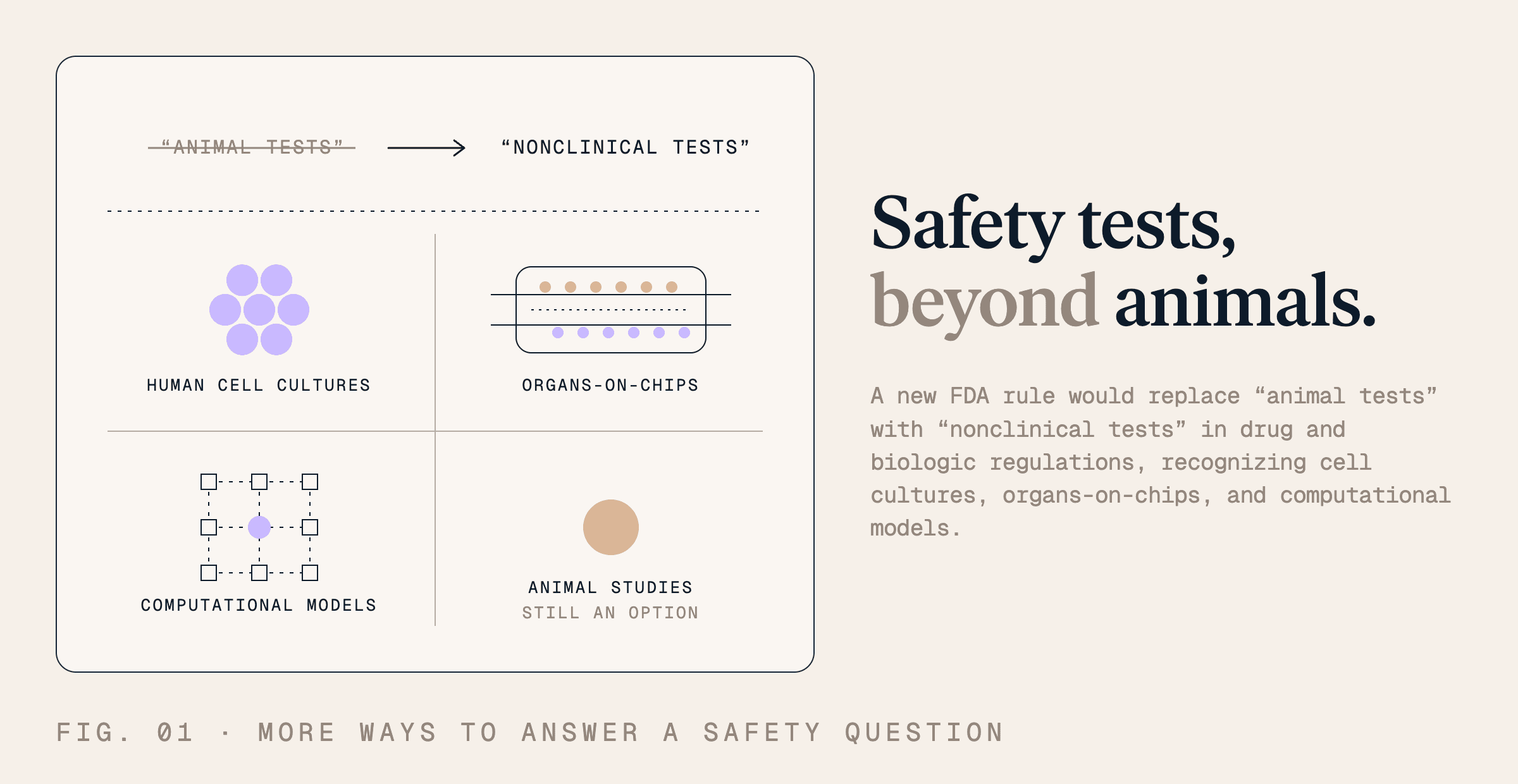
- The FDA makes room for safety tests beyond animals. Human cell cultures, organs-on-chips, and computational models can reveal things animal studies miss. The FDA’s new rule would explicitly recognize these approaches by replacing “animal tests” with “nonclinical tests” in drug and biologic regulations. It still has to clear a public comment period, and animal studies remain an option. The useful shift is more room to choose a test for the question at hand, with regulators involved early in deciding what evidence will count. FDA
- AI helps bacteria-killing viruses choose their targets. Phages, viruses that infect bacteria, could help treat infections that resist antibiotics. But finding the right one is difficult. A UW–Madison team used lab data to train an AI model, then built phages with the mutations it suggested. Some infected their targets far more effectively. The model also identified changes that could spare other bacteria. It’s still at the discovery stage, but the aim is appealing: fight an infection without disrupting the helpful microbes around it. UW–Madison
- Childhood dementia gets its first FDA-approved treatment. Children with Sanfilippo syndrome type A, often referred to as childhood dementia, gradually lose language, memory, and other abilities. Until now, care could only manage symptoms of this fatal condition. The FDA has recently approved Fayuvi, a one-time gene therapy that gives cells instructions to make the implicated missing enzyme. In the study, treated children maintained or improved cognitive function compared with untreated children from a historical cohort. Manufacturing issues had previously delayed approval, but thanks to diligent work by maker Ultragenyx, families now have a treatment aimed at changing the disease’s course. FDA; Manufacturing Update
- GSK makes a second bet on cancer antibodies from Chimagen. GSK has agreed to acquire another experimental cancer treatment from Chimagen Biosciences, in a deal worth up to $750 million. It’s an antibody designed to bring a patient’s T cells together with myeloma cells, binding two targets on the cancer rather than one. The hope is a deeper response with fewer difficult side effects, which could make these treatments useful earlier in care. Human trials are expected in 2027, so that promise still needs testing. For GSK, it’s a second investment in Chimagen’s approach. GSK
Meanwhile, at Katalyze
Pharma Supper Club: NYC Edition in coming soon.
We’re heading to New York, and we’d love to see you there. On Thursday, October 15th, Katalyze will host the first Pharma Supper Club, an invitation-only evening for senior leaders shaping how medicines are made.
We’ll gather from 6:30 to 9:30 p.m. EDT, the evening after Endpoints AI Day, where our CEO Reza Farahani will give the opening remarks. There’ll be a Michelin-starred chef’s dinner, a curated wine tasting, and a few classic Katalyze surprises. The conversation: where AI is working in manufacturing today, where it isn’t yet, and what it takes to get past the pilot stage.
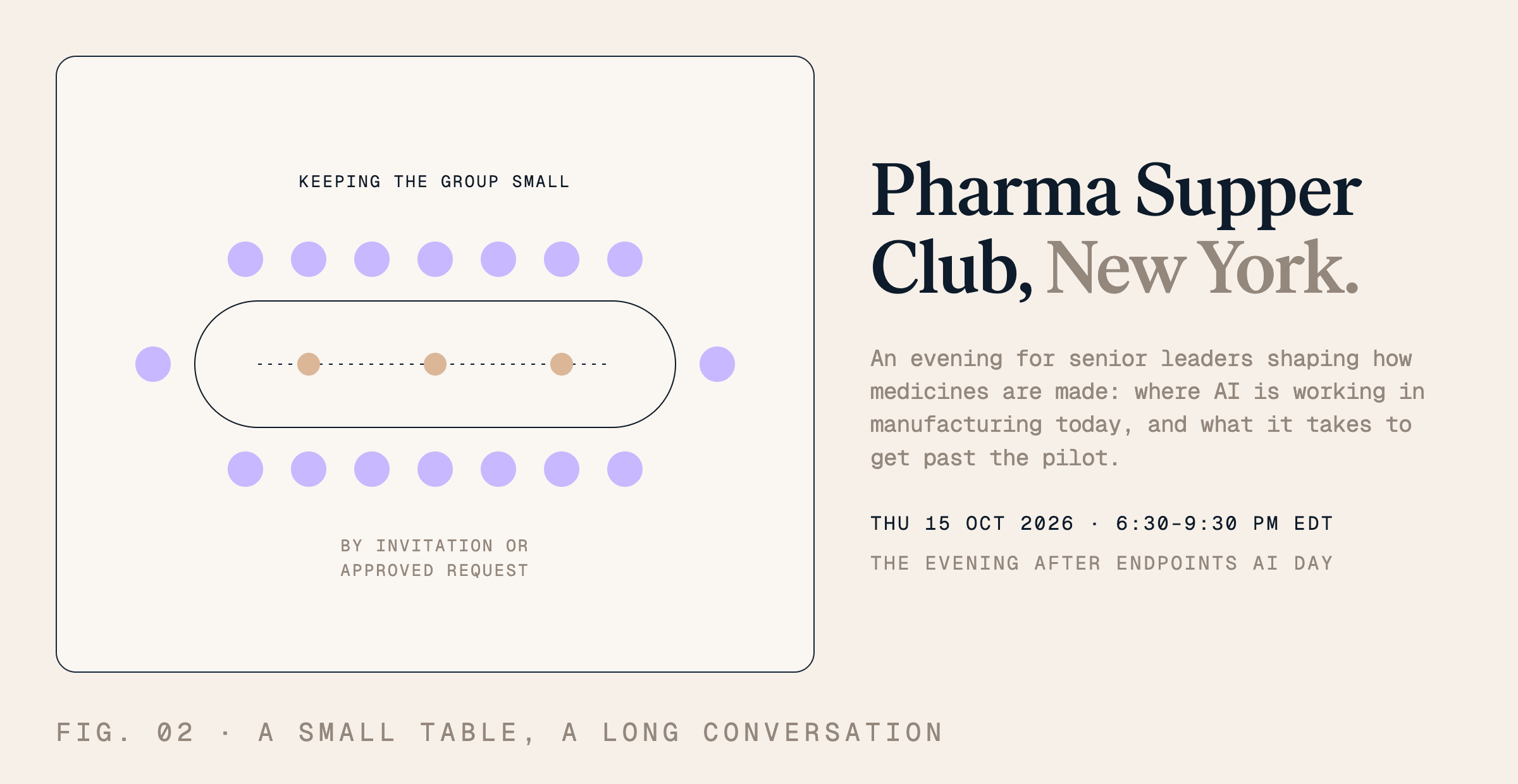
It’s for VPs, heads, and C-suite leaders in manufacturing, tech ops, MS&T, digital, IT, and data at pharma, biotech, and CDMO companies. We’re keeping the group small. Places are by invitation or approved request, and venue details will be shared with confirmed guests.
We’d still love to connect while we’re in town. Request an invite to dinner, or if you can’t make it, reserve a time with our team to meet while we’re in NYC.
The Feature: the trials that don’t start over
Most of us think about clinical trials as tightly controlled, singular studies that exist totally separately from one another. But for time-sensitive situations, for high-risk diseases, and with modern science, some clinical trials can be performed on a more continuous basis with many treatment options studied within the same framework. What does it look like when researchers, doctors, and regulators work together to expand the impact of a trial? When are these trials most useful, and how do we ensure outcomes are still reliable?
In March 2020, as COVID-19 filled British hospitals, two Oxford professors, Martin Landray and Peter Horby, set out to test as many plausible treatments as they could, fast. They needed randomized comparisons with usual care to know whether those drugs actually improved survival.
The first patient enrolled just nine days after the protocol was written. That pace reflected choices about how much work the trial would ask hospitals and patients to do. Oxford
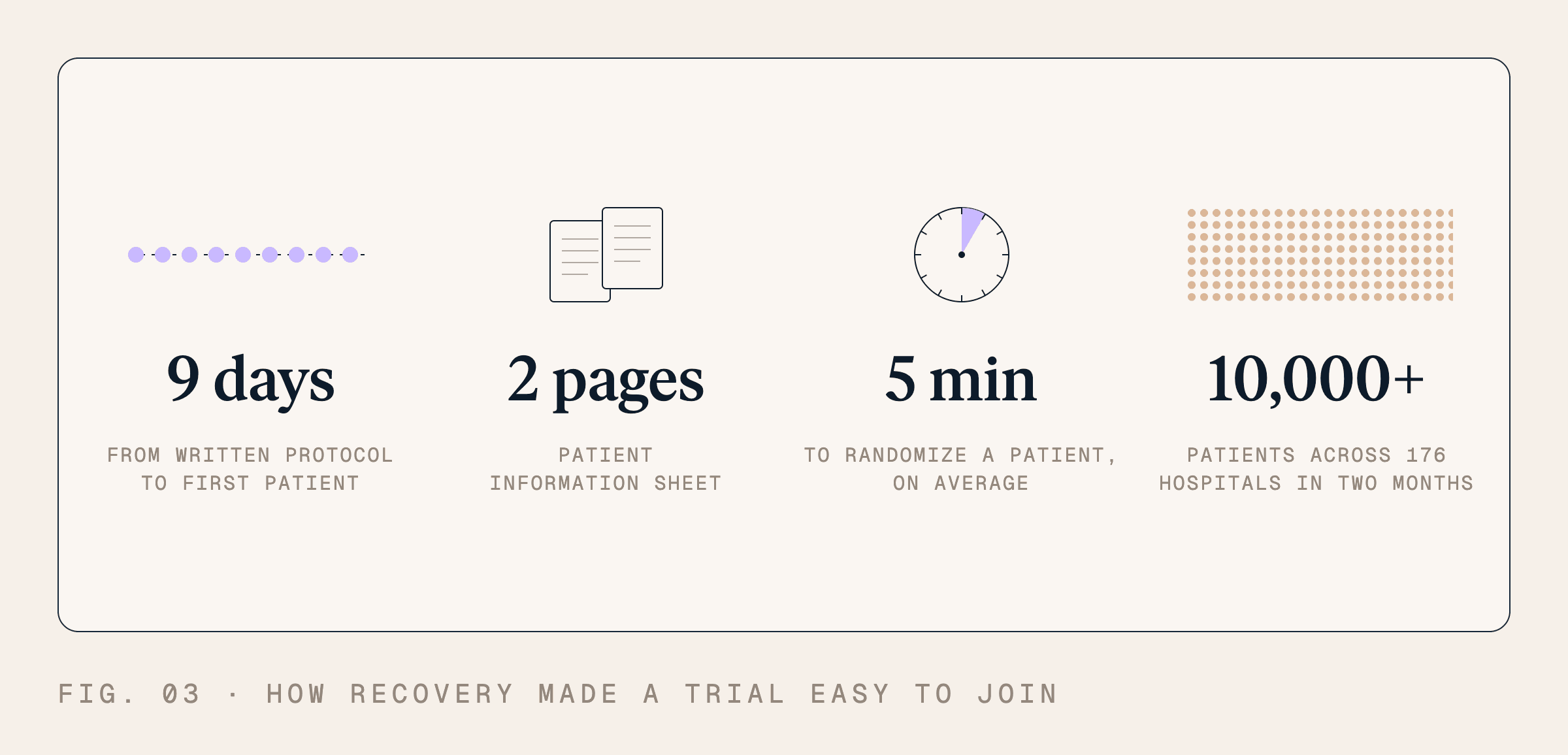
They built a trial that could test several treatments under one plan, called RECOVERY. It was designed to be easy to join. The patient information sheet was two pages. Randomizing a patient took about five minutes on average, once consent was complete. Much of the follow-up came from routine NHS records (information hospitals were already collecting) so hospital staff didn’t have to record it twice. Within two months, more than 10,000 patients had enrolled across 176 hospitals. Oxford Population Health
Each patient was randomly assigned to usual care alone or usual care plus one of several candidate treatments. Treatments could enter and leave while the trial kept running. The first to leave went in June.
One drug leaves. The trial stays.
On June 5, 2020, RECOVERY delivered its first major answer, and it was a no. Hydroxychloroquine, the most talked-about COVID-19 drug of that spring, didn’t reduce deaths in hospitalized patients. Enrollment in that group stopped immediately. HDR UK
Nothing else had to stop. Eleven days later, the same trial reported that dexamethasone, an inexpensive steroid that had been in use for decades, cut deaths by about a third among patients on ventilators and by about a fifth among those on oxygen. No benefit was found in patients who didn’t need oxygen or other respiratory support. “Dexamethasone is inexpensive, on the shelf, and can be used immediately to save lives worldwide,” Horby said. In March 2021, NHS England reported estimates of about 22,000 lives saved in the UK and a million worldwide. RECOVERY Announcement; NHS England
The no mattered almost as much as the yes. It told doctors to stop giving a drug that didn’t work, and it freed patients, staff, and attention for the next question. Its 2022 safety report listed four treatments that reduced deaths and six comparisons with no material benefit. Other comparisons were still underway. Safety Report
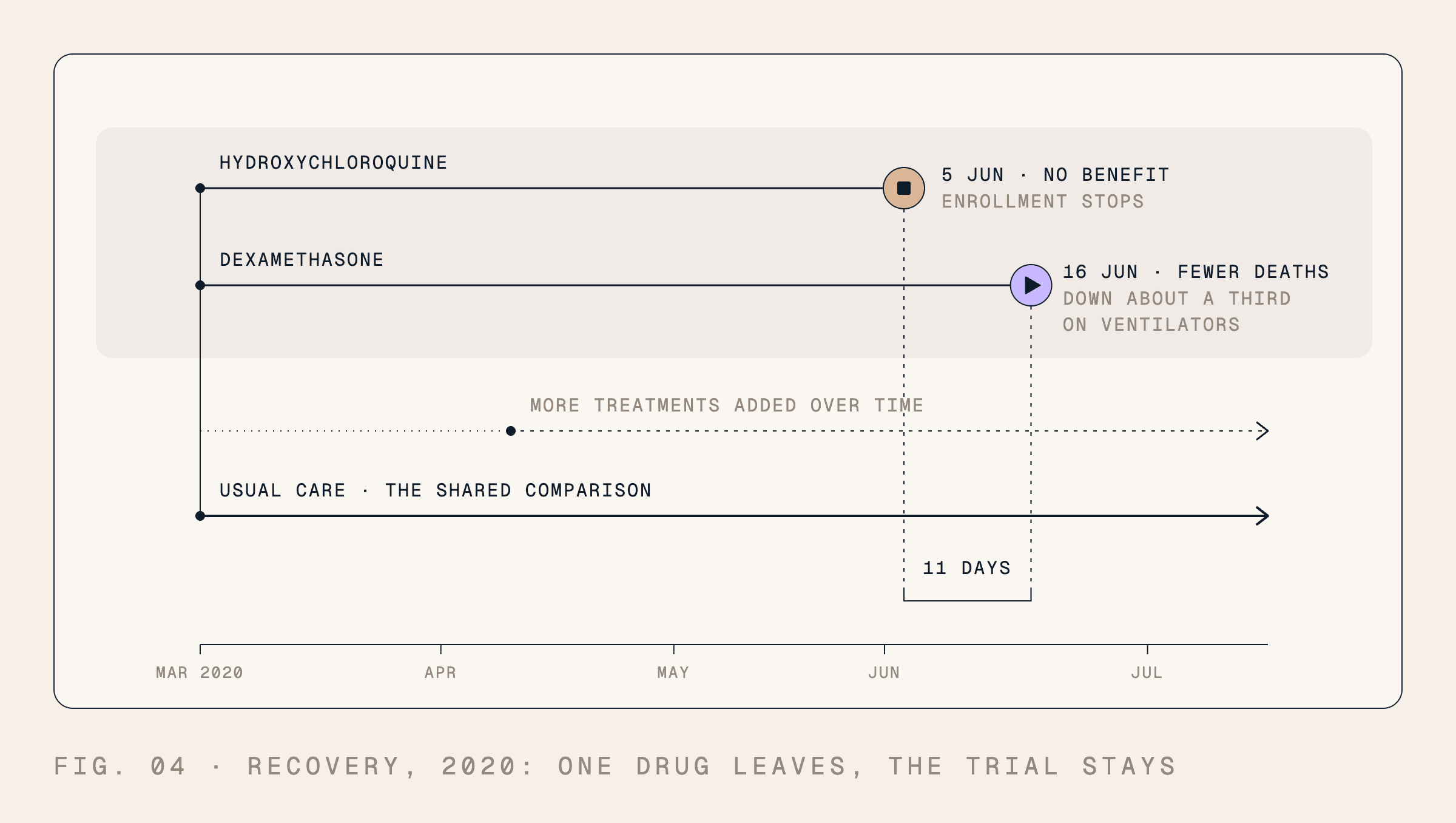
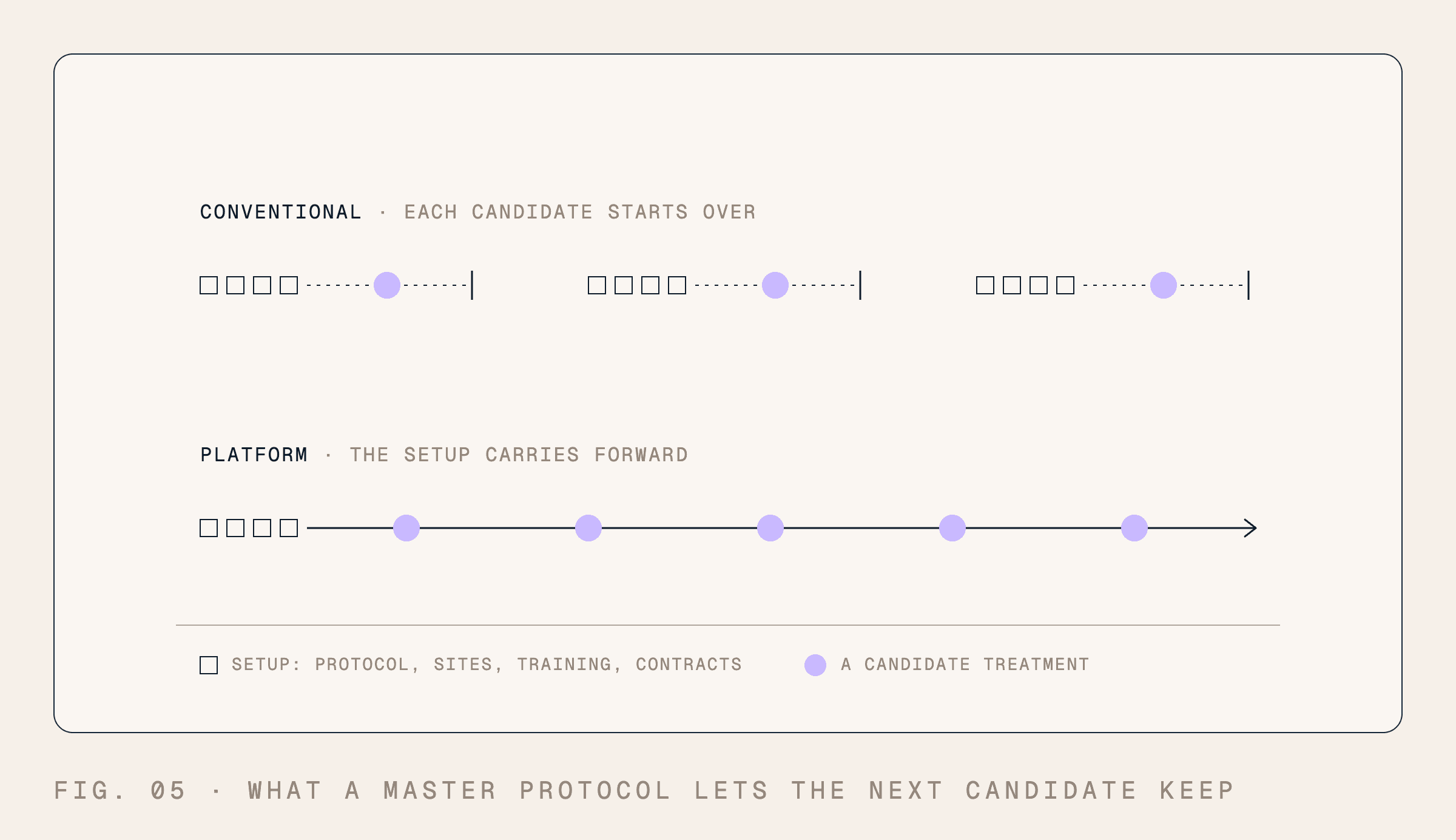
I think this is the part of the story that’s easiest to miss. The headline was the success of a cheap steroid. The real achievement was a system that didn’t have to be rebuilt every time it learned something or every time a new idea came into view. The hospitals, the trained staff, the randomization system, and the connection to patient records all carried forward from one question to the next.
Many conventional trials are built around a particular treatment and a fixed set of questions, then close when that work is complete. The next candidate often starts over with a new protocol, new sites, new training, and new contracts, and some of what the last team learned about running the study can leave with them. In our first issue, I wrote that every individualized therapy should leave the next team with a stronger starting point. A platform trial, run under one shared plan called a master protocol, is that idea built into the design.
Cancer researchers had been building this approach long before COVID. A prostate cancer trial called STAMPEDE is widely recognized as the first. It began in 2005 and added a new treatment comparison in 2011, keeping the existing trial running. A breast cancer platform, I-SPY 2, launched in 2010 to test successive candidates and identify which patients benefited. RECOVERY brought that approach to a problem with unique urgency. STAMPEDE history; I-SPY 2 launch
Outside one crisis, the clock still runs.
Sean Healey was the CEO of an investment firm when he was diagnosed with ALS in 2018. The disease destroys the nerve cells that control movement, and life expectancy after diagnosis is often only two to five years. He put a direct challenge to Merit Cudkowicz, who leads the ALS center at Massachusetts General Hospital: “I might not survive this illness, but I want to make an impact on the field,” Cudkowicz recalled him saying. Then: “Give me a proposal.” BioPharma Dive
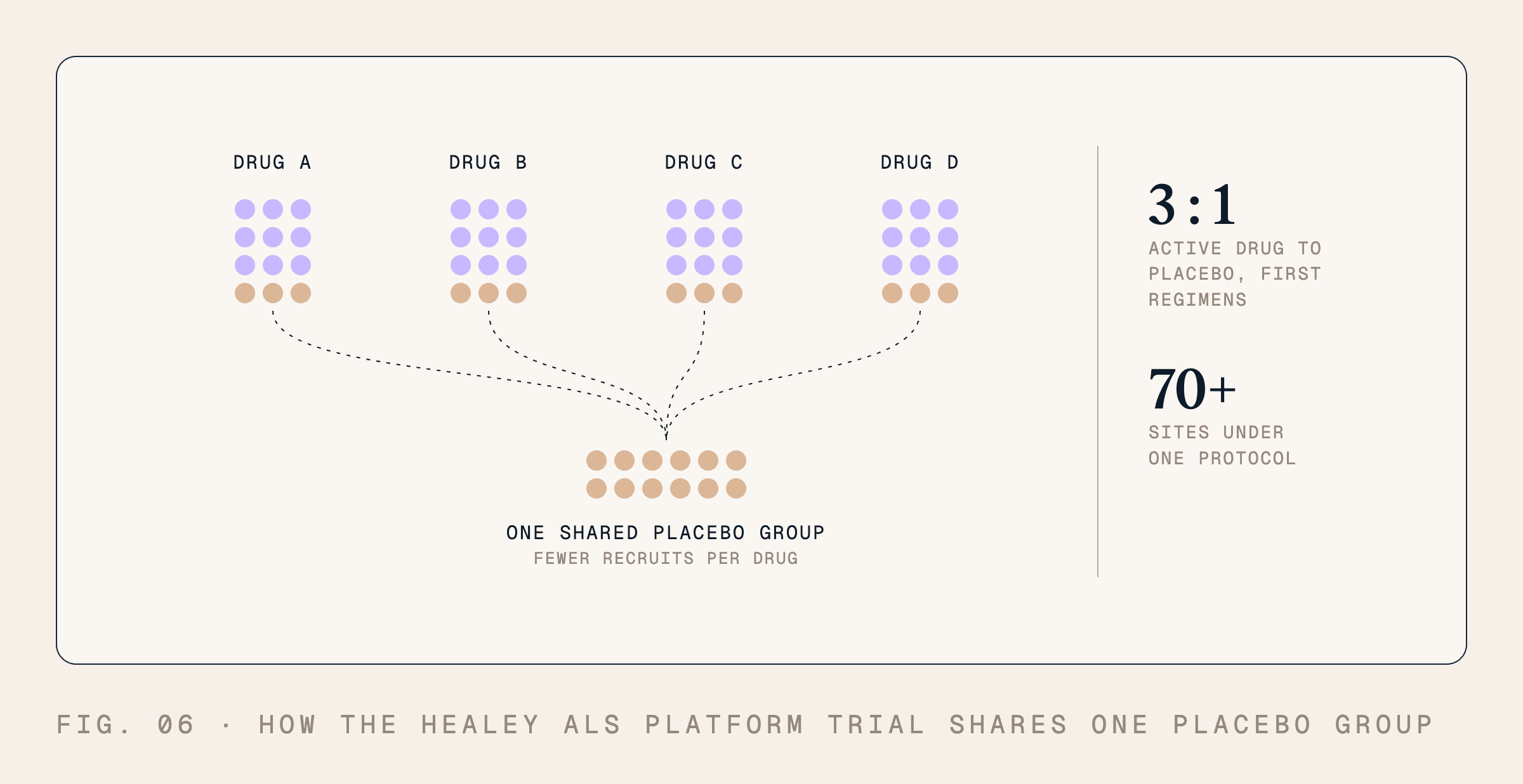
Her team’s proposal was a platform trial: several drugs tested at once, under one protocol, against a shared placebo group. Named the HEALEY ALS Platform Trial, it grew to more than 70 sites. In its first regimens, participants were assigned three to one in favor of an active drug. Sharing placebo data meant each drug could be evaluated with fewer recruits than a separate trial would need. Mass General Advances
Healey helped fund the center that runs it. He died in May 2020, the year the trial launched. “I have hope but no expectation that what we will do with the center will benefit me personally,” he told the Boston Globe in 2018. Boston Globe
The first five drugs missed their primary goals. That’s hard news in a disease with so few options, and the trial hasn’t been fast enough for everyone. Mark Reedy, a participant waiting on results from his group, described the frustration of months passing when time was limited. Still, the team produced results on four drugs within two years of launch, using the same infrastructure rather than running four separate trials. Stopping one drug early for futility saved more than 250 patient visits and five months of work. Two others showed secondary signals worth pursuing. Nurse practitioner Jen Scalia described another gain: negative results help scientists judge which pathways to pursue when choosing the next drug. BioSpace; BioPharma Dive
The lessons stay in the system.
HEALEY has also learned about itself. The current version of its protocol extended treatment periods, enrolled people earlier in their disease, added biomarkers, and expanded remote visits. Placebo data are being deposited in public repositories, and the team has committed to sharing biosamples and genome sequences with other researchers. The model is spreading, too: a platform trial for progressive supranuclear palsy, another neurodegenerative disease, enrolled its first participant this summer. HEALEY Trial Updates; CurePSP
Keeping a trial running also means keeping its comparisons fair. That’s where regulators come in. A platform trial can support drug approval when it produces reliable evidence of safety and effectiveness, just as a stand-alone trial must. But picture its third year: a new drug arrives, usual care has shifted, and a safety signal needs to reach several sponsors. The FDA’s revised draft guidance on master protocols, issued in June 2026, explains how to handle those moving parts. Its recommendations are nonbinding. For the primary analysis, it generally recommends comparing each treatment only with eligible control patients randomized during the same period. It also recommends early discussion with the agency and clear responsibilities for safety information and protocol amendments. That’s how the design can keep evolving while its answers remain trustworthy. FDA Master Protocol Guidance; FDA explanation
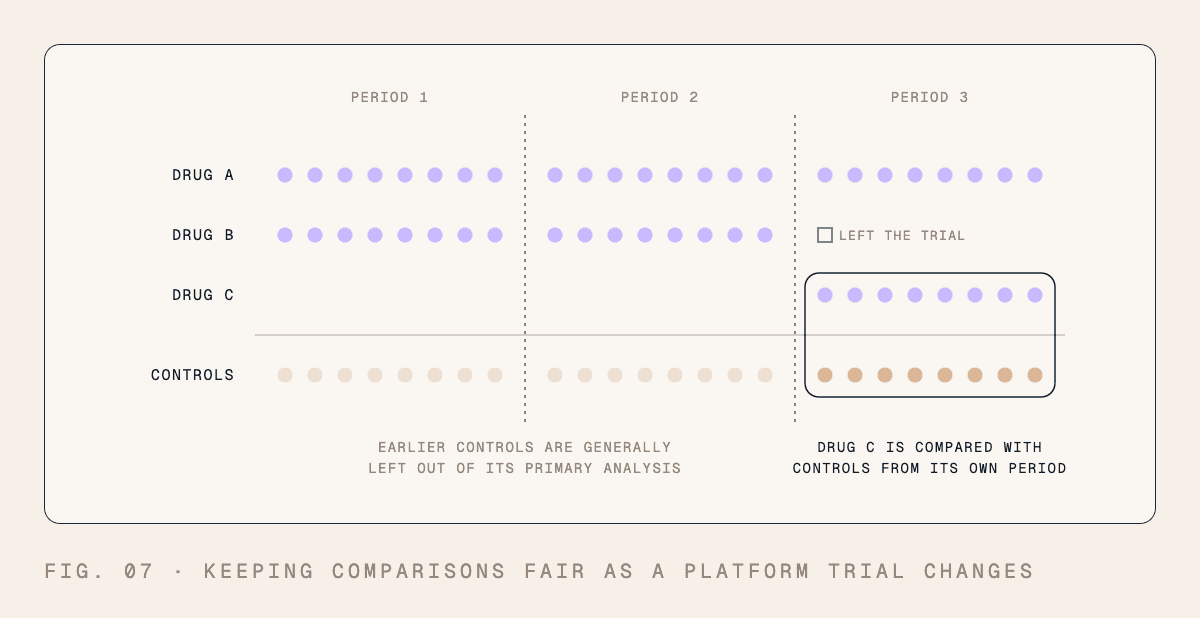
Platform trials won’t fit every question. But where they fit, one answer doesn’t have to end the experiment, and one failure doesn’t have to waste what it taught.
Dexamethasone had been on hospital shelves for decades. It took a trial built to keep asking questions to show whom it could save. Sean Healey asked for something he knew might not reach him in time. Both stories point to the same standard: whether a drug works or fails, the next patient should inherit a better starting point.
Something Good
Six fewer injections every week.
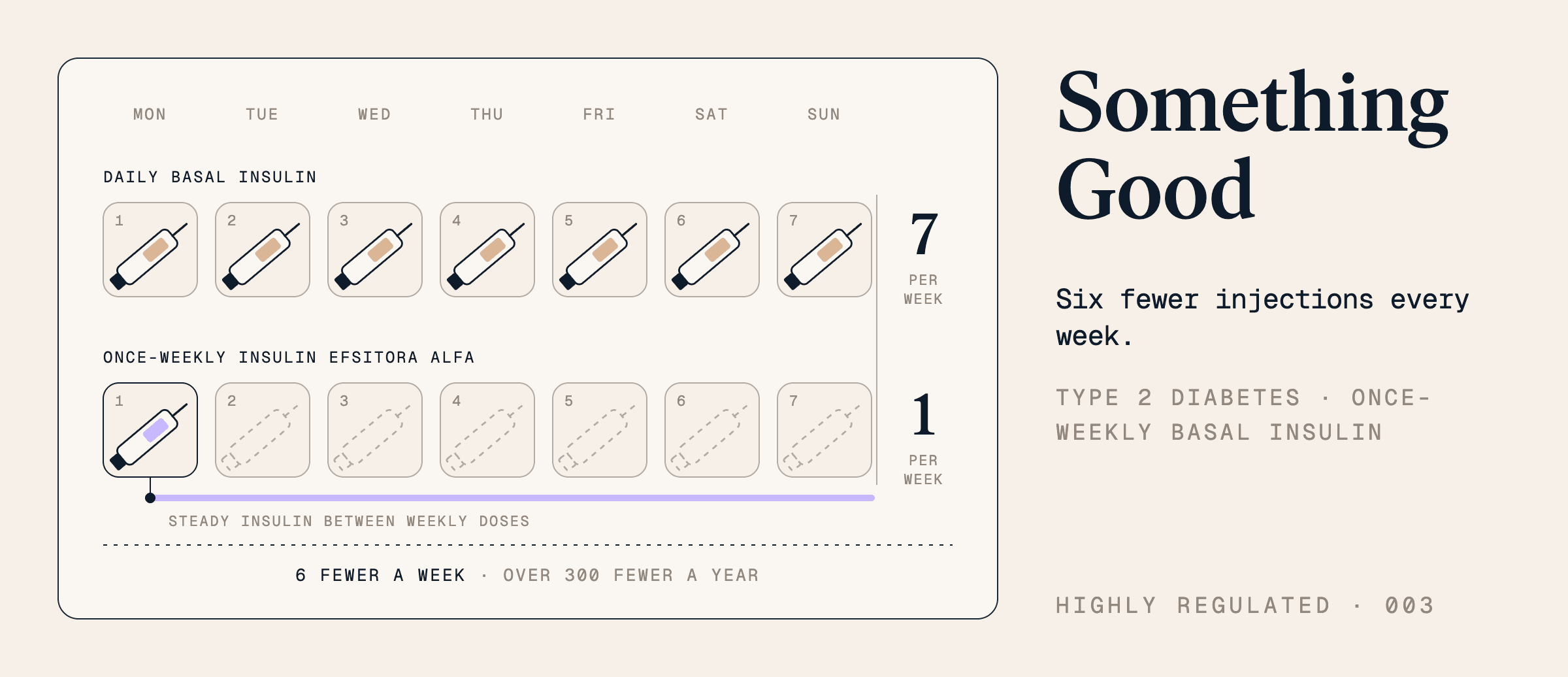
Insulin has been part of diabetes care for more than a century. Basal insulin, the background dose that manages blood glucose between meals and overnight, often requires an injection every day, for years.
Stretching that day to a week instead was an engineering problem. Lilly’s scientists attached a modified insulin molecule to part of a human antibody, which helped it last longer in the body. The result, called insulin efsitora alfa (EA), provides steady insulin exposure between weekly doses. Original Article
Then it had to hold up against the daily standard. Across four late-stage trials involving more than 3,400 adults with type 2 diabetes, weekly insulin EA lowered A1c, a measure of average blood glucose, about as well as the daily basal insulins tested. Lilly Announcement
On September 24, Lilly announced its FDA approval with the name Onswik, the second once-weekly insulin approved in the U.S. for adults with type 2 diabetes. It still requires careful dosing and monitoring for low blood sugar. Some patients will still need mealtime injections, and cost and coverage will shape access. FDA
Still, I like this kind of progress. It doesn’t make diabetes easy. It does make one of its most relentless routines less burdensome.
Six fewer injections a week. Over 300 fewer a year.
The Katalyze Marketing Team