Edition 002
The invisible relay that keeps medicine alive

Welcome to Highly Regulated 002, from Katalyze
Welcome back to Highly Regulated, the weekly letter from Katalyze that informs and celebrates the incredible and impactful work happening across life sciences. We hope it’s a useful and interesting use of 10 minutes each week.
This week’s edition revolves around an oft-forgotten question: how many more breakthroughs have to happen after a treatment works in the lab?
A treatment can perform perfectly in the laboratory and still fail the patient if it can’t survive storage, transport, and every handoff in between. We tend to call those things logistics, as if they begin after the science is finished. For many therapies, they’re part of the science.
That’s where we’re starting this week: the invisible relay that keeps medicine alive. From the freeze-dried smallpox vaccine to CAR-T cells and radiopharmaceuticals, the route changes, but the question does not: can the treatment make it all the way there?
We’ll end, as always, with a celebration of life sciences. This week, it’s the story of three scientists who kept going after an early antibody candidate failed, and the 40,000 combinations that followed.
First, though: a few things worth your attention from around the industry.
Zack Holland and Alyse Gonthier, PhD from Katalyze
Worth Your Time
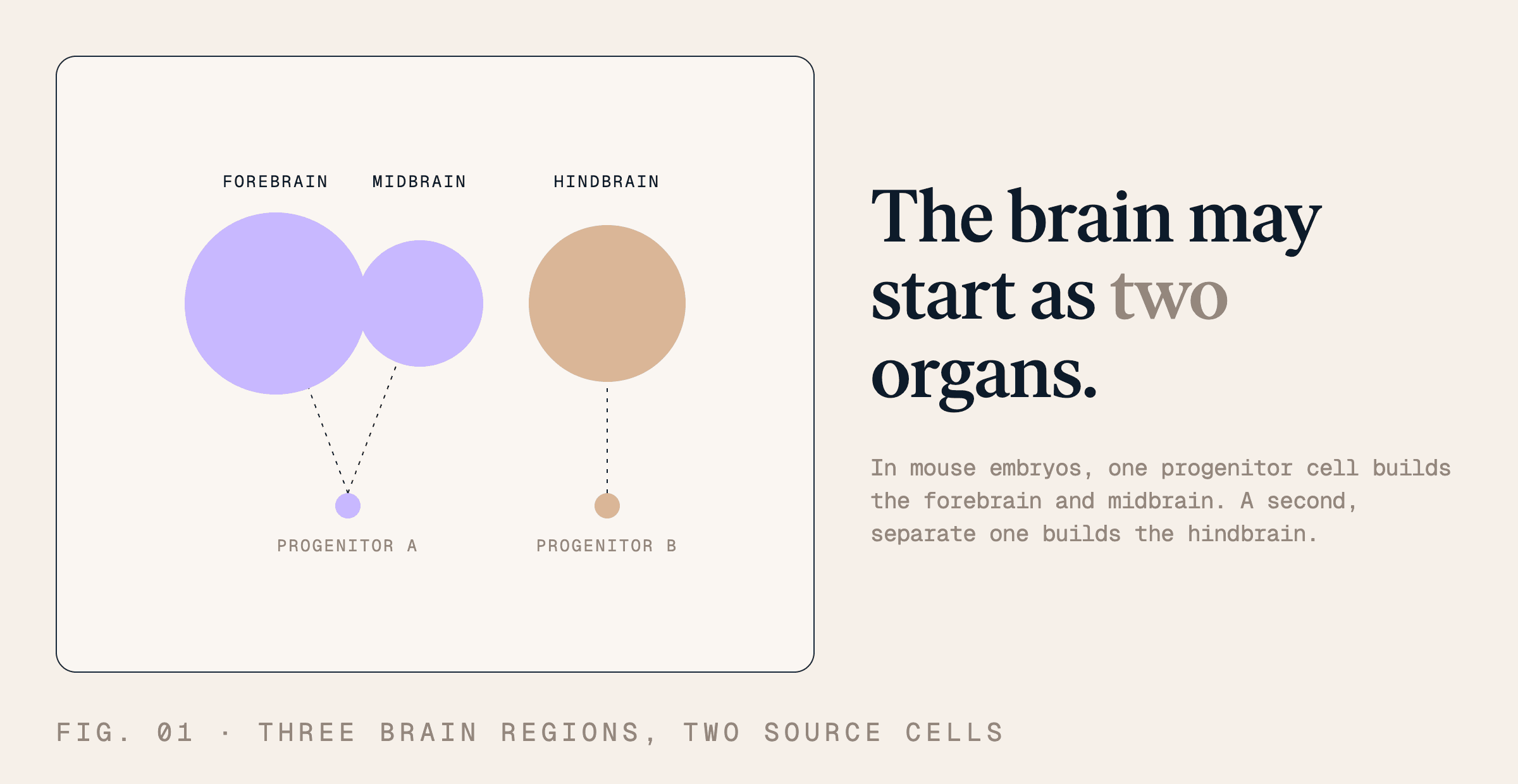
- The human brain could be two separate organs. The discovery could help us study ALS. Working in mouse embryos, a Stanford group led by Kyle Loh traced the brain back to two different progenitor cells: one that builds the forebrain and midbrain, and another that builds the hindbrain. Each is locked onto its separate path. The result is a strange possibility: the front and back of the brain may develop as separate organs that later learn to work as one. These findings gave way to a new capability to grow hindbrain motor neurons, something that scientists have struggled to do for decades. The newly-enabled in vitro study of these neurons, which are affected in ALS and spinal muscular atrophy, could pave the way for breakthroughs in understanding and treatment. Stanford Medicine
- Virtual cells you can run drug tests on. A cell has depth, and it never stops moving. Two-dimensional microscopy images miss both. A UC San Diego team led by Johannes Schöneberg captured cells in full 4D and used the footage to build an AI model called MitoSpace. Trained on 40,000 movies of drug-treated cells, the model grouped drugs by mechanism with 75 percent accuracy, much improved from 56 percent when it learned from conventional 2D images. The model does not replace the full experiment. A credible first screening, though, could save a lot of time and resources. Cell
- Robots and AI found new chemistry in a 135-year-old reaction. The Biginelli reaction has been a chemistry-class staple since 1891. A team at Korea's UNIST, led by Bartosz Grzybowski, used a robotic platform to test 960 combinations of concentrations, temperatures, catalysts, and other conditions. Hidden in that reaction space was a previously unknown branch that produces complex bicyclic structures. Chemical AI then helped the researchers reconstruct the mechanism. A useful reminder that "well understood" and "fully explored" are not the same thing, even for a reaction older than the discovery of the electron. Nature Synthesis
- Telix agrees to acquire radioisotope powerhouse ITM Isotope Technologies. Telix Pharmaceuticals has agreed to acquire ITM for $1.65 billion up front, with up to $700 million more tied to regulatory and sales milestones. ITM’s commercial manufacturing and distribution network spans more than 65 countries. Telix will strengthen its position as a heavyweight in radiopharmaceuticals by merging with the world’s leading, and in some cases only, globally scaled producer of therapeutic radioisotopes. If the transaction closes, Telix would also add a late-stage treatment for neuroendocrine tumors. This milestone acquisition effectively elevates Telix into the same echelon as Novartis within the nuclear medicine sector, setting the stage for a compelling race to capture the rapidly growing market. Telix Announcement
Meanwhile, at Katalyze
Every handoff is also a transfer of knowledge.
A therapy can move across research teams, manufacturing sites, suppliers, and partner organizations before it reaches a patient. At each step, the receiving team needs more than the latest file. They need to understand why a process was designed a certain way, where a material requirement came from, what changed, and which evidence supports the decision.
Katalyze puts that operational knowledge to work. We connect information across development documents, manufacturing records, supplier data, and scientific sources. Our governed AI agents use that context to support deviation investigations, raw material characterization, yield optimization, and tech transfer, with findings linked to their original sources.
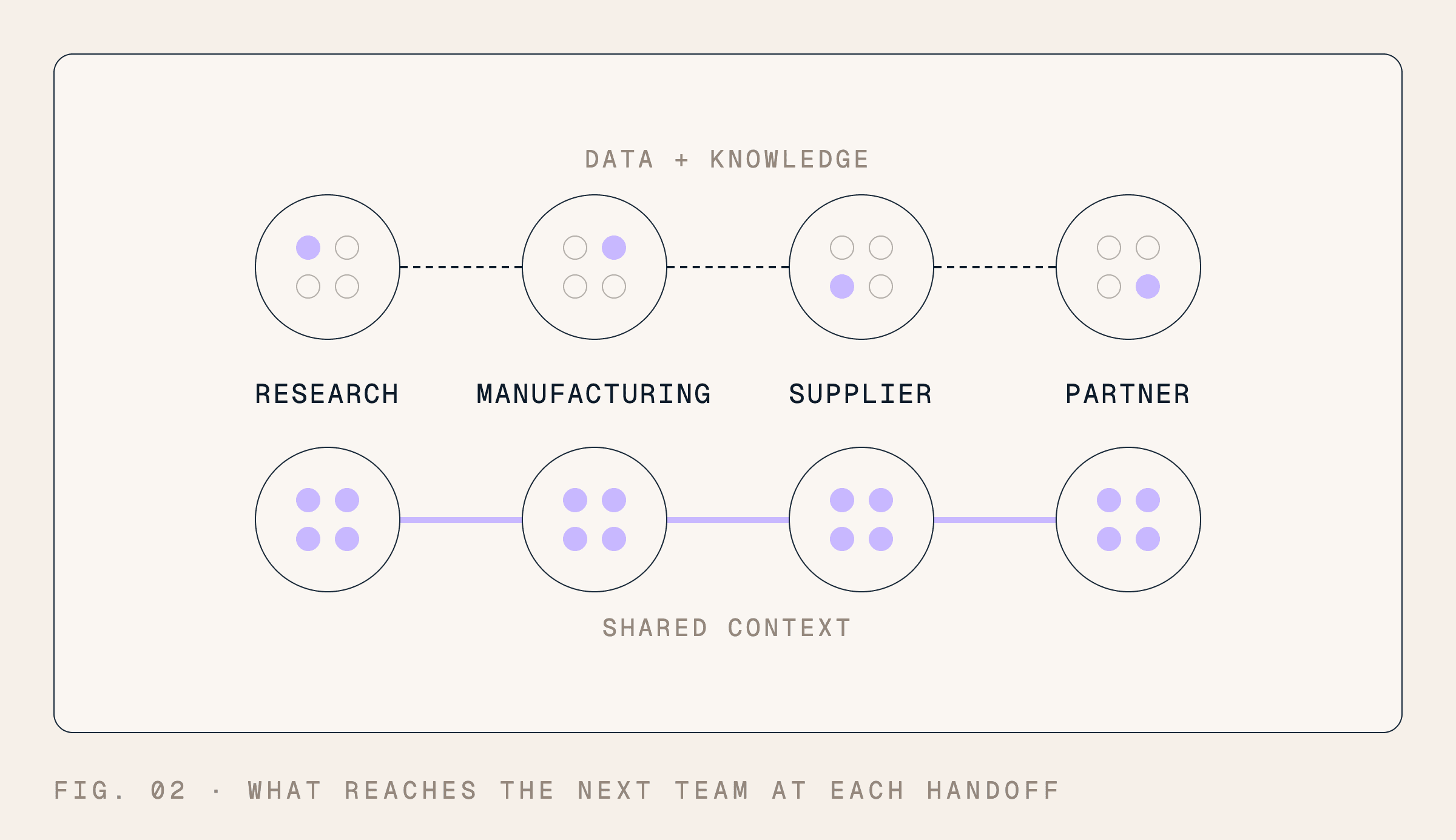
Katalyze is a decision-supporter, not a decision-maker. Your experts direct the work, review the evidence, and retain judgment. The system takes on more of the searching, assembling, and tracing that can consume the time of the people who know the process best.
That continuity becomes especially important when work moves between teams or sites. The next group should not have to reconstruct six months of reasoning from a folder of documents. The process transfers, so the context should transfer with it.
That’s our “Science Unlocked” principle at work: freeing the people making medicine to apply more of their expertise to work only they can do.
The Feature: A breakthrough only works if it survives the trip
In the late 1940s, British bacteriologist Leslie Collier began working on a way to dry the smallpox vaccine. Compared with inventing the vaccine itself, drying it might have seemed like a smaller, secondary problem. It wasn’t.
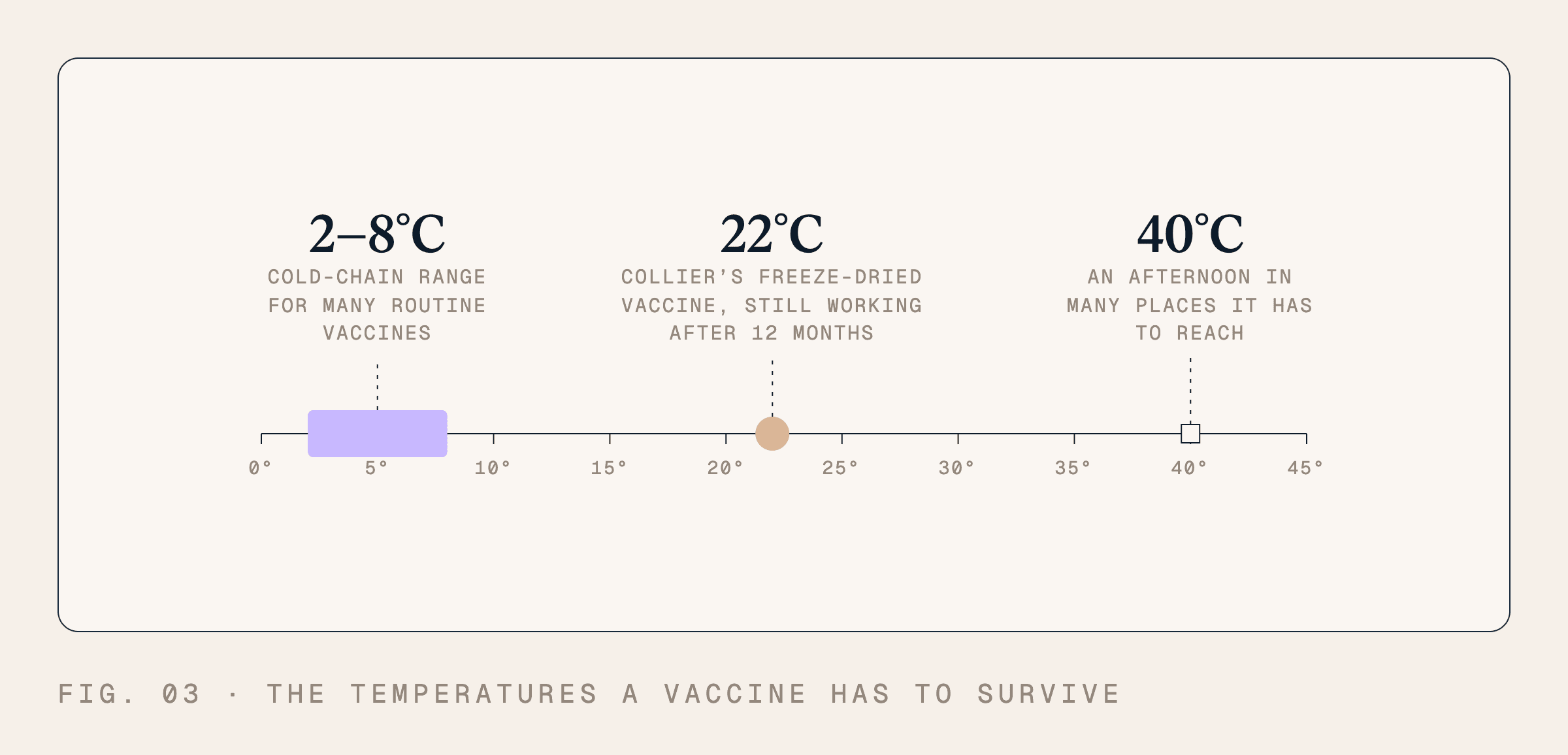
The vaccine used a live virus, and it lost potency quickly in the heat. A dose could leave the laboratory fully effective and arrive in a hot climate unusable, spoiled somewhere between the people who made it and the person who needed it. Collier freeze-dried the vaccine into a powder, and in his experiments, it still produced successful vaccinations after 12 months at 22 degrees Celsius. Gavi
Three decades later in 1977, the last naturally occurring case of smallpox was recorded. Across 14 diseases, vaccination programs have saved an estimated 154 million lives since 1974. No single formulation made that possible. But Collier’s work solved one of the campaign’s basic constraints: the vaccine had to retain its function all the way to the patient. WHO; WHO News
I think about this a lot because it is easy to celebrate the invention and forget what must follow it. We tend to talk about medicine as if the hard part ends when the molecule works, then describe manufacturing, shipping, storage, and administration as logistics. But efficacy at the bench is not enough. A medicine also has to survive the conditions between production and use, and someone has to design that journey.
The cold chain turned delivery into infrastructure.
When the WHO expanded childhood vaccination programs globally in the 1970s, that journey became an engineering problem at enormous scale. Many routine vaccines needed to stay between 2 and 8 degrees Celsius, including in places with 40-degree afternoons and unreliable electricity. The response was a system rather than one dramatic invention: ice-lined refrigerators that stayed cold through outages, solar-powered equipment that did not depend on the grid, temperature loggers, and vaccine vial monitors that showed cumulative heat exposure. Half of the vaccine refrigerators UNICEF has installed worldwide since 2017 have been solar-powered. WHO
None of those tools change the biological mechanism of a vaccine. They do change whether the mechanism is still available when a health worker opens the vial. Cold-chain failures still waste doses and interrupt care, and once a vaccine loses potency through improper temperature exposure, that potency cannot be restored. The cold chain is not just a wrapper around the vaccine. It’s part of what preserves the vaccine as a usable product.
Newer therapies make the trip even harder to separate from the medicine.
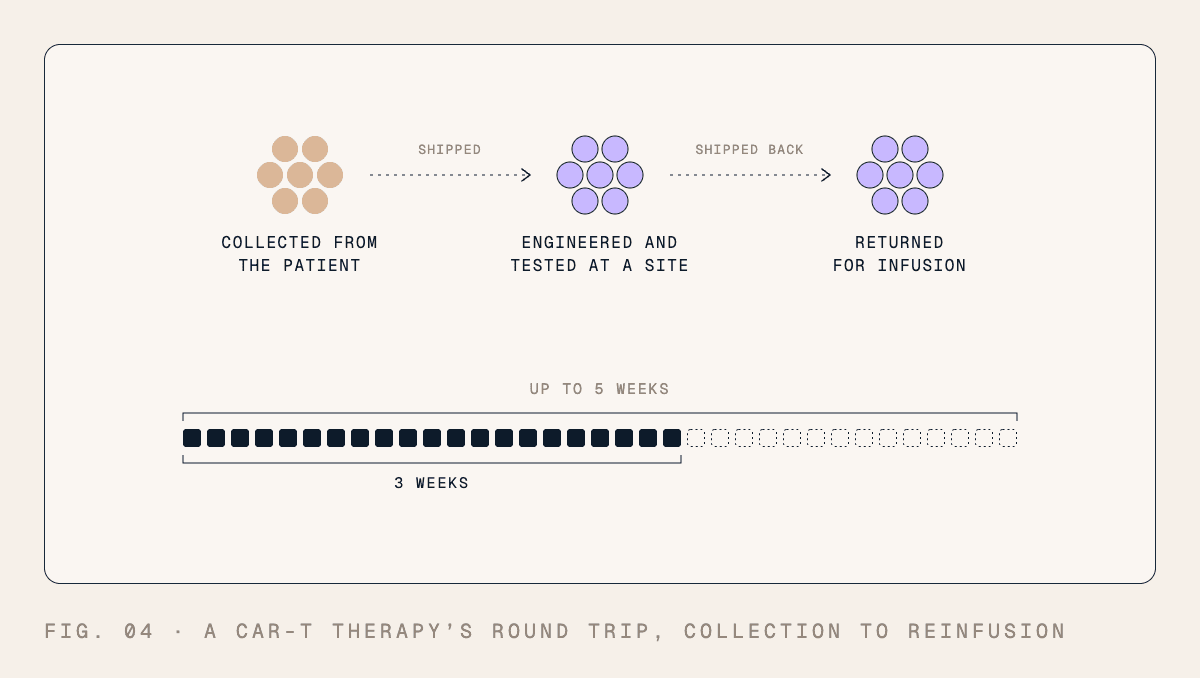
This is not only a 20th-century story. A modern CAR-T therapy begins with the patient’s own cells. They’re collected, shipped to a manufacturing site, engineered into a cancer-fighting product, tested, and returned for infusion. The process from collection to reinfusion currently takes about three to five weeks. For a patient with an aggressive cancer, manufacturing time is also clinical time. National Cancer Institute
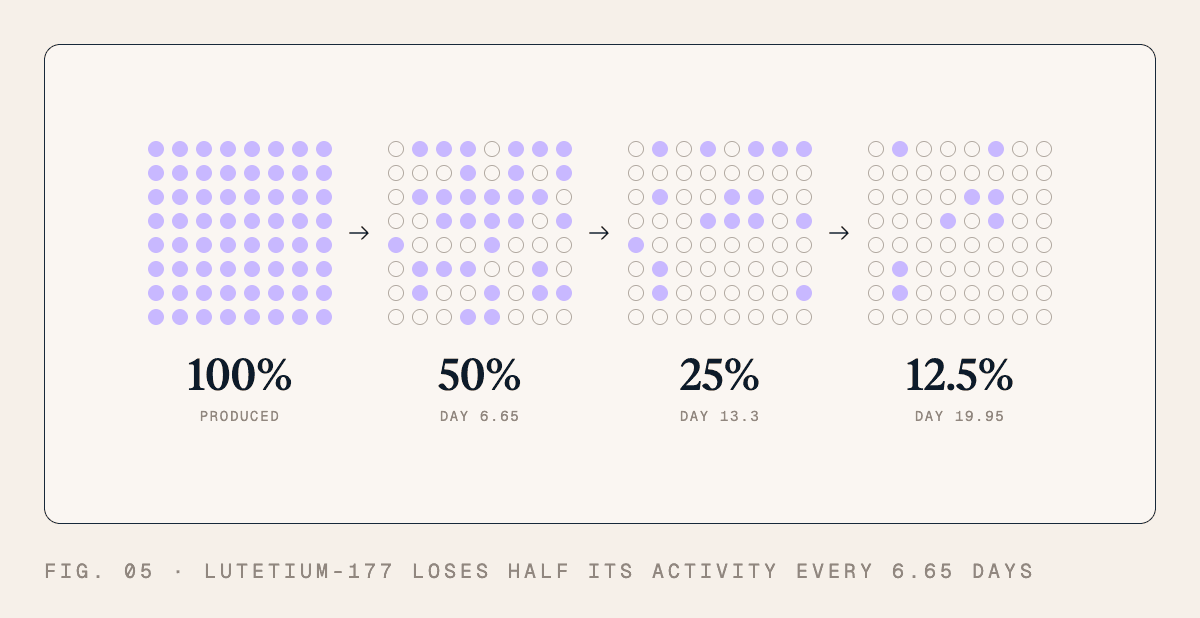
Radiopharmaceuticals impose a different clock. Lutetium-177, a therapeutic isotope, has a physical half-life of about 6.65 days, while common imaging isotopes have half-lives measured in hours or minutes. Production, transport, and the patient’s appointment have to be coordinated around radioactive decay. A delay does not merely make the supply chain less efficient. It can leave a prepared dose unusable or force treatment to be rescheduled. Journal of Nuclear Medicine
We often call delivery the last mile, but that phrase doesn’t quite fit these therapies. For CAR-T, the journey begins when the patient’s cells are collected, before the finished treatment exists. For a radiopharmaceutical, the usable life of the product begins shrinking as soon as the isotope is produced. The route is not attached after the medicine is made usable; it helps determine whether the medicine can be used at all.
The next breakthrough might be a better route.
What do you do with a delivery problem built into the product? There’s no single answer.
Sometimes the product itself can become more resilient. Researchers are developing formulations that could allow some biologics to spend more time at room temperature. Freeze-drying remains part of that work, now joined by adding stabilizing molecules, nonaqueous formulations, and other methods suited to newer kinds of medicine. Not every temperature constraint can be engineered away, but each improvement can widen the conditions under which a therapy remains usable. Nature Communications
In other cases, the route can become shorter. Academic centers and developers are testing closed, automated systems that can manufacture CAR-T products at or near the treatment site. Published studies describe manufacturing cycles of roughly 7 to 12 days. These models remain early, and moving production closer to the patient does not remove the need for testing, release criteria, or regulatory oversight. It may, however, reduce transport steps and some of the waiting built into centralized manufacturing. Frontiers Immunology; NCBI Bookshelf
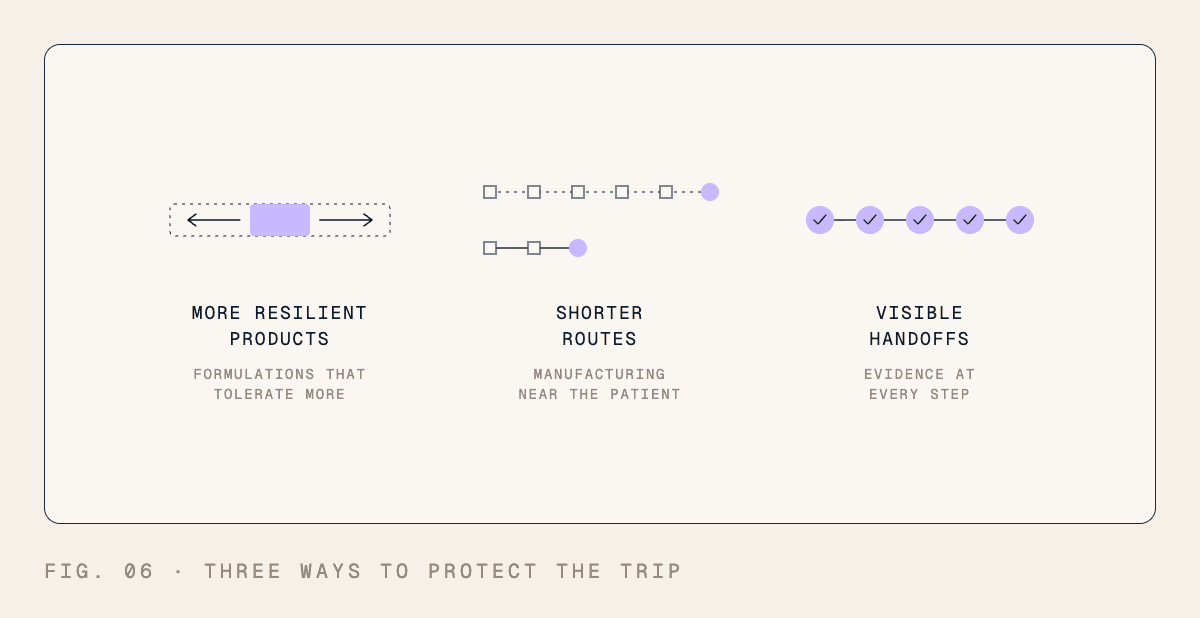
Some constraints cannot be removed. Then the work is to make every handoff visible and controlled. Stability studies establish what a product can tolerate. Validated shipping conditions define how it can move. Release criteria, temperature records, and chain-of-identity controls provide evidence that the therapy reaching the hospital is the therapy that was made and tested for that patient.
The scientists, engineers, quality teams, and operators who build those systems are not supporting the breakthrough from the sidelines. They’re the closers that make everyday miracles possible.
The smallpox vaccine didn’t change the world because it worked in a laboratory. It changed the world because people learned how to keep it alive long enough to reach the people who needed it. New therapies will require different routes, but the lesson is the same: delivery demands its own ingenuity and applause.
Something Good
The first promising antibody failed. 40,000 combinations later, a breakthrough treatment for hemophilia A.
People born with severe hemophilia A have very little working Factor VIII, a clotting protein, and their lives get organized around the bleeding that follows. The standard fix is to replace factor VIII. But about 30 percent of people with severe disease develop antibodies that neutralize the replacement, leaving some of the hardest cases with fewer options.
Scientists at Chugai, a Japanese pharmaceutical company, had a different idea. Instead of replacing Factor VIII, could an antibody do its most important job? They set out to build an antibody that mimics the function of Factor VIII, grabbing Factor IXa with one arm and Factor X with the other, holding them close enough for the clotting cascade to continue.
The first promising candidate worked in a test tube. In animals, it made bleeding worse.
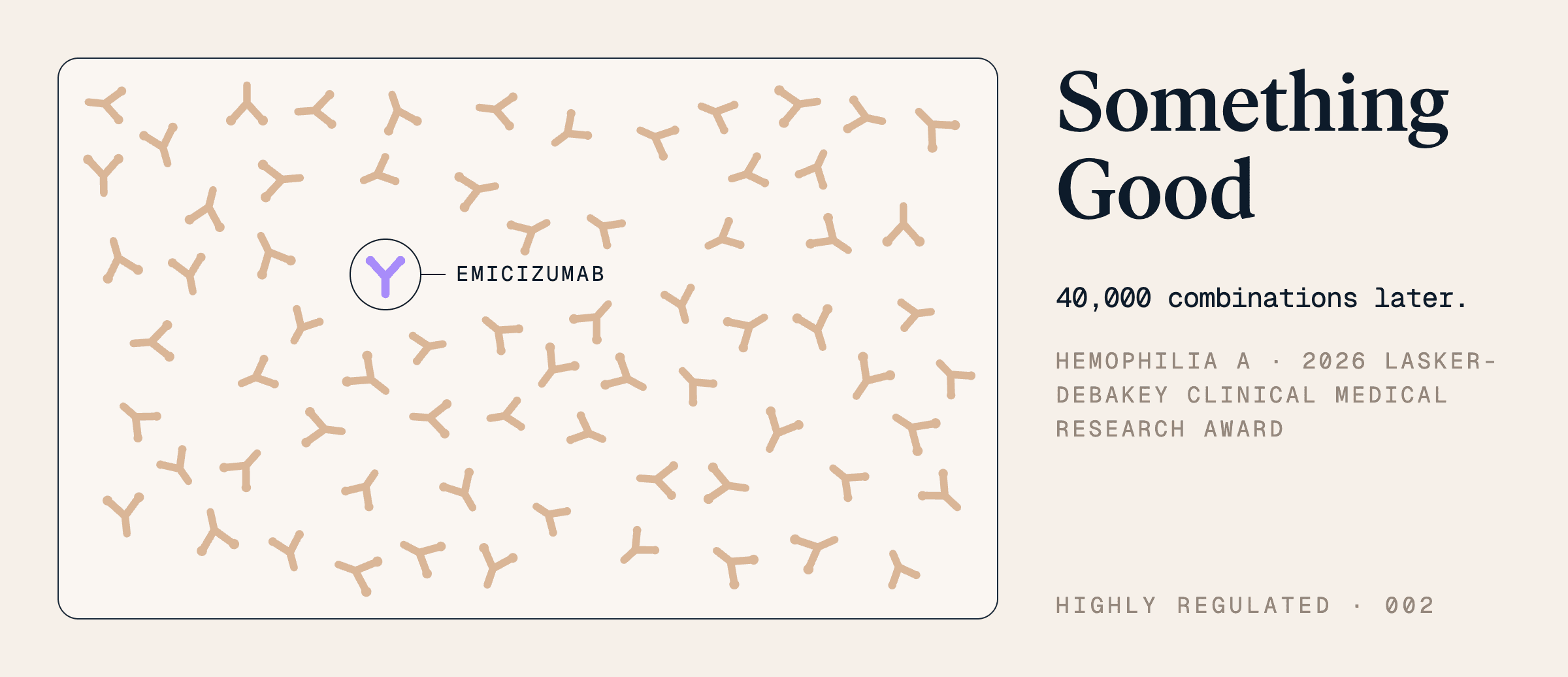
So they kept going. The team built and screened 40,000 antibody combinations, then spent years engineering the best candidates. Improve one property, and another slipped. Better solubility could mean worse activity. A molecule that worked might disappear from the body too quickly. It took nearly a decade to find one that could do its job, last long enough in the body, and be manufactured at scale.
That antibody became emicizumab, now sold as Hemlibra. In its pivotal trial in people with Factor VIII inhibitors, it reduced treated bleeding rates by 87% compared with no routine preventative treatment. The FDA approved it in 2017 for patients with inhibitors, then expanded the approval in 2018 to include patients without inhibitors.
This month, the scientists behind that work, Kunihiro Hattori, Takehisa Kitazawa, and Tomoyuki Igawa, received the 2026 Lasker-DeBakey Clinical Medical Research Award. Lasker Foundation
The medicine exists because, for nearly a decade, they didn’t let failed experiments stop them.
The Katalyze Marketing Team