Edition 001
What happens when medicine is made for one person?

Welcome to Highly Regulated 001, from Katalyze
This is the first issue of Highly Regulated, a weekly letter from Katalyze that informs and celebrates the incredible and impactful happenings in the life sciences industry. We hope its a useful and interesting 10 minutes each week.
To get us started, I keep coming back to a slightly uncomfortable question: what happens when we can design a medicine for one person, but everything around it was built for millions?
The science is extraordinary. The logistics are humbling. Someone still has to manufacture the treatment, establish what counts as evidence, and get everyone moving before the patient runs out of time.
That’s where we’re starting this week: N-of-1 medicine, and what it takes to make a treatment for a single patient. There’s a lot to be hopeful about. There’s also a lot to build.
We’ll always end the newsletter with a celebration of life sciences; something great is happening every week and deserves the spotlight.
First, though: a few things worth your attention from around the industry.
Zack Holland and Alyse Gonthier, PhD from Katalyze
Worth Your Time
- Jennifer Doudna’s next act is getting personal. Aurora Therapeutics, cofounded by the CRISPR pioneer, is developing personalized gene-editing treatments, starting with phenylketonuria, or PKU. Different mutations in the same gene can leave patients unable to properly process phenylalanine. Aurora wants a platform that can address multiple mutations without starting development from scratch each time. That’s the challenge to watch: how much of personalized medicine can become repeatable? Aurora Therapeutics
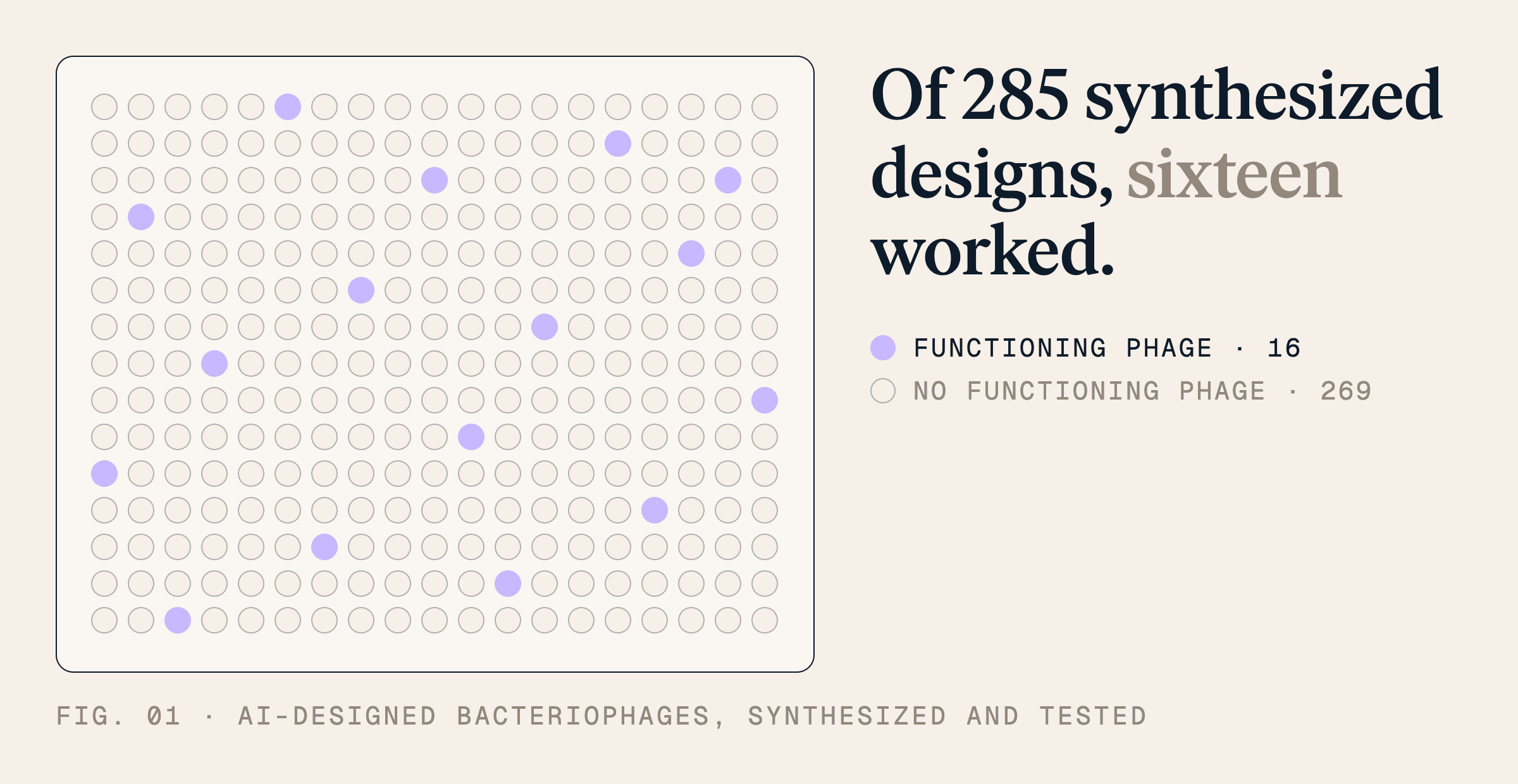
- AI designed viral genomes. Sixteen actually worked. Researchers used genome language models to design bacteriophages, the viruses that infect bacteria. Of 285 synthesized designs, 16 produced functioning phages. A mixture could even kill E. coli strains resistant to the original natural virus. These are laboratory results, with plenty of work between here and a viable therapy. Still, an AI-designed genome that functions is a pretty remarkable thing to cross off the scientific to-do list. Preprint Article
- DNA has been doing something we finally caught on camera. Scientists at Sheffield and York captured two DNA double helices “zipping” together, directly visualizing an interaction researchers had spent more than 20 years trying to explain. Advanced microscopy captured DNA pairing and groove alignment, while simulations showed how positively charged ions help bridge the molecules. The finding deepens our understanding of how DNA pairs and organizes itself. Even biology’s most familiar molecule still has a few things to show us. University of Sheffield
- Cancer changes its identity. Researchers are trying to close that escape route. Some prostate cancers evade treatment by becoming less dependent on the hormone signaling that drugs target. A University of Michigan team tested a combination aimed attacking the new identity’s function and disrupting the identity change itself. In cells and mice, it slowed tumor growth more than either approach alone. Early, yes. But a compelling way to tackle a maddeningly adaptable disease. JCI Insight
Meanwhile, at Katalyze AI
A personalized medicine shouldn’t mean starting from scratch.
A therapy for one patient still needs a manufacturing process that holds up. The scientists and engineers making it happen have precious little time to spend chasing documents or reconstructing why someone chose a particular material six months ago.
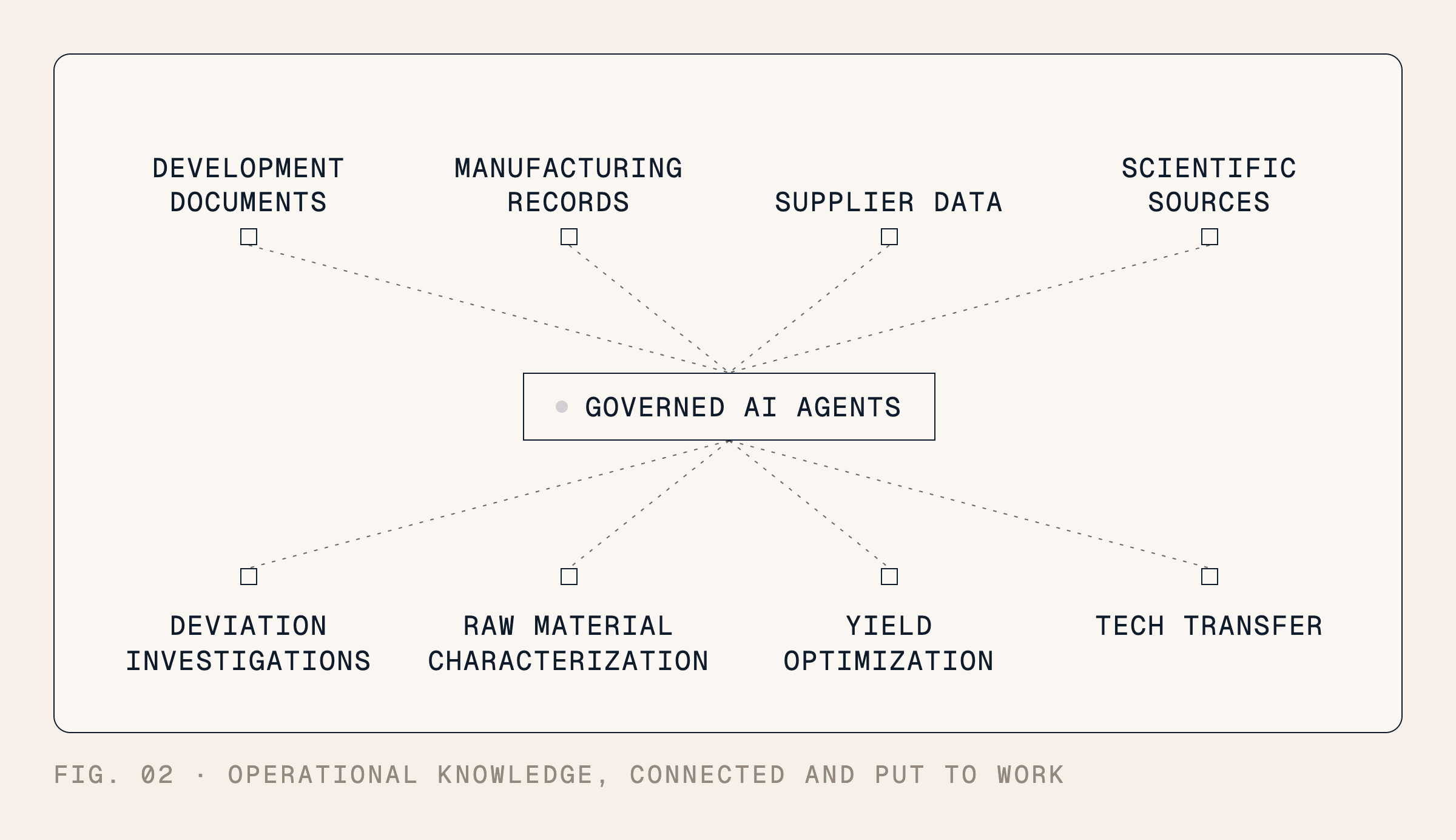
Katalyze puts that operational knowledge to work. We connect information across development documents, manufacturing records, supplier data, and scientific sources. Our governed AI agents use that context to support deviation investigations, raw material characterization, yield optimization, and tech transfer.
The agents assemble evidence, test possible explanations, and draft findings linked to their sources. Your experts direct the work and retain every decision, with more time to resolve the manufacturing questions that need their judgment.
For N-of-1 teams, the opportunity is especially compelling: carry what you’ve learned into the next program. The context established for one job can support the next, giving teams a stronger foundation as they evaluate materials, investigate variability, or transfer a process.
That’s what “science unlocked” means to us: freeing the people making medicine to put more of their expertise into getting it made.
The Feature: One patient needs a whole system
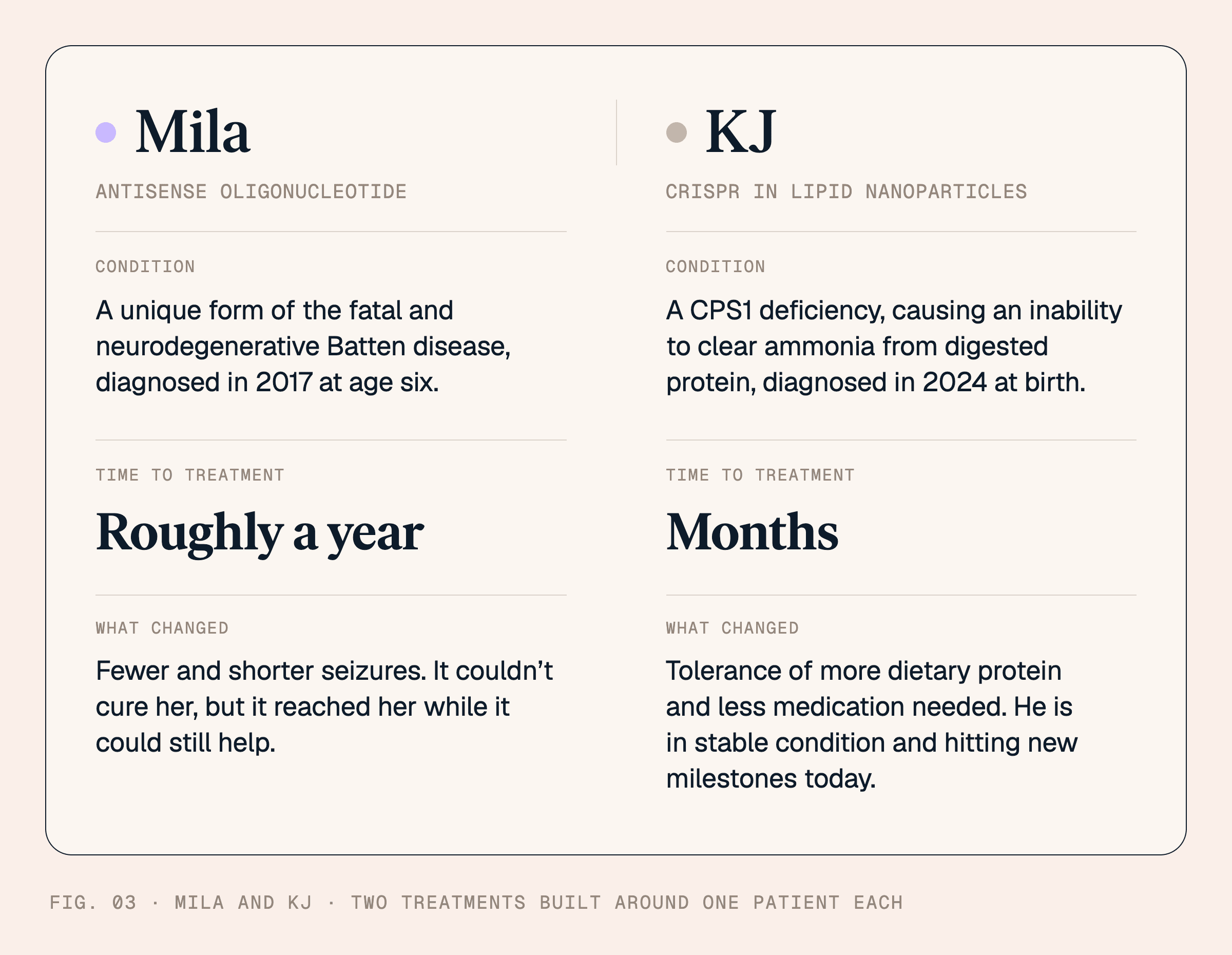
In 2017, six-year-old Mila Makovec was diagnosed with a unique form of Batten disease, a rare and fatal neurodegenerative condition.
Researchers believed they might be able to help by designing an antisense oligonucleotide: a short piece of genetic material that could intervene in how her cells processed a faulty gene’s instructions.
Within roughly a year, they had designed a drug around her specific mutation, secured FDA authorization, and started treatment.
They named it milasen.
It couldn’t cure Mila, but it reduced the frequency and duration of her seizures. A treatment had been built around the molecular particulars of one child and reached her while it could still help. Boston Children’s Hospital
Then came KJ.
Born with severe CPS1 deficiency, KJ couldn’t properly clear ammonia from his body; his overall prognosis wasn’t good. His team developed a personalized CRISPR-based treatment designed to correct his specific genetic variant, packaged it in lipid nanoparticles, and delivered it to his liver.
The therapy was developed within months and delivered to him in February of 2025. Early observations showed that he could tolerate more dietary protein and needed less medication to remove excess nitrogen. Those were encouraging results. While long-term follow-up is needed to understand the treatment’s lasting effects, KJ’s health and outlook today are a hopeful signal. Penn Medicine
It’s easy to reach for the word miracle when you read these stories. I understand the impulse.
But I want to know how we do it again.
Both treatments required people to assemble the right science, manufacturing capabilities, clinical judgment, family advocacy, and regulatory cooperation around one patient. An extraordinary amount of coordination sat behind that first dose.
Inventing the drug is only part of the accomplishment. Getting the whole system to move together is what puts it in a patient’s hands.
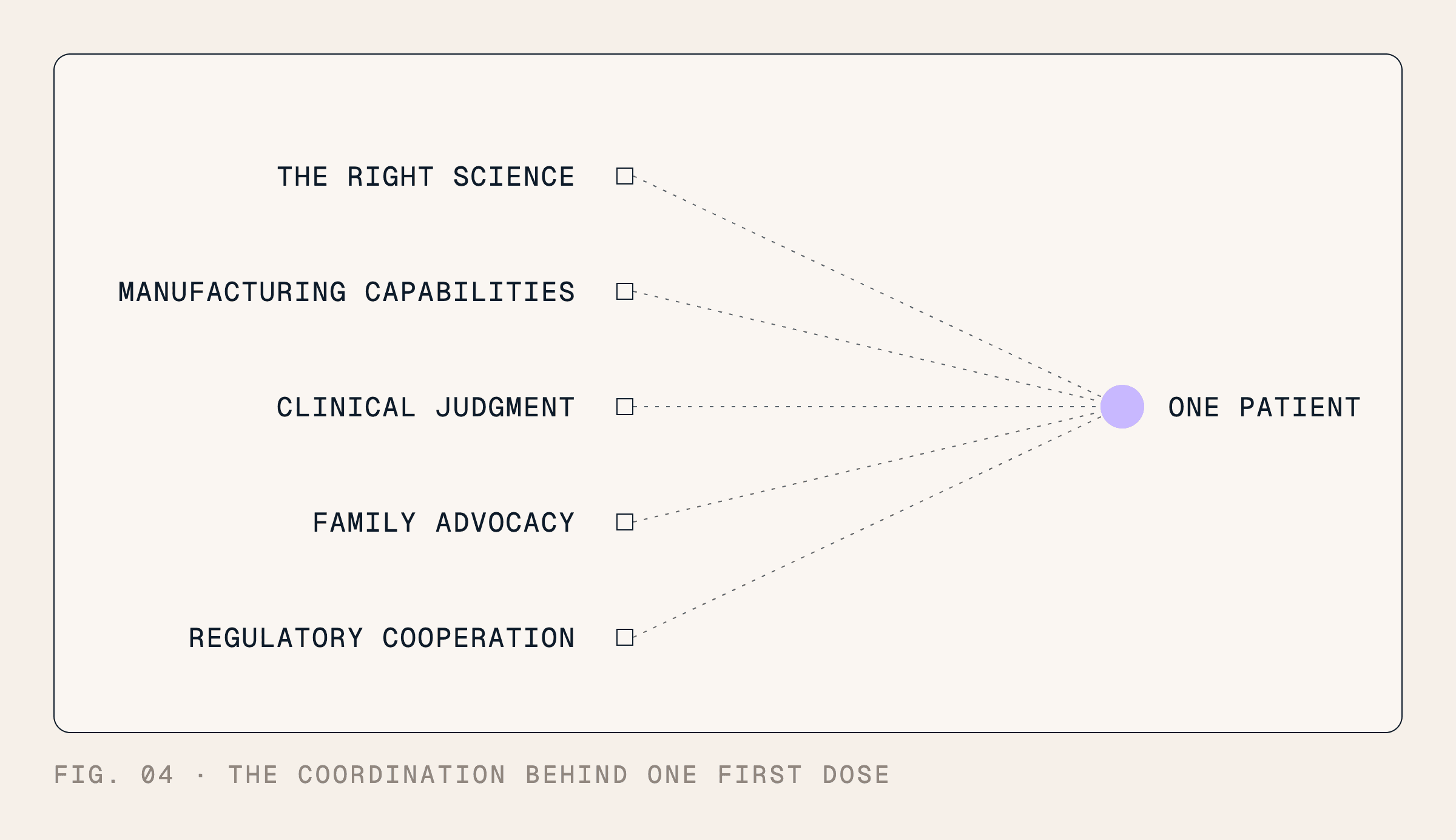
A smaller population creates a bigger coordination problem.
As we understand disease more precisely, diagnoses break into smaller groups. A condition that affects thousands of people in total may actually contain dozens of molecular subtypes, each with different implications for treatment.
Sequencing can sometimes identify the exact genetic error in a patient. Editing and RNA-based technologies give researchers increasingly precise ways to address it.
That creates an awkward situation: the scientific opportunity can become clearest just as the patient population becomes commercially tiny.
For the family, of course, the market size is beside the point. Their loved one needs help.
The challenge is to make an individualized treatment without asking every team to rebuild the entire development process around it.
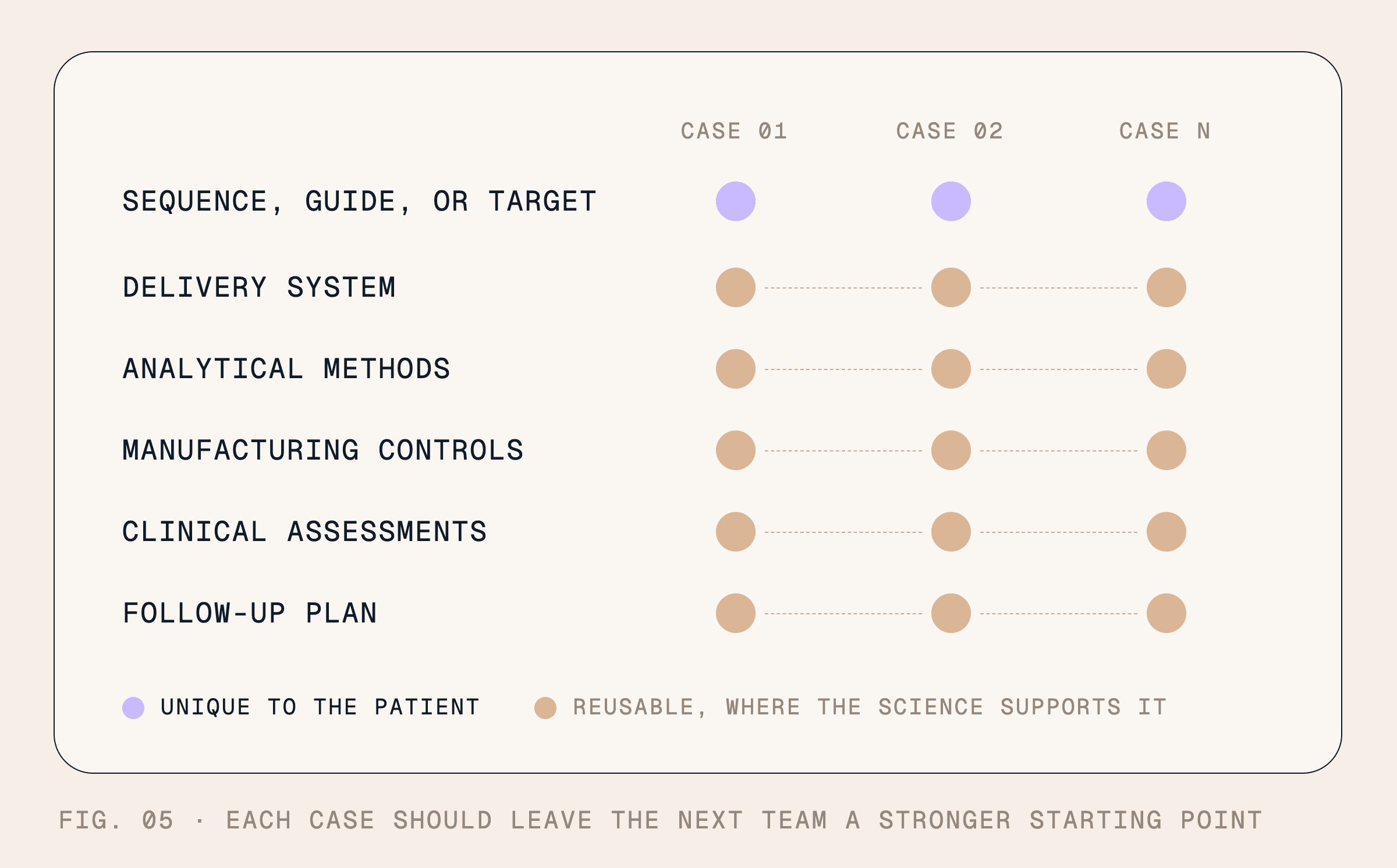
One component may need to be unique: the sequence of an oligonucleotide, the guide directing an editor, or the precise molecular target. Much of the surrounding work may be reusable, where the science supports it.
Delivery systems can improve. Analytical methods can become better characterized. Manufacturing controls, clinical assessments, and follow-up plans can benefit from what earlier teams learned.
Each case should leave the next team with a stronger starting point.
Otherwise, we’re asking people to pull off an extraordinary rescue and then putting all the equipment back in separate boxes.
Rigor has to work at this scale, too.
The evidence question is hard, and it deserves to remain difficult.
How do we evaluate a treatment when there may never be enough comparable patients for a conventional large trial? How do we separate a treatment effect from the natural course of disease? What would persuade us that an early improvement is meaningful? What would make us change our minds?
A compelling biological idea is a starting point. Patients also need evidence that the treatment reaches its target, can be manufactured reliably, and has a reasonable balance of potential benefit and risk.
Different kinds of evidence have to work together. The disease mechanism helps explain why a therapy could work. Preclinical studies test important parts of that explanation. Natural history provides context for what might happen without treatment. Clinical observations show what changes after dosing.
And follow-up matters enormously. An encouraging response is the beginning of a longer account of safety and benefit.
This takes planning from the start. If a team waits until after treatment to decide what it should have measured, some of the most useful evidence may already be gone.
The FDA’s February 2026 draft guidance on the Plausible Mechanism Framework addresses this challenge for certain individualized therapies. It describes how mechanistic, clinical, and manufacturing evidence could support approval under existing pathways when conventional randomized trials aren’t feasible. It remains draft guidance for now, with safety, effectiveness, and product quality still central to the assessment. FDA Draft Guidance
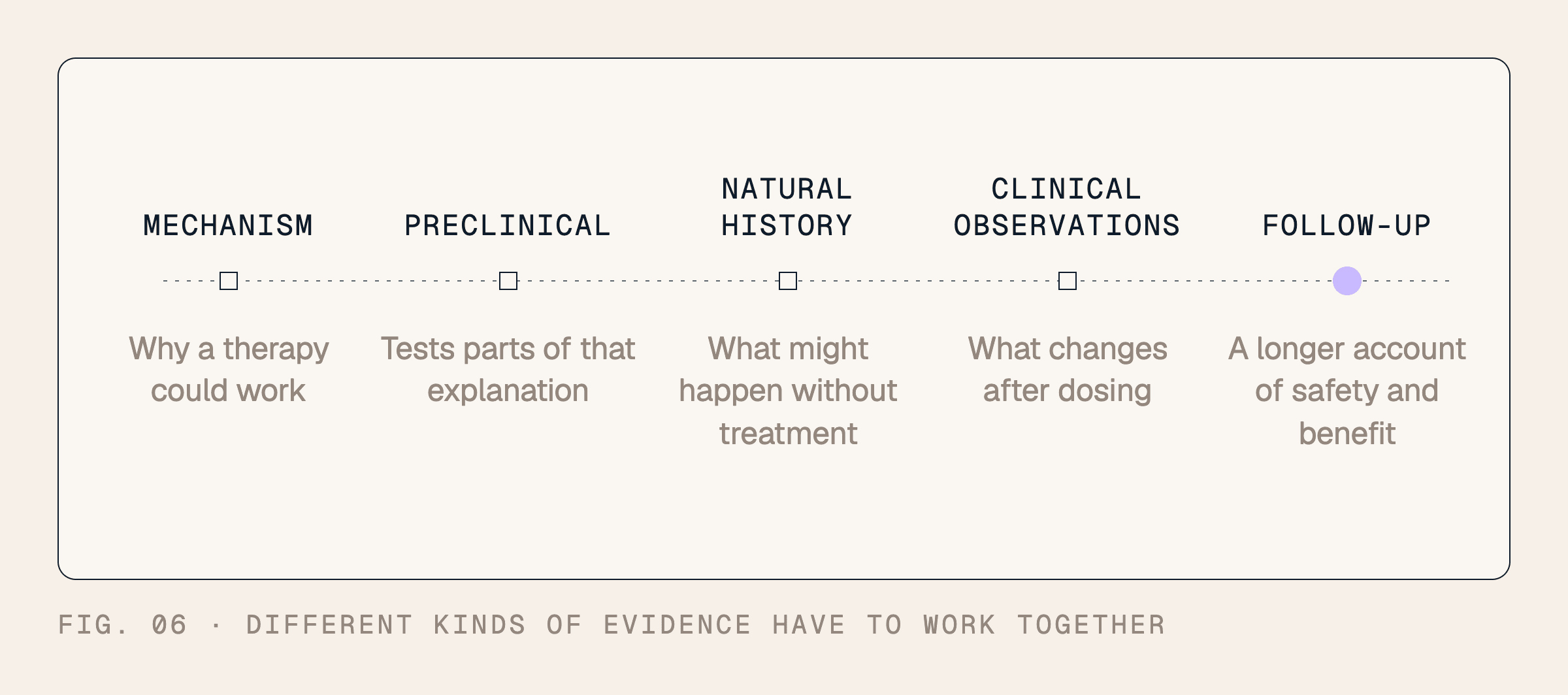
I find that encouraging. A child with a rapidly progressing disease needs a development process that can respond to the time they actually have.
That requires researchers, clinicians, manufacturers, and regulators to work together early enough to make the evidence useful and the treatment possible.
There’s no spare decade in the schedule.
The next patient should inherit what we learned
N-of-1 medicine will have failures. Some variants won’t be treatable with the tools we have. Some promising responses won’t last. Every case will involve uncertainty that enthusiasm cannot resolve.
But Mila and KJ make it possible to ask much more concrete questions about what comes next.
Which parts of development can we reuse? What needs to be tested again? How do we share results, including the disappointing ones, so another team can make a more informed decision?
Those questions deserve as much attention as the editing technology itself.
The field becomes more capable when a team leaves behind usable methods, clear evidence, and an honest account of what happened. A patient’s treatment can contribute to knowledge that reaches well beyond them.
That’s the promise I keep coming back to: one patient can be enough to organize a serious scientific effort around, and what we learn doesn’t have to stop with that patient.
The next family deserves every bit of that head start.
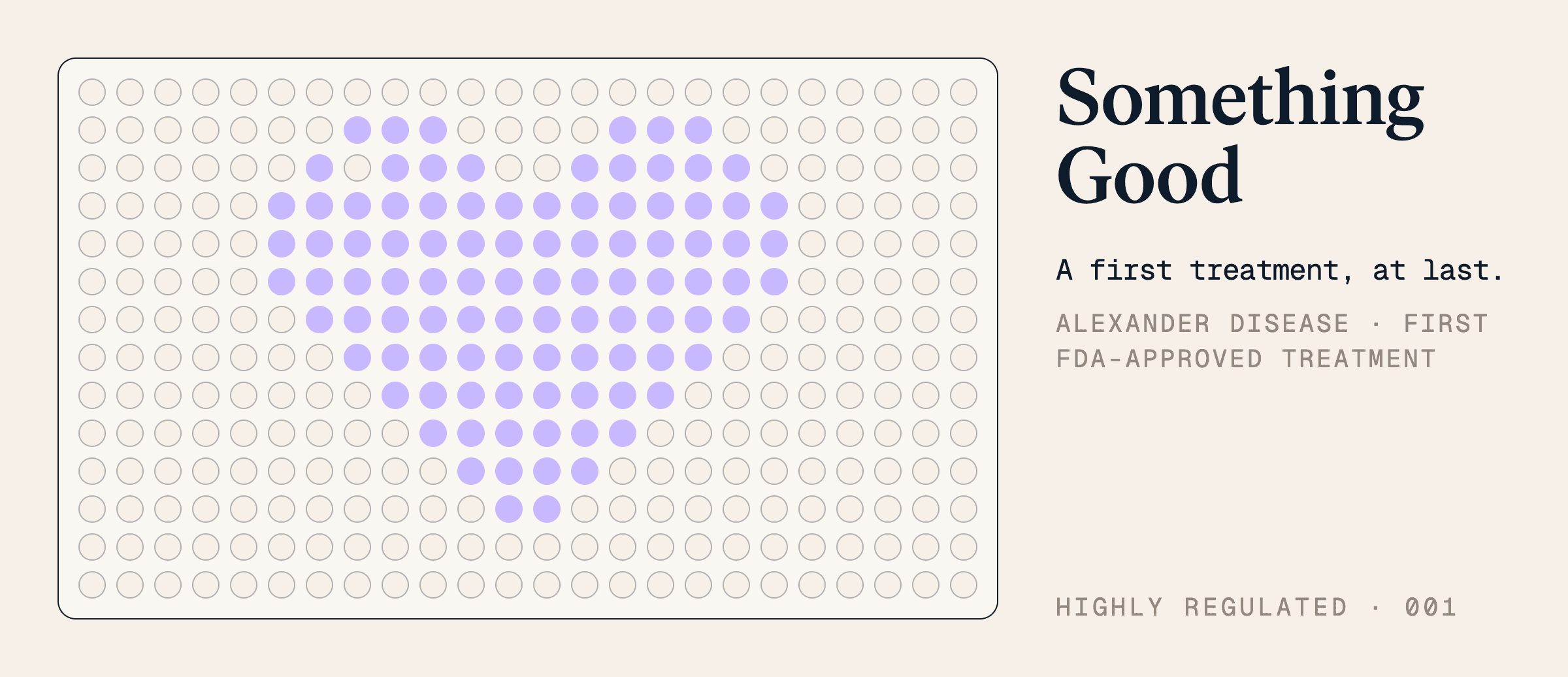
Something Good
A first treatment, at last.
Until September 3, families dealing with Alexander disease had no FDA-approved treatment.
The condition affects fewer than one in a million people. It can cause seizures, muscle weakness, lost developmental milestones, and progressive damage to the nervous system.
Now there is Zanvastro, an antisense oligonucleotide that reduces production of the GFAP protein whose abnormal buildup drives the disease.
In a randomized study of 49 children and adults, treated patients aged five and older with walking difficulties had better walking speed than the untreated group. Children aged two to four improved on a broader measure of motor skills while the control group declined.
Treatment involves an injection into the spinal canal every three months. It also carries side effects and risks, including reported cases of aseptic meningitis. FDA Approval Announcement
For families who have spent years managing symptoms while the disease progresses, there is finally a treatment aimed at its underlying cause.
A very small patient population. A very big change in what a family can hear at their next appointment.
The Katalyze Marketing Team