Edition 005
The $1.8 billion effort to teach AI biology
Welcome to Highly Regulated 005, from Katalyze
Welcome back to Highly Regulated. Last week, we followed a question about pond algae into neuroscience. This week, I want to look at the experimental work behind AI models of biology: what scientists have measured, what’s missing, and how the results get shared.
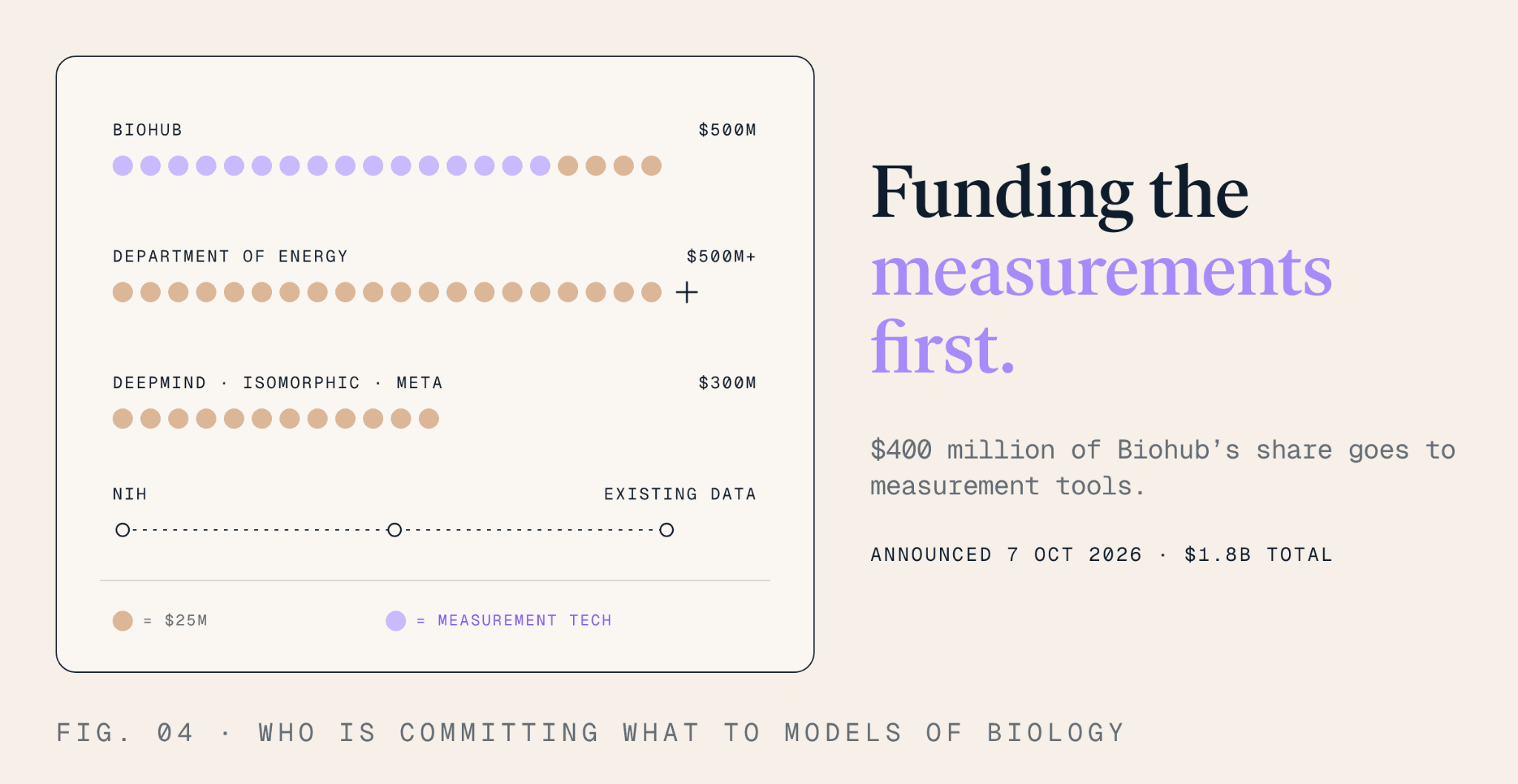
On October 7, Biohub, the Department of Energy, the NIH, Google DeepMind, Isomorphic Labs, and Meta announced a $1.8 billion commitment in funding, data, computation, and measurement technology to help build predictive models of biology. Biohub
We’ll start with a collection of seven protein structures in the 70s and how they grew into a resource for AI, and then discuss what it will take to build something similarly useful for understanding how the ever-complex cell responds to change.
We’ll end with two siblings born with profound hearing loss who gained hearing after gene therapy. Their story demonstrates the power of replacing one missing protein.
First, though: a few things worth your attention from around the industry.
Zack Holland and Alyse Gonthier, PhD from Katalyze
Worth Your Time
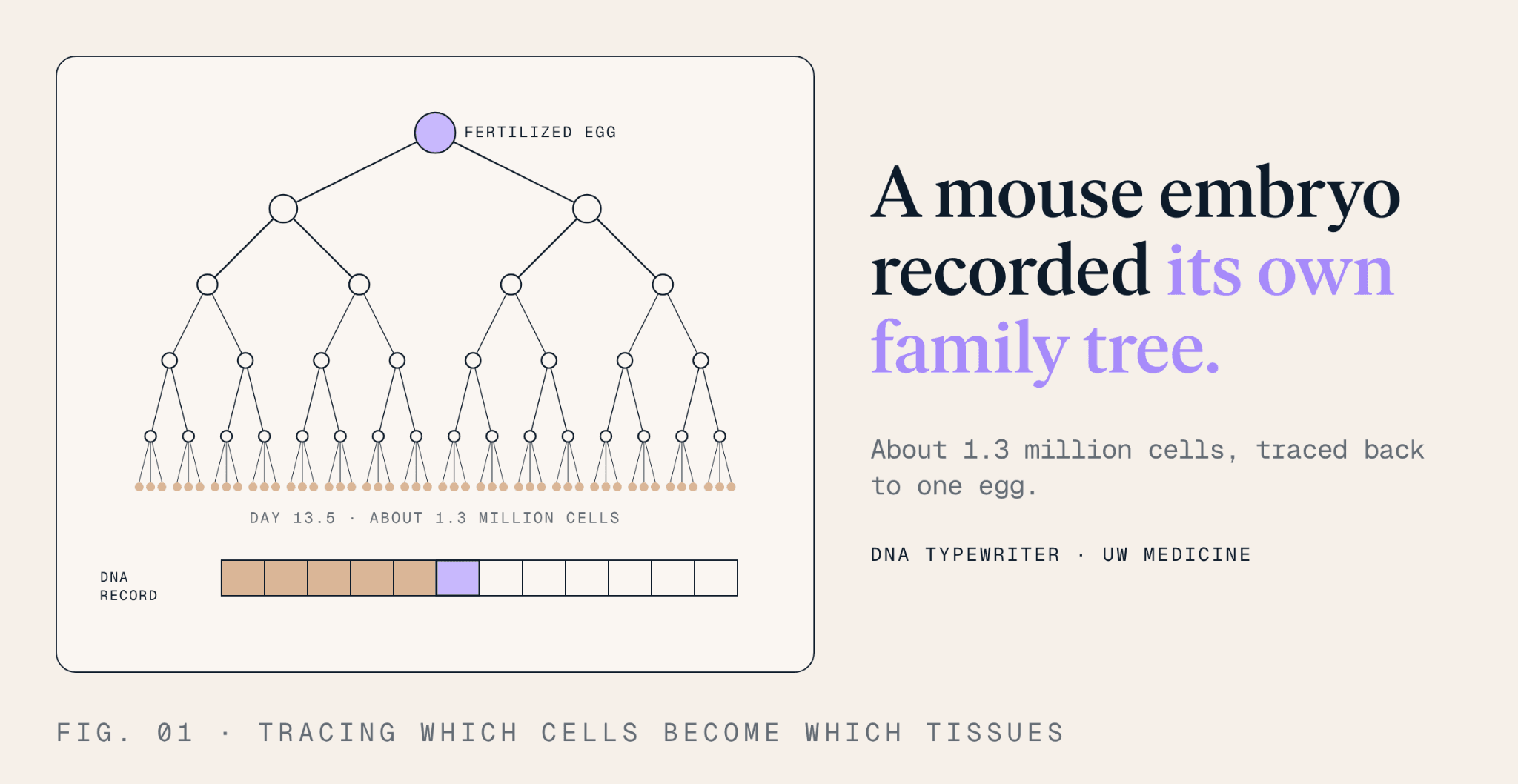
- A mouse embryo recorded its own family tree. Tracing which cells give rise to which tissues has been difficult across developing mammals. Researchers at the University of Washington and Dartmouth inserted a DNA recorder called DNA Typewriter into fertilized mouse eggs. It writes successive marks into DNA while preserving earlier entries, letting the team reconstruct the ancestry of about 1.3 million cells in one embryo after ~14 days of development. Ten of 100 injected eggs yielded embryos to examine, and the team focused on the richest recordings. The method could help researchers identify when cells take different developmental paths, and how those paths change in disease. UW Medicine
- Human brain organoids grew and formed circuits inside mice. Human brain tissue is difficult to study, and small models grown from stem cells, called organoids, mature only so far in a dish. A Stanford team grafted human cortical organoids into mice engineered to lack most of their cerebral cortex. The tissue grew, produced diverse neural cell types, and formed circuits that integrated with the host nervous system. Researchers could use this model to study how changes in developing human neural tissue affect the animal’s behavior, including after injury. It offers a way to investigate brain development and disease that organoids in a dish cannot provide. Nature
- Viatris agrees to acquire Pacira BioSciences for $1.65 billion. Pacira makes non-opioid pain treatments, including a long-acting local anesthetic and an extended-release steroid injection. Viatris has agreed to acquire the company in an all-cash deal and plans to use its international commercial network to bring the medicines to selected additional markets. The transaction is expected to close by the end of 2026, subject to customary conditions. If completed, it could make these existing treatments available in more countries. Viatris
- Shionogi agrees to acquire IntraBio for $2 billion. Niemann-Pick disease type C is a rare inherited condition that can cause progressive neurological problems. IntraBio’s medicine AQNEURSA is approved to treat its neurological symptoms. The planned acquisition would add that medicine and IntraBio’s rare-disease expertise to Shionogi’s existing business. Shionogi says the additional capabilities could also support its clinical programs in Pompe disease, Fragile X syndrome, and Jordan’s syndrome. Those programs will still need to demonstrate clinical benefit, but the acquisition would give Shionogi more resources and expertise to develop them. Shionogi
Meanwhile, at Katalyze
Join us tonight for Pharma Supper Club in NYC
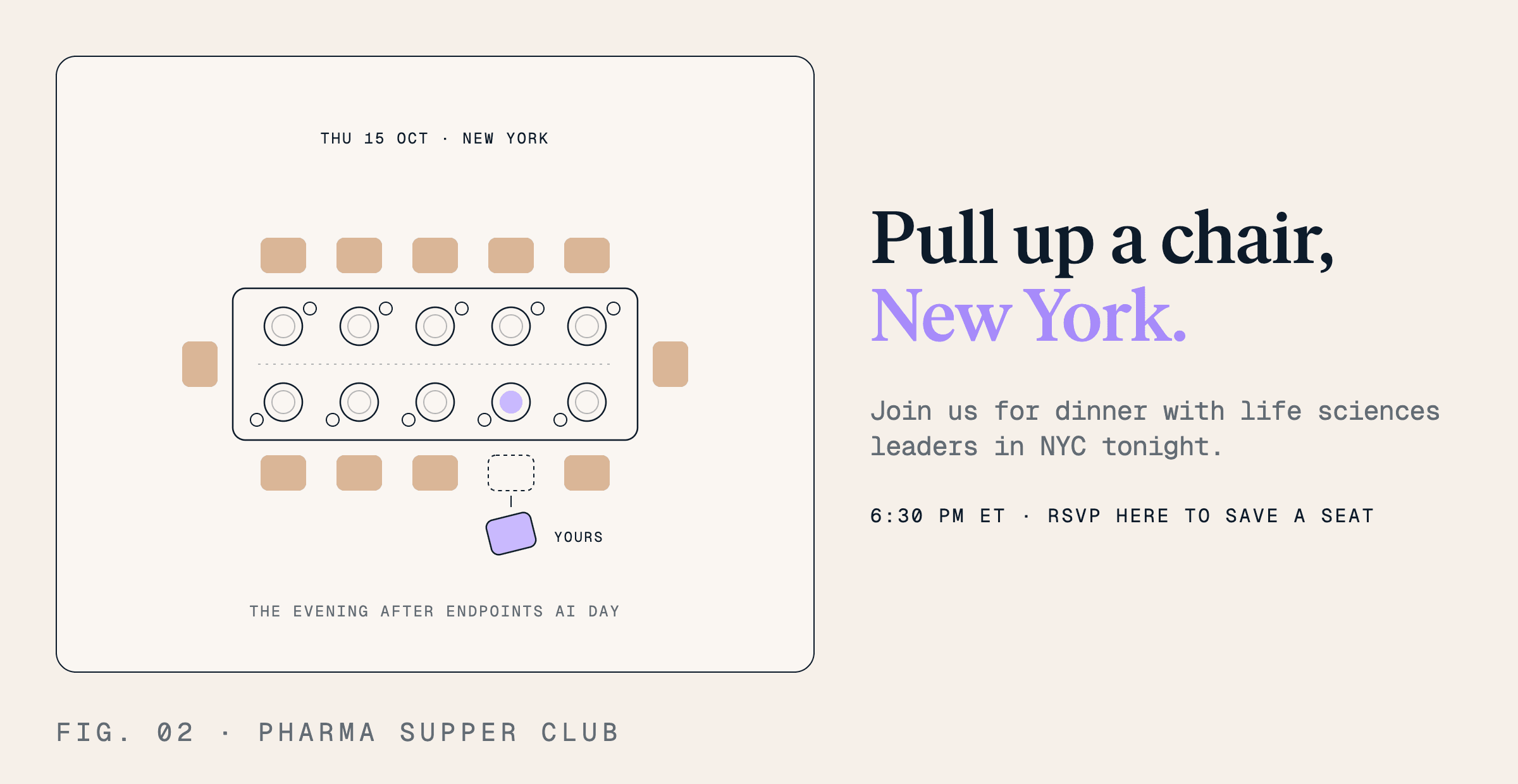
This evening, Thursday, October 15, from 6:30 to 9:30 p.m. ET, we’re bringing a small group of life sciences leaders together in New York for the first Pharma Supper Club. It’s an invitation-only dinner for people thinking about how medicines are made and where technology can make a difference.
We’ll continue the conversation from yesterday’s Endpoints AI Day over a dinner prepared by a Michelin-starred chef, a curated wine tasting, and a few Katalyze surprises. We’ll compare experiences with AI in research and manufacturing: where it’s proving useful, what’s getting in the way, and what it takes to move beyond a promising pilot.
In town and interested in joining us? RSVP Here.
The Feature: Bridging the AI-bio gap
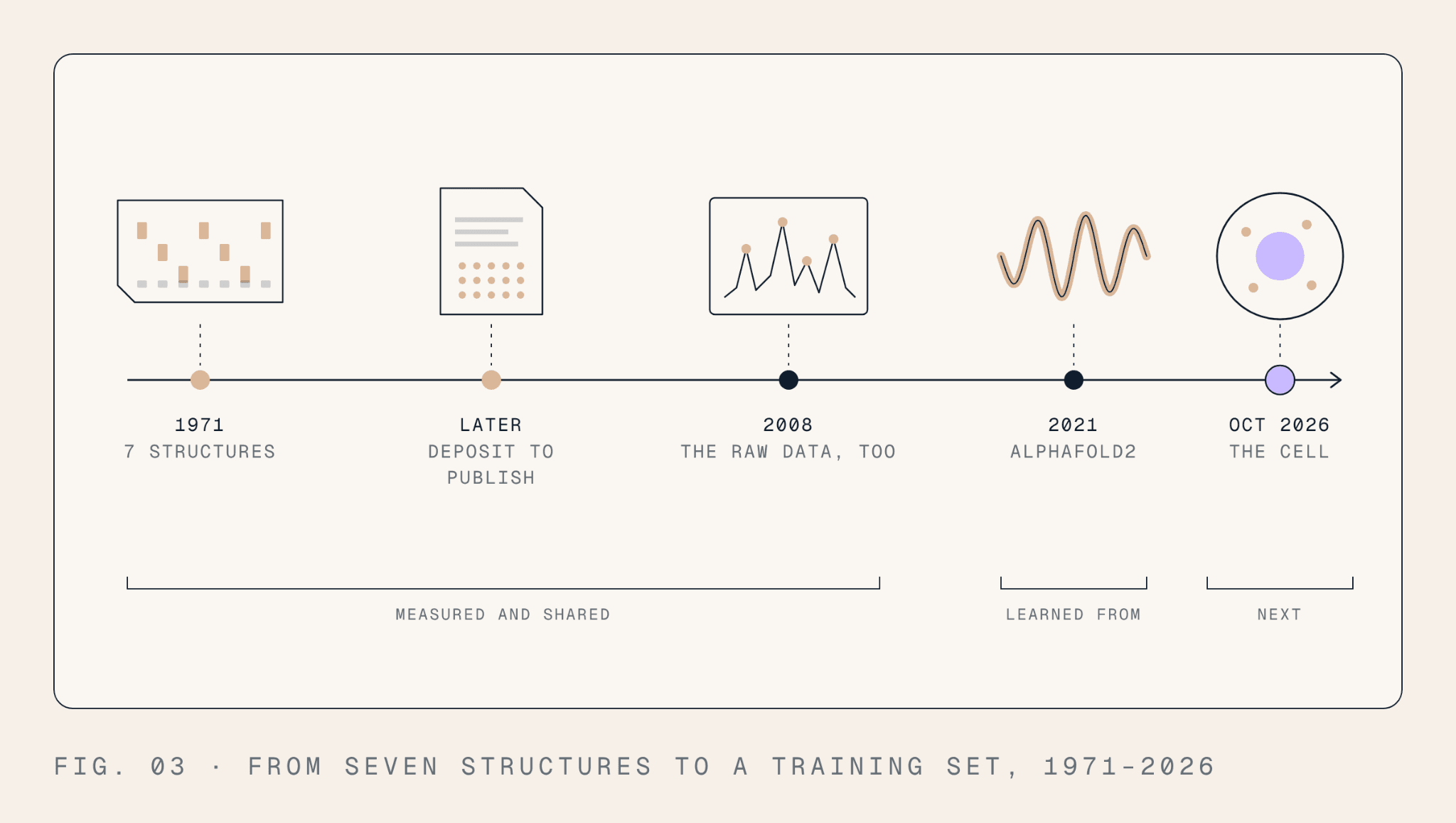
In 1971, the Protein Data Bank held seven structures describing the positions of atoms in biological molecules. Scientists had determined them using X-ray crystallography, then made the results available for others to use.
The archive began at Brookhaven National Laboratory under Walter Hamilton’s leadership. Its earliest data travelled by magnetic tape and punch cards, and Tom Koetzle took over in 1973. As the collection grew, researchers could compare their structures with findings from other laboratories. RCSB PDB; RCSB Archive
Journals eventually made depositing atomic coordinates a condition of publication. In 2008, the archive began requiring the underlying X-ray structure factors and NMR restraints, the experimental measurements used to determine and check those structures. Other researchers could inspect both the model and the evidence supporting it. wwPDB
Decades later, those experimental structures helped train AlphaFold2 to predict protein shapes. The model’s performance depended in part on scientists having measured and shared so many examples. AlphaFold Paper
For me, that’s what’s exciting about this kind of collaboration: results collected to answer individual research questions became useful for other important tasks that the original researchers hadn’t necessarily anticipated.
Building a resource for cell prediction
An effort announced on October 7, 2026 aims to build a shared resource for a more complex question: how does a cell respond to new stimuli? For those at all familiar with cell biology, the magnitude of that short question can’t be overstated. Biohub is committing $500 million, the Department of Energy will contribute more than $500 million over five years, and Google DeepMind, Isomorphic Labs, and Meta are investing $300 million together. The NIH will coordinate existing datasets and research infrastructure. The $1.8 billion total combines new financial commitments with utilization of some existing resources. Biohub
Of Biohub’s commitment, $400 million supports measurement technologies, including microscopy and tools to change biological systems and observe the effects. Much of the experimental evidence needed to train models of cellular responses has yet to be collected. This funding will support the work of generating it.
A cell’s response depends on many interacting molecules, its surroundings, and when a change occurs. Predicting that response is a different task from predicting a protein’s structure, primarily because the associated pathways are so multifaceted and still include many unknowns.
Researchers will study cellular responses by reducing the activity of a gene, adding a compound, or changing the conditions in which cells grow. These experiments, called perturbation studies, measure what happens afterward. Models can then learn from those measurements, provided the experimental set-up and controls are rigorous.
There are substantial datasets to build on. In 2022, Joseph Replogle and colleagues measured gene activity across more than 2.5 million cells after using CRISPR interference to reduce the activity of selected genes. Their work included a genome-scale screen in K562 leukemia cells and an essential-gene screen in RPE1 retinal cells. Another example, Tahoe-100M, contains 100 million profiles of gene activity from 50 cancer cell lines exposed to 1,100 drug-dose conditions. Replogle et al.; Tahoe-100M
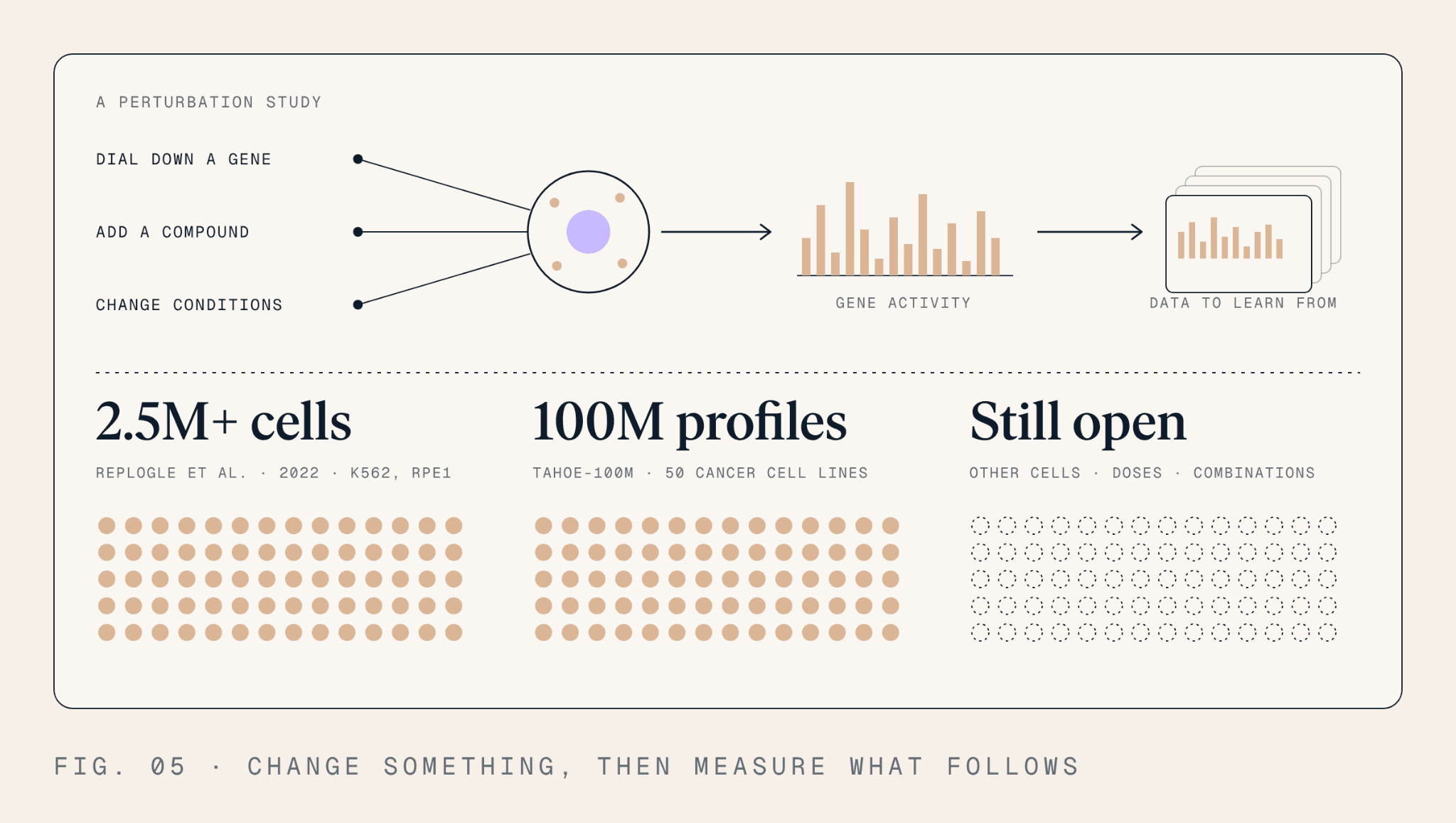
These are huge experiments with a ton of resultant data, but they still only cover a limited range of the biology we’d like to capture. Changing a gene in a leukemia cell may produce a different response from changing it in a neuron. Different doses, drug combinations, and measurement times add further conditions to study.
More measurements from the same cell lines will not resolve every gap. To make predictions useful across tissues and patients, researchers need data from a wider range of cells and conditions, and tests that establish where the predictions hold up.
What the models can predict so far
In 2025, Constantin Ahlmann-Eltze, Wolfgang Huber, and Simon Anders compared deep learning models with simpler methods for predicting changes in gene activity after perturbations. The deep learning models did not consistently outperform those simpler methods in their tests. That’s a testament to the complexity of these experiments and just how much we still have to learn. Nature Methods
A paper published in Nature Biotechnology on October 1 showed that the way predictions are evaluated can affect that comparison. Some deep learning models outperformed simple baselines when the evaluation measures were better able to detect meaningful changes. The study only tested prediction in cell types it had trained on; its ability to predict those outside of training is still an open question. Nature Biotechnology
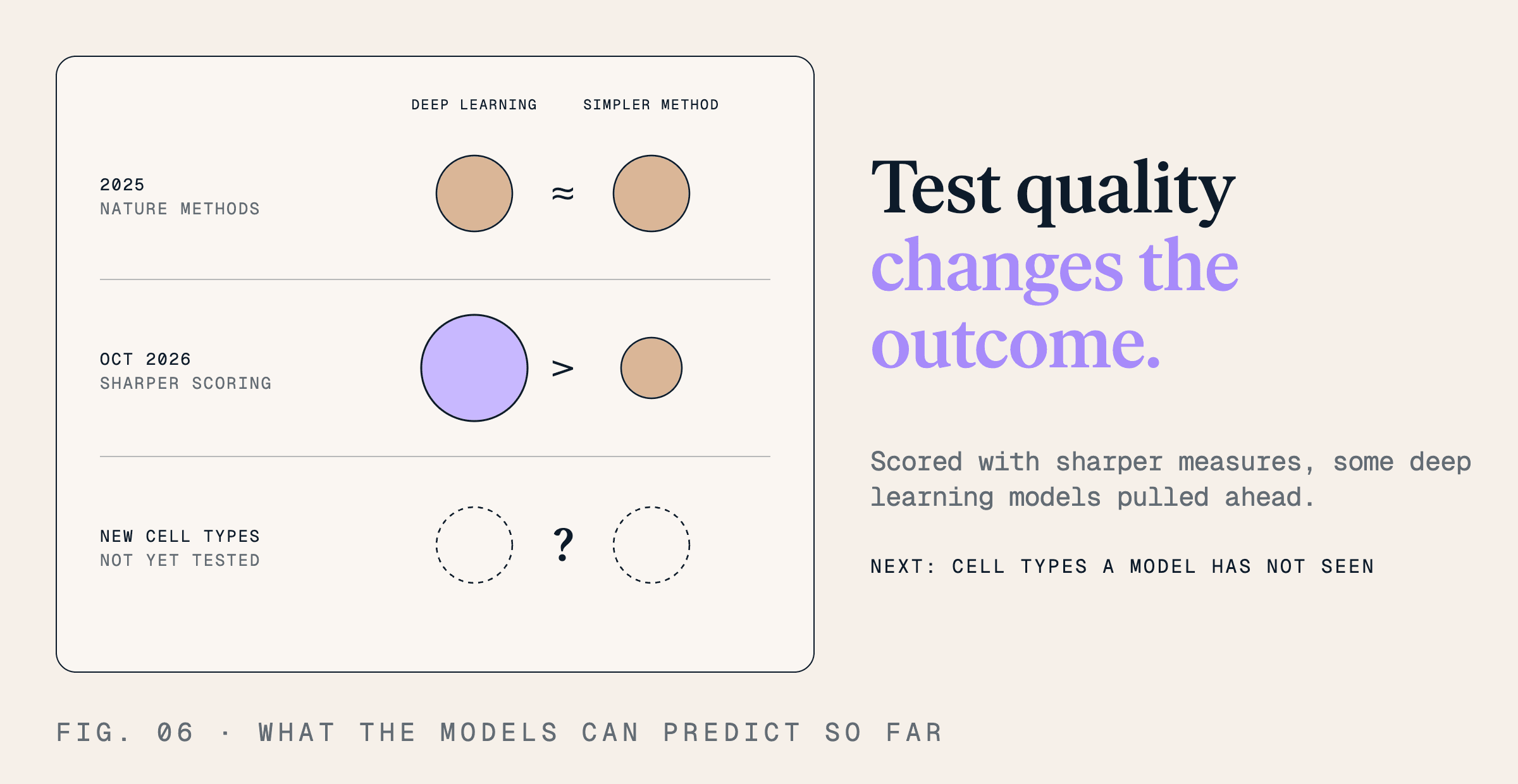
The new initiative should give researchers more evidence to investigate whether broader experimental coverage improves predictions. They will also need to improve how models represent biological interactions and how their performance is assessed.
The intended use is practical: helping a scientist decide which experiment to run or which treatment idea to investigate. Predictions need to be tested against experimental results before researchers can rely on them for those decisions.
Making the results useful across laboratories
For results from different laboratories to be useful together, researchers need to know precisely how each experiment was done. Descriptions of the cells, specific interventions, measurement times, and experimental conditions help establish which results can be compared. Consistent names and formats make those comparisons easier.
Maintaining that information involves checking records, resolving inconsistencies, and preserving the details needed to interpret a result. The worldwide Protein Data Bank partnership has repeatedly standardized and corrected its archive as methods and formats changed. Those updates help researchers continue to use older findings alongside new ones. wwPDB Remediation
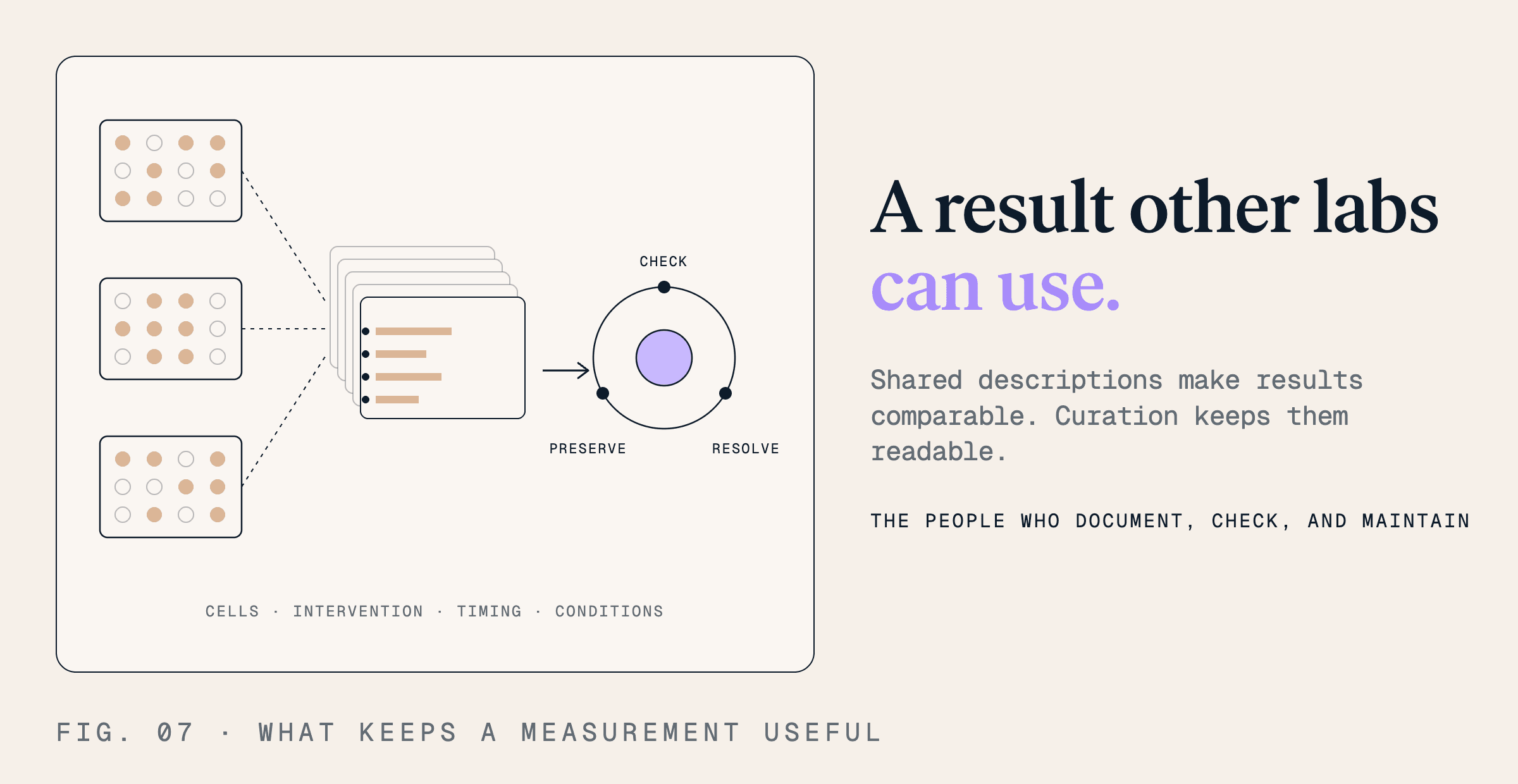
The cell biology resource will need ongoing support for the people who document, check, and maintain it. Otherwise, new measurements can become difficult to interpret once the original experimenters have moved on.
I’ll be watching which cells and conditions the initiative adds, how readily other laboratories can use the data, and whether models trained on it make better predictions in new settings. Those results will tell us more about its value than the size of the commitment alone.
Something Good
Two siblings born deaf can now hear.
Abdu was three when he received gene therapy at Cincinnati Children’s in April 2025. Born with profound hearing loss, he began detecting sounds within four weeks. The hospital now reports that his hearing is in the normal range and that he has begun developing speech. His younger sister, Sumaya, has since received the treatment and also gained hearing. Cincinnati Children’s
Both children have changes in the OTOF gene, which provides instructions for making otoferlin. That protein helps sensory cells in the inner ear pass signals to the auditory nerve. The treatment delivers a working copy of the gene into those cells through an infusion into the cochlea. Study in NEJM
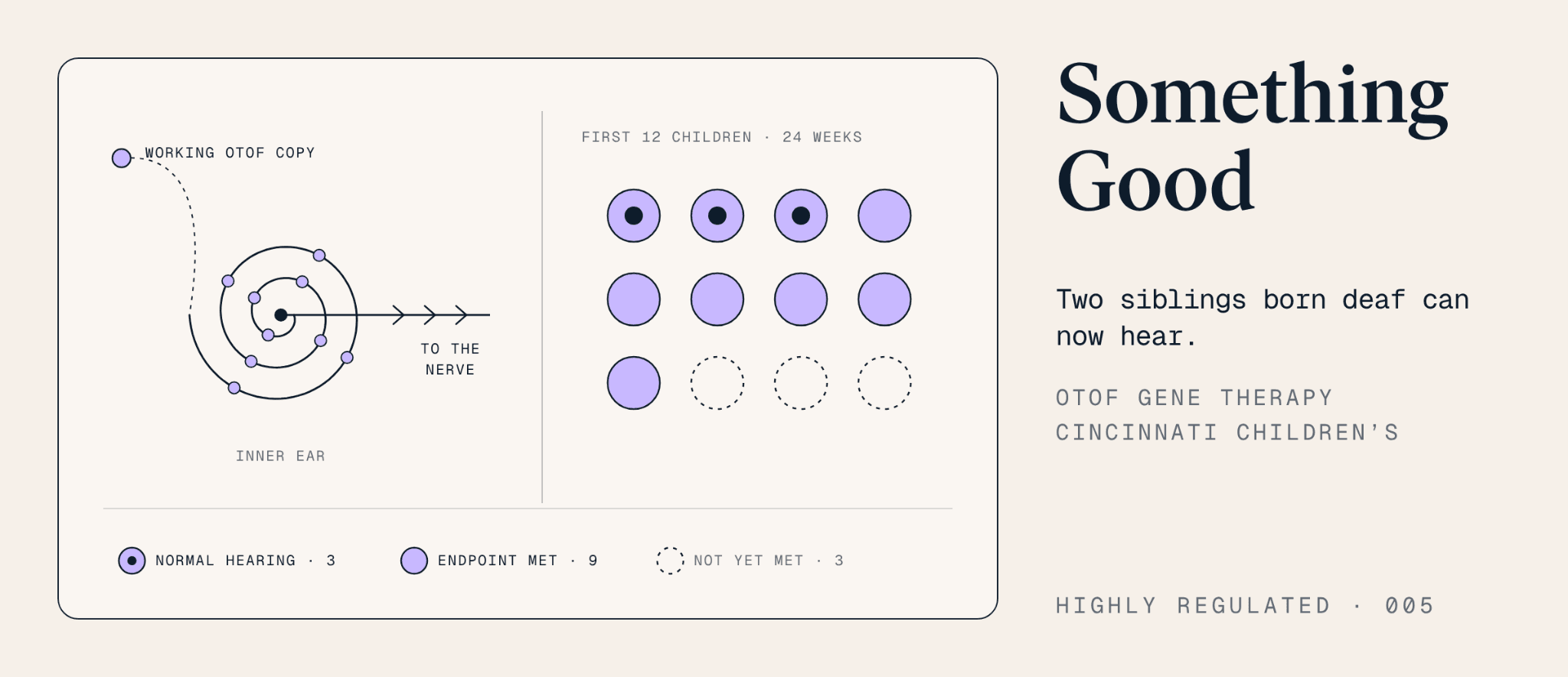
In the published study of the first 12 children treated, nine reached the trial’s hearing endpoint at 24 weeks, and three achieved normal hearing sensitivity. The treatment addresses a specific genetic cause of deafness, and researchers are continuing to follow the children’s outcomes.
For Abdu’s family, his improvement helped inform the decision to treat his sister. Now both children are learning what they can hear. Cincinnati Children’s
The Katalyze Marketing Team