Edition 009
What are cancer vaccines, and why are they making headlines?


Welcome to Highly Regulated 009, from Katalyze
Welcome back to Highly Regulated. Last week, we followed peptide chemistry from early experiments to the factories supplying the GLP-1 boom. This week, we're looking at cancer vaccines and the latest developments that have the experts excited.
Modern advancements have made it possible for a vaccine to be designed around one person's cancer. In a recently publicized Phase 3 melanoma trial, adding one such vaccine to standard treatment after surgery reduced the risk of recurrence or death by 42%. This week's feature follows the story from early attempts to stimulate immunity against cancer to a trial involving more than a thousand patients.
We'll end with Something Good: an expanded map of human proteins, built from millions of images and measurements and freely available for all scientists.
First, a few things worth your attention from around the industry.
Alyse Gonthier, PhD and Zack Holland from Katalyze
Worth Your Time
- FDA finalizes new potency guidance for cell and gene therapies for the first time since 2011. Teams working on cell and gene therapies need to show that each batch can produce its intended biological effect. This month, the FDA finalized its Potency Assurance for Cellular and Gene Therapy Products guidance, replacing the 2011 version. It recommends identifying which materials and production steps could affect that activity, controlling those risks, and checking potency during production as well as before a batch is released. For teams developing a therapy, that means planning the manufacturing controls and laboratory tests together, then strengthening the evidence as clinical trials progress. For teams making an approved product, changes to manufacturing or testing must be assessed for their effect on potency. The guidance gives teams a framework for organizing that work under existing requirements. FDA Potency Assurance Guidance
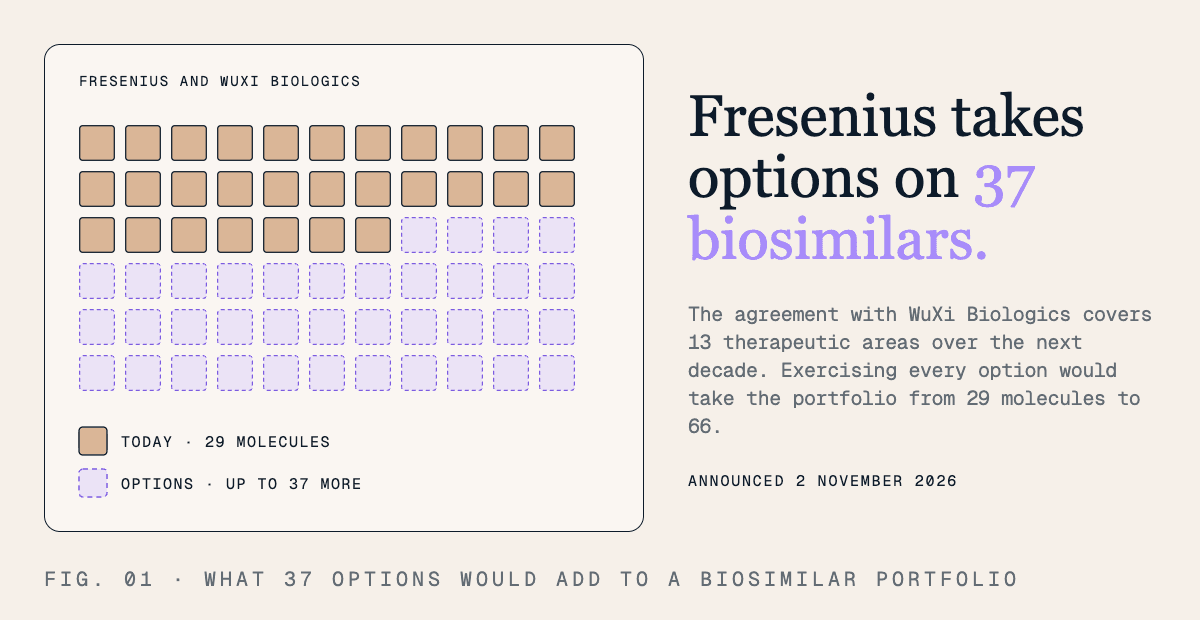
- Fresenius and WuXi sign deal covering up to 37 biosimilar candidates. Biosimilar developers have to decide which medicines to pursue and where to make them before committing to years of development. On November 2, Fresenius announced an agreement with WuXi Biologics giving it options on up to 37 candidates across 13 therapeutic areas over the next decade. Fresenius will select the programs it advances, pay WuXi for their development, and retain global commercialization rights. If all options are exercised, its marketed and pipeline portfolio could grow from 29 to 66 molecules. Fresenius will decide how each product is manufactured, including possible transfers to its wholly owned mAbxience network. Fresenius & WuXi Biosimilar Agreement
- AstraZeneca is hiring a director to bring digital twins and AI into manufacturing. A digital twin is a model of a physical system, informed by data from that system. In manufacturing, it can help teams explore how a process behaves and assess changes before trying them in production. AstraZeneca is hiring a Director for Digital Twin & Intelligent Manufacturing Capabilities to connect these models with process knowledge, manufacturing data, and AI. The role focuses on improving process understanding, preparing sites for production, and transferring processes between facilities. It also includes evaluating technologies and establishing methods that teams can reuse across products and sites. AstraZeneca Digital Twin & Manufacturing Opening
- Visible light can turn hard-to-reuse drug compounds into new building blocks. Medicinal chemists often have useful compounds sitting in their libraries that are difficult to modify for another purpose. Eric Nacsa and Elvira Sayfutyarova at Penn State, Bryan Kudisch at Florida State University, and collaborators at GSK have reported a way to convert one such group, called sulfonamides, into building blocks used in many drugs, called anilines. A base and visible light drive the reaction in a single operation, without an added catalyst. For teams preparing and screening new molecules, the method could make existing compounds easier to reuse and reduce the number of chemical steps needed to reach a new structure. GSK's calculations suggest that more than 90% of commercially available sulfonamides could be suitable for this process. Penn State's Sulfonamide Conversion Method
- Formation Bio raises $600 million fund to develop new drug programs. Biotech teams can have promising drugs ready for further trials without the money or staff to run them. On October 28, Formation Bio announced a fund with $600 million in capital commitments to support acquiring 10 to 15 drug programs over three to five years. The company acquires or licenses programs in early clinical testing, then advances them using its scientific, clinical, operational, and AI capabilities. Each funded program will sit in a separate company while sharing Formation's development organization. For drug developers, this could provide a route to financing and running the next studies. For the fund's investors, including research foundations, endowments, hospitals, and philanthropic organizations, it provides exposure to individual drug programs. Formation Bio Drug Development Fund
Meanwhile, at Katalyze
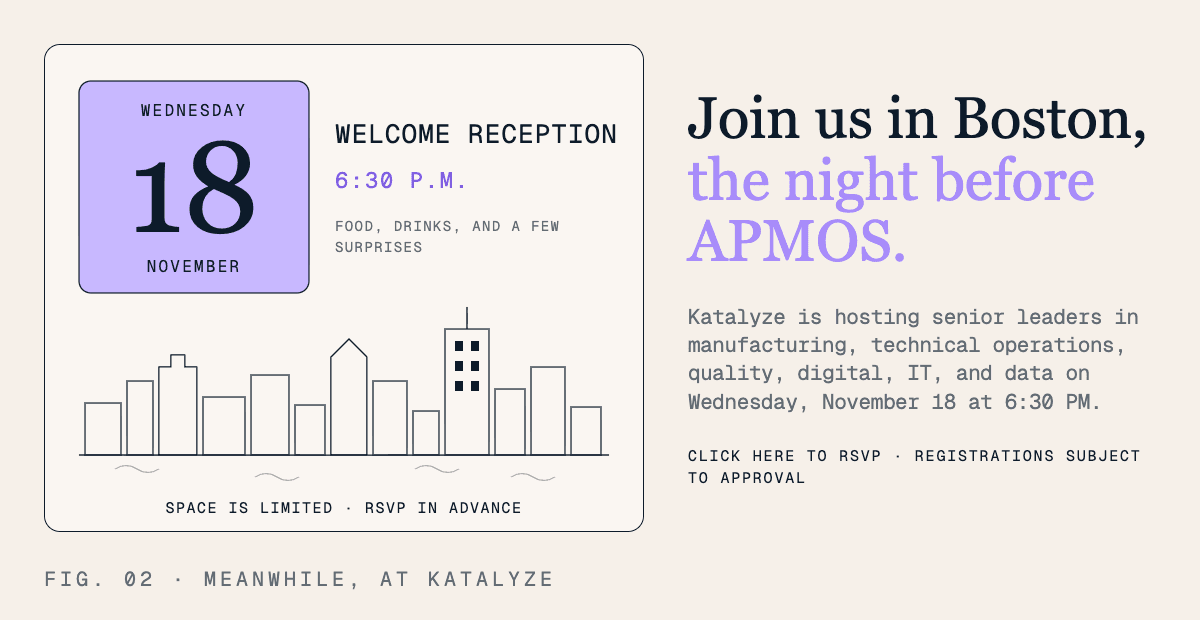
Attend our welcome event in Boston the evening before APMOS
The American Pharma Manufacturing and Outsourcing Summit runs in Boston on November 19 and 20. Katalyze is hosting a welcome reception the evening before, on Wednesday, November 18, at 6:30 PM.
We're bringing together senior leaders in manufacturing, technical operations, quality, digital, IT, and data from pharma, biotech, and contract manufacturing companies. Join us for cocktails, food, and a few Katalyze surprises, and meet fellow attendees before the summit begins.
Space is limited, and registrations are subject to approval. Please RSVP here in advance. Luma will send the venue details once your registration is approved. Colleagues are welcome to register through the same link.
The Feature: Cancer vaccines and their recent developments
A century of trying to direct immunity against cancer
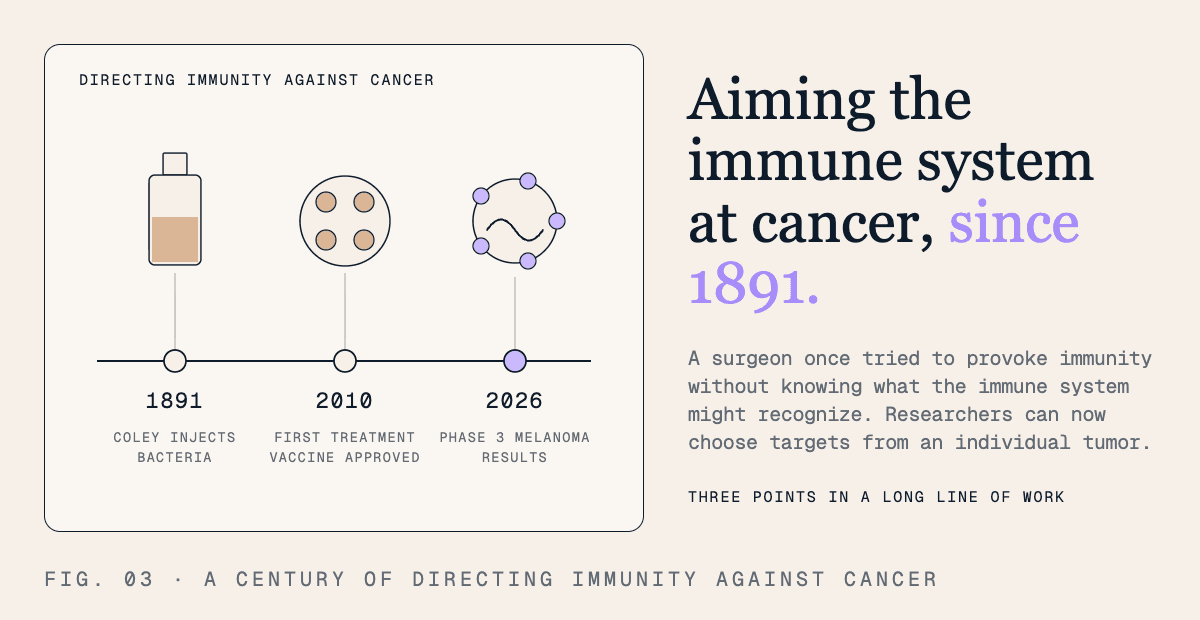
In 1891, New York surgeon William Coley began testing whether bacterial preparations could stimulate the immune system to attack cancer. Some patients' tumors shrank, but the treatment was dangerous and unpredictable, and radiation therapy eventually displaced it. His work helped establish a question that researchers are still pursuing today: how can we direct the immune system against a patient's cancer? William Coley's Immunotherapy Work
The first approved vaccine for treating cancer isn’t new. In 2010, the FDA approved sipuleucel-T, sold as Provenge, for certain men with advanced prostate cancer. It uses a patient's own immune cells to help them recognize and respond to the tumor. How Provenge Works
Vaccines to prevent cancer and treat it
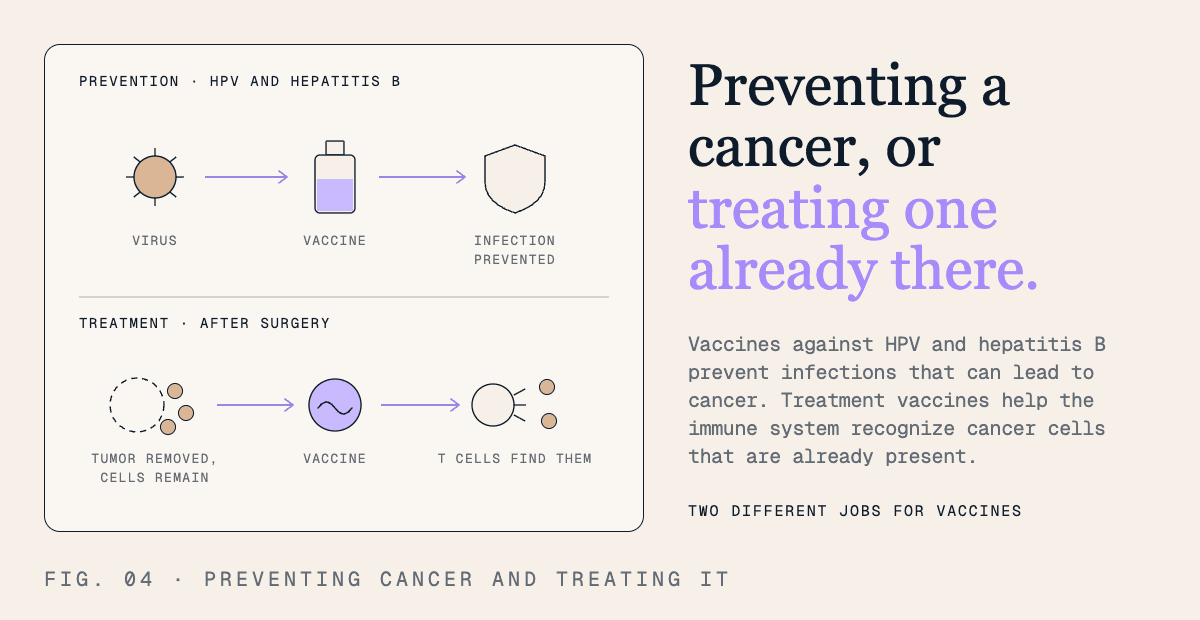
Cancer vaccines come in two general types. Vaccines against conditions like human papillomavirus (HPV) and hepatitis B work by preventing infections that can lead to cancer. Treatment vaccines help the immune system recognize cancer cells. Some are tested for use after surgery, when the visible tumor has been removed but cancer cells may remain. The aim is to help the immune system find those remaining cells before they can grow into another tumor. How Cancer Treatment Vaccines Work
The general challenge in fighting cancer is that it develops from our own cells, which makes it difficult for the immune system to distinguish a tumor from healthy tissue. Some mutations produce altered protein fragments, called neoantigens, that immune cells can recognize as foreign. They give researchers targets that can distinguish cancer cells from healthy ones. Tumors can still suppress or evade the immune response, which is why a treatment based on recognizing a target may still need to be combined with other treatments. Selecting Targets for Cancer Vaccines
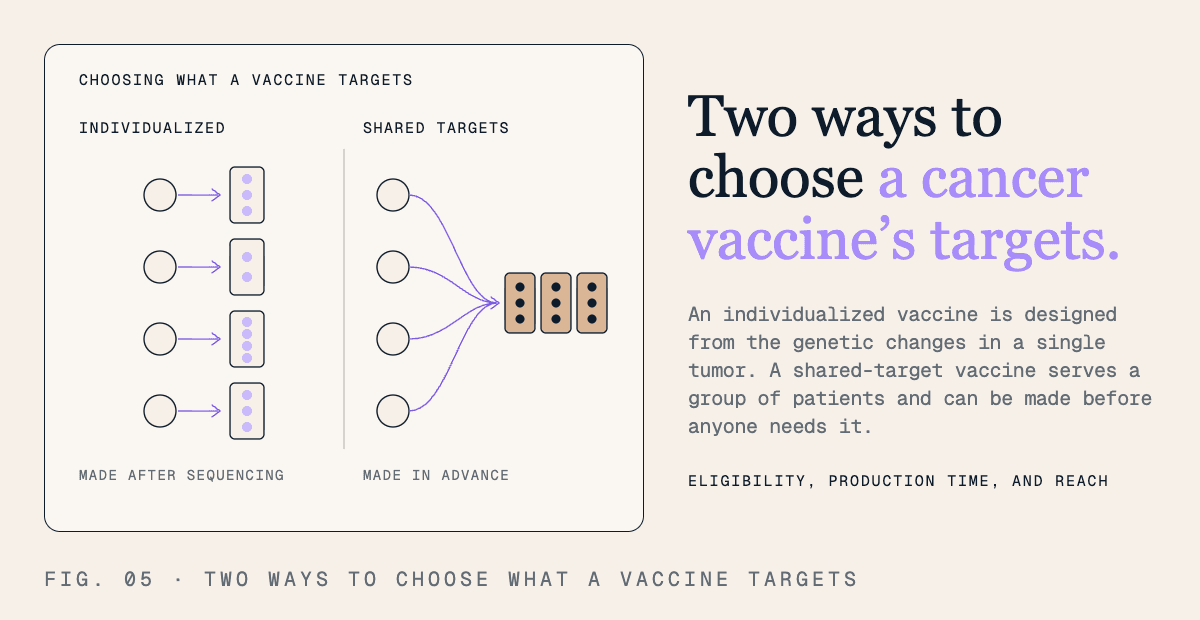
Choosing targets for a cancer vaccine
One targeting approach starts with the genetic changes in a single patient's tumor and uses them to design an individualized vaccine. Another uses targets shared by cancers in a group of patients, allowing the product to be made in advance. The choice affects who is eligible, how long production takes, and how many patients one design can serve.
In an approach developed by Merck and Moderna, researchers sequence genetic material from tumor and blood samples. Comparing the cancer with the patient's healthy cells helps identify genetic mutations specific to the tumor. From those mutations, they select targets that the patient's immune system is predicted to recognize. Instructions for making the selected targets are then encoded in messenger RNA (mRNA).
After injection, cells take up the mRNA and make the encoded proteins. Presenting fragments of those proteins to the immune system helps train immune cells called T cells to recognize cancer cells carrying the same targets. A second medicine, called a checkpoint inhibitor, can block signals that restrain T-cell activity. Merck and Moderna began collaborating in 2016 to test the two approaches together. Merck & Moderna's Original Collaboration
What the 2026 melanoma trial showed
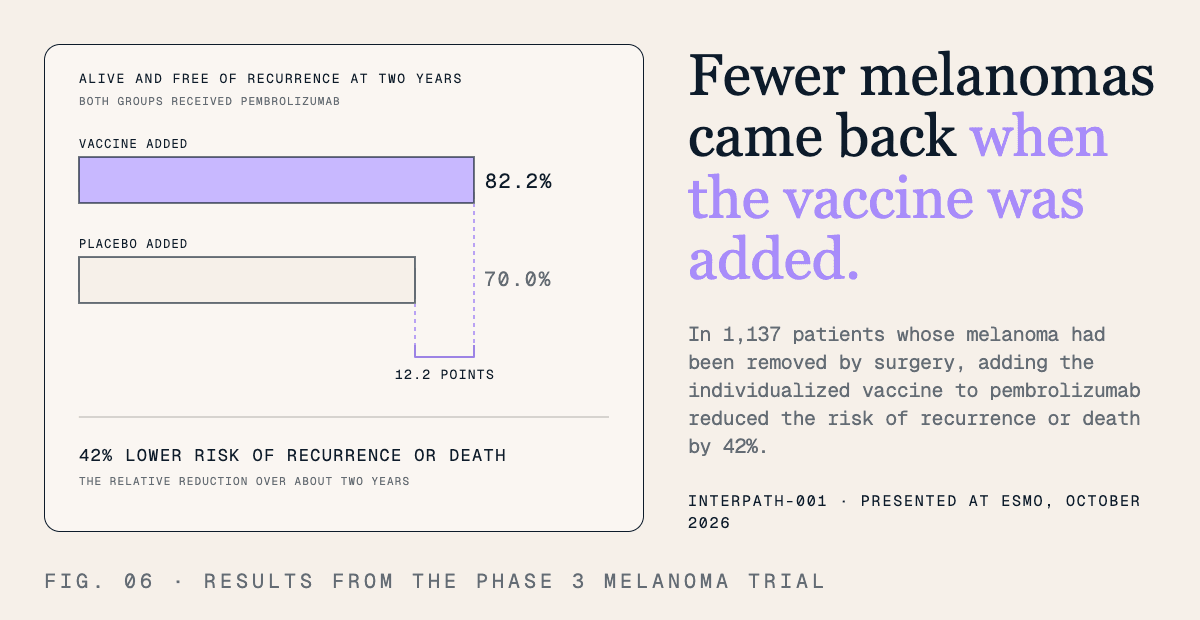
The results of Merck and Moderna’s collaboration, presented in October at the European Society for Medical Oncology (ESMO) congress, generated excitement among scientists both in the lab and on social media. The INTerpath-001 Phase 3 trial involved 1,137 patients who had undergone surgery for melanoma and were at high risk of it returning. Patients were randomly assigned to receive the individualized vaccine intismeran autogene or a placebo injection. Both groups also received pembrolizumab, sold as Keytruda, a checkpoint inhibitor already used after melanoma surgery. Why the Results Drew Attention
After about two years of follow-up, the trial found that adding the vaccine reduced the risk of cancer returning or death from any cause by 42%. At two years, an estimated 82.2% of patients in the combination group were alive without recurrence, compared with 70.0% of controls. INTerpath-001 Phase 3 Results
The groups had similar risks during the first six months, with a greater benefit emerging afterward. Longer follow-up is certainly warranted to determine long-term effects and risks.
The most common adverse events reported in the combination group were fever, injection-site pain, and fatigue. Adverse events led 17% of patients receiving the combination to stop treatment, compared with 9% of controls. Two deaths were attributed to pembrolizumab, both before the first vaccine dose; none were attributed to intismeran. INTerpath-001 Safety Findings
Making a different vaccine for each patient
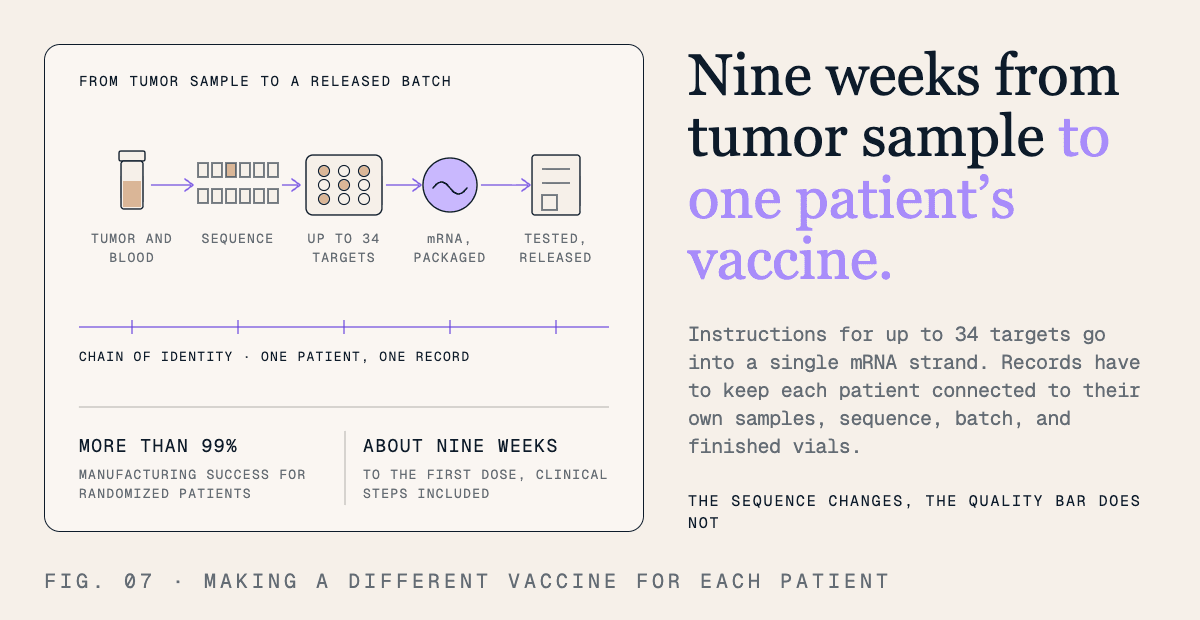
For manufacturing teams, every new patient brings a new mRNA sequence. Usable tumor tissue is collected during surgery, then teams have to sequence it and use the results to make, test, and deliver each individual vaccine. The trial's typical interval to the first vaccine dose was about nine weeks, including clinical procedures and scheduling.
Moderna reports manufacturing success for more than 99% of patients randomized to receive the vaccine, after eligibility and sample checks. That's an encouraging result for a process repeated with a different design each time. INTerpath-001 Manufacturing Results
The work ahead
Ongoing intismeran trials in lung, kidney, and bladder cancer will test whether the approach can help beyond melanoma. Intismeran Trials Beyond Melanoma
Intismeran hasn't been approved for routine use. Broader access will depend on reliable sequencing, manufacturing capacity, quality testing, and coordinated clinical care. Intismeran Development and Manufacturing
Coley was trying to provoke an immune response against cancer without knowing which parts of a tumor the immune system might recognize. Today, researchers can choose targets from an individual patient's tumor and write instructions for making them. Manufacturing teams then have to turn that design into doses for the right person, on time. That combination of biological precision and practical coordination is routine in this space, but we should take the time to appreciate how remarkable it is.
Something Good
A free map of human proteins adds four resources and an AI assistant
Knowing where a protein appears can help researchers work out what it does. Founded in 2003, the Human Protein Atlas has brought together data on human proteins and made it freely available to scientists in academia and industry.
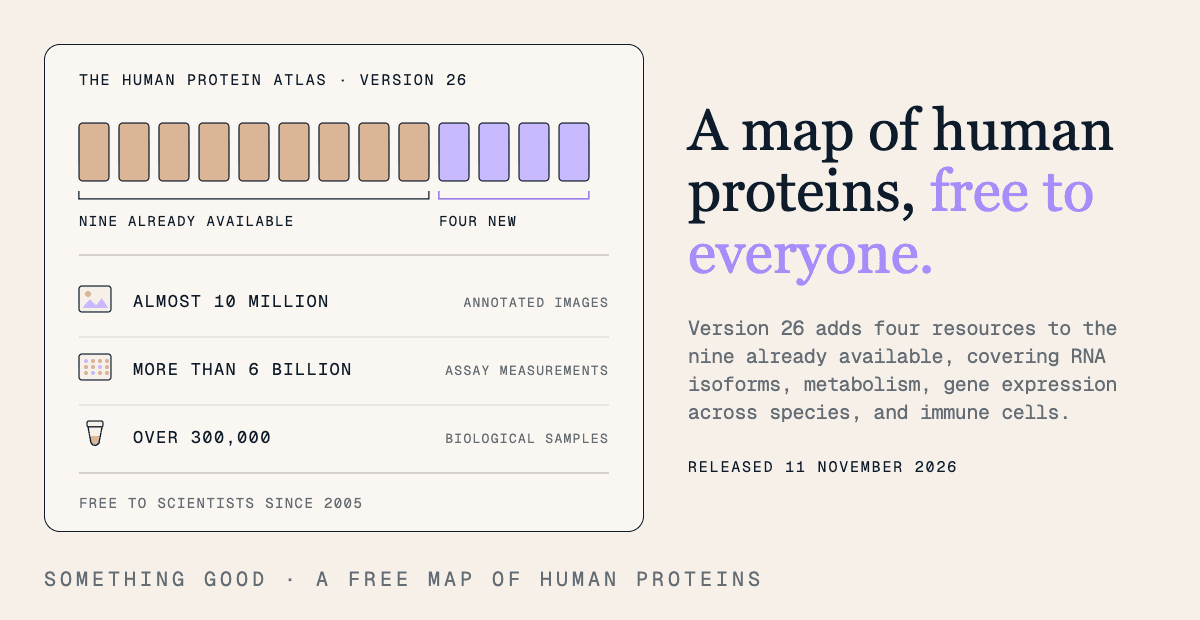
On November 11, the consortium released version 26, adding four resources to the nine already available. One tracks where nearly 90,000 alternative RNA versions of human genes, called isoforms, are expressed. The others cover metabolism, gene expression across mammalian species, and immune cells. Researchers can use these resources to investigate how a gene's activity differs between tissues, cell types, or species. Human Protein Atlas Version 26
The release also adds AtlasAI, an assistant for finding, explaining, and visualizing the data, and visual summaries generated with Google's Gemini models for roughly 20,000 protein-coding genes. The generated summaries can help researchers explore the atlas, with the original data available to check.
The atlas brings together almost 10 million manually annotated images and more than 6 billion assay measurements across over 300,000 biological samples. This kind of scientific generosity is what makes research great. The people who collect samples, validate measurements, and annotate images leave something that other researchers can build on. Making that work freely available means the next team has a stronger starting point. A rising tide lifts all boats.
The Katalyze Marketing Team